


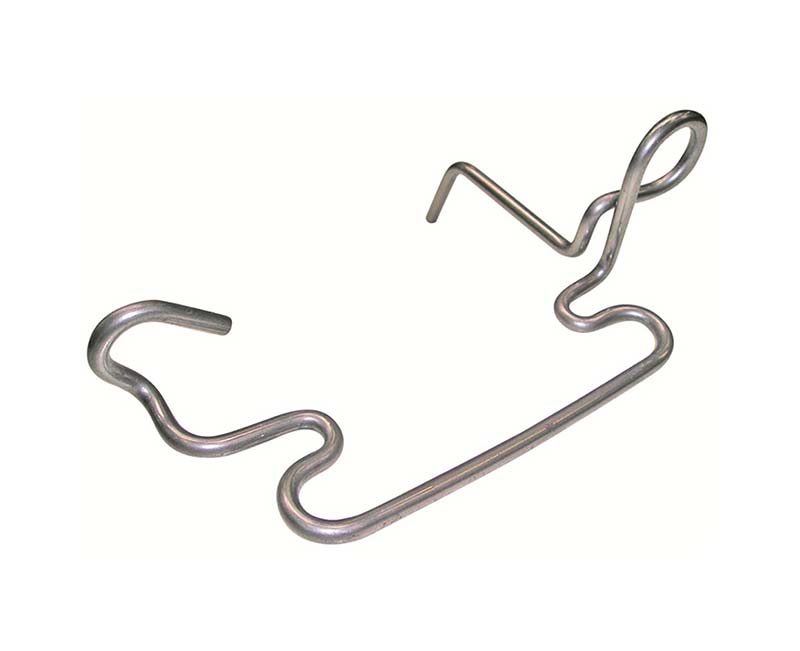
Wire forming is a manufacturing process used to bend, shape, cut, and manipulate metal wire into functional components. Wire forms can range from relatively simple hooks, handles, and brackets to complex three-dimensional parts used in automotive assemblies, industrial equipment, material handling systems, medical products, and other precision manufacturing applications.
Modern wire forming increasingly relies on computer-controlled equipment capable of producing complex bends with a high degree of consistency. CNC technology allows manufacturers to create repeatable wire components directly from coil while controlling bend angles, dimensions, and part geometry throughout a production run. Companies that need engineered components can also work with Salco Engineering for custom wire forming services using advanced CNC bending technology.
What Is Wire Forming?
Wire forming is the process of converting straight wire or coiled wire into a predetermined shape. Depending on the component, the manufacturing process may involve straightening, bending, cutting, welding, flattening, or other fabrication operations. The finished part is commonly referred to as a wire form.
One of the main advantages of wire forming is the wide variety of shapes that can be produced without machining an entire component from solid material. A manufacturer can start with wire of an appropriate diameter and create bends, curves, offsets, loops, hooks, frames, and other geometries based on a part drawing or digital model.
Wire forms are used both as individual components and as elements of larger fabricated assemblies. Some are relatively small components installed during final assembly, while others become handles, frames, dividers, supports, racks, baskets, or material handling structures.
How Does the Wire Forming Process Work?
The exact wire forming process depends on the geometry of the part, production quantity, material, wire diameter, tolerance requirements, and intended application. Modern CNC wire forming systems automate many of the steps that were once performed manually or with dedicated tooling.
Material Selection
The process begins by selecting a wire material and diameter appropriate for the finished component. Strength, corrosion resistance, formability, operating environment, cleaning requirements, and cost can all influence material selection.
Carbon steel and stainless steel are common choices for industrial wire forms. Carbon steel provides strength and can be combined with protective finishes when additional corrosion resistance is needed. Stainless steel is frequently selected for environments where corrosion resistance, cleanliness, or frequent washing are important.
Wire Straightening and Feeding
For CNC production from coil, wire is fed into the forming equipment and straightened before bending. Proper straightening is important because inconsistencies in the incoming material can affect the dimensions and geometry of the completed part.
Automated feeding also allows multiple components to be produced efficiently from continuous coil stock rather than requiring an operator to position individual pieces for every bend.
CNC Wire Bending
CNC wire forming equipment uses programmed instructions to control how the wire is advanced, rotated, and bent. Multiple bends can be made along different planes to create three-dimensional components with significantly more complexity than a simple two-dimensional wire shape.
At Salco Engineering, CNC wire forming is performed using a Numalliance FTX10 3D wire bending machine. CNC control helps produce consistent parts across repeat production runs while also providing the flexibility needed for custom designs and more complicated geometries.
Secondary Fabrication Operations
Wire bending may be only one stage of manufacturing a finished product. Depending on the design, individual wire forms can be welded to additional components or incorporated into a larger fabricated assembly. Features such as frames, cross members, mounting points, handles, dividers, or part-holding elements can be added when the application requires more than a single formed piece of wire.
This combination of wire forming and fabrication is especially useful for products such as custom wire baskets, material handling racks, storage systems, and industrial fixtures.
Inspection and Finishing
After forming and fabrication are complete, finished components can be inspected against the original design requirements. Important characteristics may include overall dimensions, bend locations, angles, spacing, fit within an assembly, and repeatability from one component to another.
Depending on the material and end use, a wire form may also receive a secondary finish. Carbon steel components can be powder coated, plated, or coated with another protective material. Stainless steel may be used without a coating or processed with a finishing method appropriate for the application.
CNC Wire Forming vs. Traditional Wire Bending
Wire has been shaped into useful components long before computer-controlled manufacturing equipment became available. Manual bending, presses, dedicated jigs, and mechanical forming machines can still be appropriate for certain projects. CNC wire forming, however, offers several advantages when parts require multiple bends, repeatable dimensions, or ongoing production.
Because movements are controlled by a programmed manufacturing sequence, CNC equipment can reproduce the same geometry from one part to the next. Programming can also make it easier to manufacture complex three-dimensional forms and transition from prototypes into repeat production.
CNC forming is particularly valuable when a component contains numerous bends or must interface precisely with another part, assembly, basket, rack, or piece of equipment.
Common Types of Wire Forms
The term “wire form” covers a broad range of products. In many cases, the final geometry is developed specifically for the application rather than selected from a standard catalog. Examples of components that can be produced through wire forming include:
- Hooks and retaining components
- Handles and grab points
- Brackets and mounting supports
- Clips and retaining wires
- Frames and structural wire components
- Product and equipment supports
- Wire dividers and separators
- Part-holding fixtures
- Basket components
- Racks and material handling assemblies
The ability to combine several bends into a single wire component can sometimes simplify an assembly by reducing the number of separate pieces required.
Industrial Applications for Wire Forming
Wire forming is used throughout manufacturing because relatively simple raw material can be converted into highly specialized components. The process can support everything from high-volume production parts to custom material handling equipment.
Automotive Manufacturing
Automotive manufacturers and suppliers use wire forms for brackets, retainers, handles, frames, supports, material handling equipment, and assembly-related components. Repeatability is particularly important when formed parts must fit into established manufacturing processes or interact with other components consistently.
Wire forms can also be incorporated into baskets, racks, carts, and dunnage systems used to organize automotive components as they move between machining, washing, assembly, storage, and transportation processes.
Aerospace Manufacturing
Aerospace applications frequently require fabricated components to meet precise dimensional requirements. Wire forming can be used to manufacture supports, retainers, frames, fixtures, and other specialized components where consistent geometry is important to the finished assembly.
Medical and Laboratory Applications
Stainless steel wire forms can be useful in medical, laboratory, and research environments because of their corrosion resistance and compatibility with applications that require frequent cleaning. Formed wire can be incorporated into equipment racks, holders, baskets, storage systems, and specialized fixtures.
Warehousing and Material Handling
Wire forming also plays an important role in industrial material handling. Formed wire components can create dividers, shelves, side panels, handles, guides, and part-holding features for baskets and carts. Custom geometry allows a material handling product to be designed around the parts it actually needs to store or transport rather than forcing the operation to adapt to a generic container.
Food and Commercial Bakery Equipment
Wire racks and formed-wire assemblies are commonly used in commercial food production and bakery environments. Depending on the application, formed components may support trays, create product dividers, provide handles, or become part of mobile storage and transport racks.
Important Wire Forming Design Considerations
A successful wire form depends on more than creating the correct overall shape. Several factors should be considered during the design stage because they can affect manufacturability, strength, consistency, and cost.
Wire Diameter
Wire diameter influences both the strength of the finished component and how tightly the material can be bent. Larger-diameter wire can provide greater structural strength, while smaller diameters may be better suited for lightweight components and intricate designs.
Bend Radius
Every bend introduces stress into the material. The appropriate bend radius depends on factors such as wire diameter, material properties, and part geometry. Designing realistic radii can improve forming consistency and reduce unnecessary manufacturing complications.
Number and Direction of Bends
A component with several bends across different planes requires more advanced forming capability than a simple flat wire shape. CNC equipment makes three-dimensional wire forms practical by controlling both wire rotation and bend location throughout the manufacturing sequence.
Tolerances
Tolerance requirements should reflect how the wire form will function in the finished assembly. Critical dimensions may require tighter control, while noncritical features can often allow greater variation. Establishing appropriate tolerances can help balance manufacturing cost with actual performance requirements.
End Use and Environment
The operating environment can influence material, finish, construction, and design. Components exposed to moisture, cleaning chemicals, heat, abrasion, or repeated loading may require different materials or surface treatments than parts used in a controlled indoor environment.
Benefits of CNC Wire Forming
Modern CNC wire forming provides manufacturers with a combination of flexibility, repeatability, and production efficiency that makes the process useful for a wide range of applications.
Repeatable Production
Once a forming program has been developed and proven, CNC equipment can reproduce the required bend sequence consistently across production quantities. This repeatability is important when individual wire forms must fit into larger assemblies.
Complex Three-Dimensional Shapes
CNC forming equipment can rotate and bend wire across multiple axes, allowing manufacturers to produce components that would be difficult or time-consuming to create using basic manual forming methods.
Efficient Use of Material
Producing parts directly from coil can reduce unnecessary handling and make efficient use of raw material. Automated cutting and forming also helps integrate multiple manufacturing steps into a continuous process.
Design Flexibility
Wire forms can be developed around a specific product, component, manufacturing process, or material handling requirement. Designs can range from straightforward formed pieces to components that later become part of welded assemblies.
Scalability
CNC wire forming can support prototype development as well as repeat production. Once a design has been validated, manufacturers can reproduce the part without rebuilding an entirely new forming process for each production run.
From Wire Form Design to Production
For custom components, wire forming often begins before any metal reaches the bending machine. The design should account for material properties, bend locations, clearances, manufacturing tolerances, and how the component will function in the final assembly.
Salco Engineering can assist with this process through in-house design and prototyping capabilities. Reviewing a component before full production can help identify opportunities to simplify the design, improve manufacturability, or integrate the wire form more effectively with surrounding components.
Wire Forming in Modern Manufacturing
Wire forming remains an important manufacturing process because it combines relatively simple raw material with tremendous design flexibility. Advances in CNC equipment have expanded what can be produced, allowing manufacturers to create accurate three-dimensional components for automotive, aerospace, medical, material handling, food production, and many other applications.
Understanding the wire forming process, materials, bend requirements, and manufacturing considerations can help engineers and purchasing teams develop components that perform reliably while remaining practical to manufacture.
If you have a specific component ready for production, Salco Engineering provides CNC wire forming and custom wire forming services for projects ranging from individual formed components to larger fabricated assemblies. Contact Salco Engineering to discuss your drawings, dimensions, material requirements, or production needs.