

Stainless steel carts are used throughout manufacturing plants, warehouses, cleanrooms, food production facilities, medical environments, laboratories, and other industrial settings where durability, cleanliness, and reliable material handling are essential. Unlike general-purpose carts that may not hold up to moisture, repeated cleaning, heavy loads, or demanding production conditions, stainless steel carts are built for long-term use in environments where strength and sanitation both matter.
For many facilities, carts are more than simple transport tools. They support daily workflow, improve organization, reduce unnecessary handling, protect materials, and help employees move parts, tools, supplies, and equipment more efficiently. Whether used for production staging, washdown areas, assembly support, inspection, maintenance, or clean storage, stainless steel carts can be designed around the specific needs of the operation.
Salco Engineering designs and manufactures stainless steel carts and custom cart solutions for industrial environments that require dependable performance, cleanability, and application-specific features.
Why Stainless Steel Carts Are Used in Industrial Environments
Industrial facilities need equipment that can withstand daily use. Carts may be pushed across production floors, loaded with heavy parts, exposed to liquids or chemicals, cleaned frequently, or used in areas where contamination control is important. Stainless steel is a strong material choice for these environments because it resists corrosion, cleans easily, and maintains its structure over repeated use.
Stainless steel carts are commonly used in applications where standard painted steel, plastic, or lightweight aluminum carts may not provide the right level of durability or sanitation. They are especially valuable in facilities where carts must support heavy loads while remaining easy to maintain.
Common reasons facilities choose stainless steel carts include:
- Corrosion resistance in wet or washdown environments
- Durability for daily industrial use
- Clean surfaces that support sanitation procedures
- Strength for moving parts, tools, fixtures, and supplies
- Long service life compared to many standard cart materials
- Professional appearance in production, medical, and food environments
- Compatibility with custom shelves, baskets, trays, handles, and dividers
Industrial Uses for Stainless Steel Carts
Stainless steel carts can be used across many areas of a facility. Because they can be customized by size, load capacity, shelf layout, caster type, and handling features, they can support a wide range of production and storage needs.
Material Handling and Part Transport
One of the most common uses for stainless steel carts is moving parts and materials between work areas. In manufacturing settings, components often move from machining to washing, from washing to inspection, from inspection to assembly, or from assembly to packaging. A properly designed cart keeps these transfers more organized and controlled.
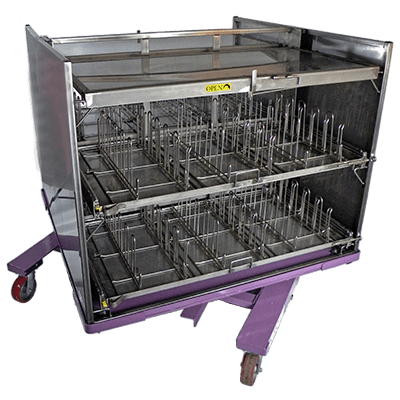
For part transport, stainless steel carts may include multiple shelves, reinforced frames, retaining edges, dividers, baskets, or custom supports. These features help keep parts separated and reduce the risk of damage during movement.
Clean Storage and Production Staging
Stainless steel carts are also useful for temporary storage and production staging. Instead of leaving parts or tools on benches, pallets, or improvised surfaces, facilities can use carts to keep materials organized and ready for the next process step.
Mobile storage carts allow employees to bring parts directly to the point of use. This can reduce walking, improve workflow, and help production teams keep the right materials near the right workstation.
Washdown and Cleaning Areas
Facilities that use cleaning, rinsing, sanitizing, or washdown processes often rely on stainless steel equipment. Stainless steel carts can tolerate repeated exposure to moisture better than many other cart materials. This makes them useful in areas where sanitation, drainage, and corrosion resistance are important.
Depending on the application, stainless steel carts may be designed with open wire shelves, perforated surfaces, drainage-friendly layouts, or removable baskets to support washing and drying processes.
Food Processing and Commercial Bakery Applications
Stainless steel is widely used in food production, commercial kitchens, bakeries, and processing environments because it supports cleanliness and durability. Stainless steel carts may be used to move ingredients, pans, trays, packaged products, tools, or processing supplies.
In food-related environments, carts may need smooth surfaces, open shelving, easy cleaning access, corrosion resistance, and layouts that support repetitive loading and unloading. Custom stainless steel carts can be designed around the workflow of the production line or kitchen area.
Medical, Laboratory, and Clean Manufacturing Environments
Medical, laboratory, pharmaceutical, and clean manufacturing environments often require equipment that can be cleaned regularly and used without excessive contamination risk. Stainless steel carts are commonly used to transport supplies, instruments, samples, equipment, and clean materials.
These environments may require carts with enclosed sides, open wire construction, smooth shelves, guard rails, handles, or custom compartments. The right design depends on the items being moved and the cleanliness requirements of the facility.
Maintenance and Tool Organization
Stainless steel carts can also support maintenance departments and tool organization. A mobile cart can hold tools, replacement parts, cleaning supplies, gauges, hardware, or other items needed throughout the facility.
By keeping equipment organized and mobile, maintenance teams can respond more efficiently without making repeated trips back to a central storage area.
Benefits of Stainless Steel Carts
The value of stainless steel carts comes from their ability to combine strength, cleanability, and flexibility. When designed correctly, they improve daily handling tasks while supporting long-term facility needs.
Durability for Demanding Use
Industrial environments can be hard on material handling equipment. Carts are loaded, pushed, turned, parked, cleaned, and reused throughout the day. Stainless steel carts provide the strength and durability needed for these conditions.
A custom stainless steel cart can be designed with reinforced frames, heavy-duty shelves, strong welds, and caster configurations based on the weight and movement requirements of the application. This helps ensure that the cart is built for the actual work being performed.
Cleanability and Sanitation Support
One of the biggest advantages of stainless steel carts is that they are easier to clean and maintain than many other cart types. Stainless steel surfaces do not absorb moisture the way some materials can, and they can be cleaned repeatedly without quickly breaking down.
This is especially important in food processing, medical, laboratory, pharmaceutical, cleanroom, and parts washing environments. A cart that is easier to clean helps support better housekeeping and can reduce the risk of residue or debris buildup.
Corrosion Resistance
Moisture, cleaning chemicals, coolants, oils, and production fluids can shorten the life of standard equipment. Stainless steel provides better resistance to rust and corrosion, making it a strong choice for wet or demanding environments.
Facilities that need carts near wash areas, food production lines, cleanrooms, laboratories, or humid conditions often benefit from stainless steel construction because it helps extend service life and reduce maintenance needs.
Improved Organization
Stainless steel carts can be designed to improve organization at the point of use. Shelves, compartments, baskets, trays, tool holders, dividers, and labeling areas can help employees keep items separated and easy to access.
Better organization can reduce wasted time, prevent misplaced parts, and make production areas cleaner and more efficient. In high-volume facilities, small improvements in organization can have a meaningful impact on workflow.
Reduced Handling and Better Workflow
Every time a part or tool is moved unnecessarily, there is an added opportunity for delay, damage, or inefficiency. Stainless steel carts can reduce unnecessary handling by allowing materials to move through multiple steps without being transferred into different containers or locations.
For example, a cart may be used to stage parts before washing, move them through inspection, and deliver them to assembly. When the cart is designed around the process, it becomes part of a smoother material handling system.
Customization Options for Stainless Steel Carts
Not every facility needs the same stainless steel cart. A food production facility may need carts that support washdown and tray handling. A manufacturing plant may need heavy-duty carts for parts and tools. A laboratory may need compact carts with organized shelves and clean surfaces. Customization allows the cart to match the application.
Common customization options include:
- Custom length, width, and height
- Fixed or adjustable shelves
- Solid, wire, or perforated shelving
- Heavy-duty caster packages
- Swivel, rigid, braking, or locking casters
- Push handles or pull handles
- Raised edges or containment rails
- Dividers, bins, or baskets
- Tool holders or accessory mounts
- Drainage-friendly surfaces
- Stacking or nesting features
- Custom load capacity requirements
These options help facilities create carts that support real-world movement, storage, cleaning, and access needs.
How to Choose the Right Stainless Steel Cart
Selecting the right stainless steel cart starts with understanding the application. A cart should be designed around what it will carry, where it will be used, how often it will move, and how employees will interact with it.
Important questions include:
- What parts, tools, supplies, or materials will the cart carry?
- What is the maximum expected load weight?
- Will the cart be used in a wet, clean, or washdown environment?
- Does the cart need shelves, baskets, trays, or compartments?
- Will the cart move through narrow aisles or tight production areas?
- Does the cart need brakes, locks, or special casters?
- Will employees load and unload the cart manually?
- Does the cart need to integrate with other equipment?
- Are there cleanliness, sanitation, or corrosion resistance requirements?
Answering these questions helps ensure the final cart design supports both operational efficiency and long-term durability.
Industries That Use Stainless Steel Carts
Stainless steel carts are used across many industries because they can be adapted to different handling requirements. Their durability and cleanability make them useful in both general industrial and highly controlled environments.
Common industries include:
- Automotive manufacturing
- Aerospace manufacturing
- Food processing
- Commercial bakeries
- Medical device manufacturing
- Pharmaceutical production
- Laboratories
- Electronics manufacturing
- Warehousing and distribution
- Metal fabrication
- Industrial parts washing
- General manufacturing
In each of these environments, stainless steel carts can be configured to improve storage, movement, organization, and cleanliness.
Custom Stainless Steel Carts from Salco Engineering
Stainless steel carts are an important material handling solution for facilities that need strength, sanitation, corrosion resistance, and long-term dependability. They can support part transport, clean storage, production staging, washdown areas, maintenance tasks, and facility logistics while improving organization and reducing unnecessary handling.
Salco Engineering designs and manufactures custom stainless steel carts for industrial, manufacturing, food processing, medical, laboratory, warehouse, and technology environments. Whether your facility needs a heavy-duty stainless steel cart, a cleanroom cart, a food processing cart, a mobile storage cart, or a custom cart built around a specific process, Salco can help develop the right solution.
To discuss custom stainless steel carts for your facility, request a quote from Salco Engineering today.