


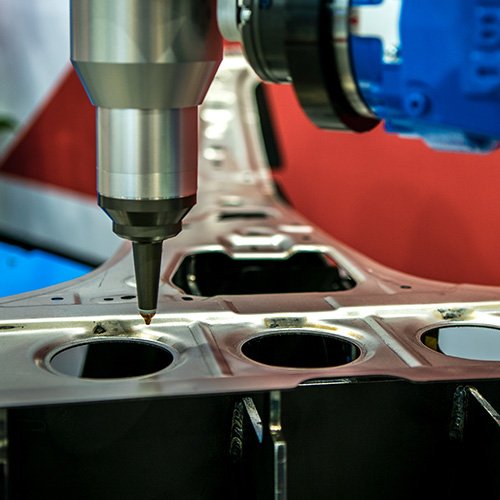
The automotive manufacturing industry continues to evolve as manufacturers respond to changing vehicle technology, tighter production timelines, supply chain pressure, labor challenges, and growing expectations for quality and efficiency. From traditional internal combustion vehicle components to electric vehicle systems, advanced electronics, lightweight materials, and automated production lines, today’s automotive facilities must be flexible, organized, and prepared for constant change.
Automotive manufacturing trends are no longer focused only on faster assembly lines or larger production volumes. Modern manufacturers are looking for ways to improve the entire production environment, including part handling, cleanliness, automation, storage, transport, ergonomics, and workflow consistency. Every movement inside the facility matters. How parts are stored, staged, cleaned, moved, inspected, and delivered to the production line can have a direct impact on throughput, product quality, and long-term profitability.
For suppliers and manufacturers, adapting to these automotive manufacturing trends requires more than new machines or software. It also requires practical material handling equipment that supports the way parts move through the facility. Custom carts, baskets, racks, dunnage, and transport systems help bridge the gap between advanced production goals and real-world shop floor needs.
The Changing Landscape of Automotive Manufacturing
Automotive manufacturers are operating in a more complex environment than ever before. Product lines are changing quickly, component designs are becoming more precise, and facilities must often support multiple vehicle platforms, part families, and production schedules at the same time.
Several key factors are influencing automotive manufacturing operations:
- Increased automation and robotics
- Growth in electric vehicle component production
- Demand for cleaner and more controlled manufacturing environments
- Pressure to reduce downtime and improve throughput
- Need for safer and more ergonomic handling processes
- Greater focus on supply chain resilience
- More complex part geometries and assembly requirements
- Rising expectations for quality control and traceability
These trends are pushing manufacturers to evaluate not only their equipment and production lines, but also the supporting systems that keep parts moving. Material handling products are a major part of that equation.
Automation and Robotics in Automotive Manufacturing
Automation is one of the most important automotive manufacturing trends shaping the future of the industry. Robotic arms, CNC loading systems, automated guided vehicles, conveyors, inspection systems, and robotic wash lines are helping facilities improve repeatability and reduce manual handling.
However, automation depends on consistency. A robot can perform the same motion repeatedly, but only if the part is presented in the same position each time. If components shift inside a basket, become mixed in a bin, or are not properly staged, the system may require manual correction. This can reduce the value of the automation investment.
Custom material handling equipment helps automated systems work more reliably by keeping parts organized, separated, and properly oriented. Wire baskets, fixtures, racks, and carts can be designed around robotic pick points, wash line requirements, conveyor layouts, and production cell needs. This allows automation to function with fewer interruptions and better consistency.
EV Manufacturing and Changing Component Requirements
The growth of electric vehicle production has introduced new challenges for automotive manufacturers and suppliers. EV systems often involve battery components, electrical assemblies, lightweight structures, precision housings, cooling system parts, and sensitive electronics. These parts may require careful handling to prevent damage, contamination, or misalignment.
As a result, material handling equipment must be designed with more attention to part protection and organization. Custom baskets, carts, and racks can be built around specific component shapes, load requirements, cleanliness expectations, and production workflows. This is especially important when parts move through machining, cleaning, inspection, assembly, or packaging before reaching the final production line.
Facilities that want to stay competitive must continue investing in systems that allow them to adapt quickly as vehicle designs and component requirements change.
Cleanliness and Contamination Control
Clean manufacturing has become increasingly important in automotive production. Precision parts, fluid system components, EV components, electronics, sensors, and machined assemblies may all be affected by debris, oils, metal chips, fibers, or other contaminants.
Contamination can create problems such as premature wear, assembly issues, sealing failures, poor coating adhesion, product defects, and added rework. Because of this, manufacturers are placing greater emphasis on technical cleanliness and controlled handling throughout the production process.
Stainless steel carts, wire baskets, and custom racks can help support cleaner workflows by improving part separation, drainage, airflow, visibility, and washability. In parts washing or clean manufacturing areas, open wire baskets can allow cleaning solutions to reach more surfaces while helping fluids and debris drain away. Stainless steel carts can support clean transport between washing, inspection, and assembly areas.
Material Handling as a Driver of Efficiency
Efficiency in automotive manufacturing is not only about machine speed. It is also about reducing wasted movement, preventing bottlenecks, and making sure parts arrive at the right place in the right condition. Poorly designed handling equipment can cause delays throughout the facility.
For example, if employees must make repeated trips to move parts between departments, production slows down. If parts are stored in generic containers that require extra sorting, labor costs increase. If components are damaged during transport, quality problems and rework follow. If carts are difficult to push or poorly sized for the aisle layout, employee fatigue and safety risks can increase.
Custom equipment can solve these issues by matching the material handling system to the workflow. Salco’s article on streamlining automotive manufacturing with custom solutions explains how application-specific carts, racks, baskets, and handling equipment can support better movement, organization, and production flow.
The Importance of Automotive Carts
Carts are one of the most useful tools in automotive manufacturing because they support movement between nearly every stage of production. They may be used to transport raw materials, machined parts, stampings, welded components, assemblies, tools, fixtures, inspection equipment, or finished goods.
Automotive carts can be designed for general transport or for highly specific applications. Some carts may need reinforced frames for heavy parts. Others may need shelves, dividers, rotating bases, pull-out trays, dunnage, or protective surfaces. In clean areas, stainless steel carts may be preferred. In production environments, powder-coated steel carts may provide strength, visibility, and durability.
The right cart design can help reduce forklift dependence, improve line-side delivery, keep parts organized, and reduce manual lifting. For a closer look at how cart design supports automotive production, Salco’s article on the importance of automotive carts explains why custom carts are valuable for safety, productivity, and part handling.
Customization for Flexible Production
Another major trend in automotive manufacturing is the need for flexibility. Manufacturers may need to adjust production lines for new models, different part families, changing order volumes, or updated processes. Standard handling equipment often cannot adapt to these changes without creating inefficiencies.
Custom material handling solutions can be designed around current needs while allowing for future changes. Modular cart designs, removable dunnage, adjustable shelves, stackable baskets, and flexible rack systems can help facilities respond to changing production requirements.
Custom solutions may include:
- Automotive carts for line-side delivery
- Wire baskets for parts washing and transport
- Custom racks for component storage
- Dunnage systems for part protection
- Stainless steel carts for clean manufacturing areas
- Heavy-duty carts for large or dense parts
- Fixtures for robotic loading and unloading
- Material handling equipment for EV components
By designing equipment around the application, manufacturers can improve daily efficiency while staying better prepared for future production changes.
Ergonomics and Workplace Safety
Automotive manufacturing often involves repetitive movement, heavy components, sharp edges, awkward part shapes, and fast-paced production schedules. As facilities look for ways to reduce workplace injuries and improve employee productivity, ergonomic material handling has become a higher priority.
Custom carts and racks can help position parts at better working heights, reduce unnecessary lifting, and make materials easier to access. Smooth-rolling casters, properly placed handles, stable frames, and organized storage areas can reduce strain during daily work.
Safety-focused equipment can also reduce the need for employees to carry heavy parts by hand or maneuver poorly suited containers across the facility. This supports both productivity and employee well-being.
Supply Chain Resilience and In-House Efficiency
Supply chain disruptions have encouraged many manufacturers to review their internal processes and reduce avoidable inefficiencies. While material handling equipment cannot solve every supply chain issue, it can help facilities make better use of the parts, labor, and production time they already have.
Better carts, racks, and baskets can support more organized staging, faster changeovers, improved inventory visibility, and smoother movement between production areas. This can help manufacturers respond more effectively when schedules change or when production demands increase.
Adapting to Automotive Manufacturing Trends with Salco Engineering
Automotive manufacturing trends continue to point toward greater automation, cleaner production, flexible workflows, safer handling, and more efficient movement of parts throughout the facility. To keep up, manufacturers need equipment that is built around their actual production processes, not generic solutions that create limitations.
Salco Engineering & Manufacturing designs and fabricates custom carts, baskets, racks, fixtures, and material handling products for automotive manufacturers and suppliers. Whether your facility needs automotive carts, stainless steel baskets, robotic handling fixtures, parts washing baskets, line-side transport carts, or custom storage solutions, Salco can help build equipment around your workflow.
By investing in smarter material handling equipment, automotive manufacturers can improve efficiency, protect parts, support automation, and adapt more easily to the changing demands of the industry.