

Nylon coating on metal is commonly used when manufacturers need a durable protective surface that helps separate sensitive parts from bare steel. For industrial wire baskets, racks, fixtures, and material handling components, the right surface finish can reduce metal-to-metal contact, protect the underlying basket, and help the basket perform more effectively within a specific manufacturing process.
Nylon coating is only one option. Powder coating, zinc plating, and uncoated stainless steel each provide different advantages depending on whether the basket will be used for parts handling, washing, storage, assembly, transportation, or another industrial application.
Choosing the correct finish requires looking beyond appearance. Temperature, chemical exposure, abrasion, part sensitivity, corrosion resistance, cleaning requirements, and the environment in which the basket will operate should all influence the decision.
Why Surface Finish Matters for Industrial Wire Baskets
Industrial wire baskets are frequently used to carry parts through multiple stages of manufacturing. Components may be moved between machining centers, parts washers, inspection stations, assembly operations, storage areas, and shipping departments. During that movement, the basket itself becomes part of the manufacturing process.
For some applications, direct contact between a metal component and an uncoated steel basket is acceptable. In others, it can create scratching, abrasion, marking, or unnecessary movement. A coating can provide a different contact surface while also protecting the basket material from moisture and environmental exposure.
The finish should therefore be selected according to the job the basket needs to perform. A basket carrying finished cosmetic components may have very different requirements from one submerged in an industrial wash system or exposed to elevated temperatures.
Salco Engineering manufactures custom industrial wire baskets around the parts, process, and operating conditions of each application, including material and finishing considerations.
What Is Nylon Coating on Metal?
Nylon coating is a polymer finish applied over a metal substrate to create a protective outer layer. Rather than leaving the steel surface exposed, the nylon becomes the contact surface for parts placed inside the basket or fixture.
When used on wire products, the coating follows the shape of the underlying wire and can cover basket frames, dividers, handles, and other fabricated features. This makes nylon particularly useful where manufacturers want the strength of a steel structure but do not want sensitive components resting directly against exposed metal.
Nylon-coated wire products can be used for part storage, work-in-process handling, transportation, assembly operations, and certain processing environments. The suitability of a particular nylon material still depends on operating temperature, chemical exposure, coating thickness, and the specific production process.
Benefits of Nylon-Coated Wire Baskets
Protection for Sensitive Parts
One of the primary reasons to specify nylon coating is to create a less abrasive contact surface between the basket and the components being handled. Machined, polished, plated, painted, or otherwise finished parts can be vulnerable to scratches and marks when they repeatedly contact bare steel.
A nylon-coated basket can be especially useful when the appearance or surface condition of the component must be maintained throughout handling and assembly.
Reduced Metal-to-Metal Contact
Nylon creates separation between the steel basket and the parts it carries. That can be beneficial for precision components that move repeatedly within a basket during transportation, staging, or production.
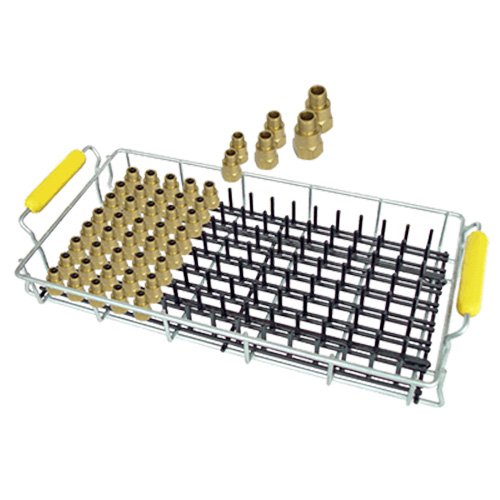
Custom basket designs can provide additional protection by combining the coating with dividers, individual part locations, formed-wire supports, or other features that limit unnecessary movement.
Corrosion Protection for the Basket
When properly applied and maintained, a polymer coating can help isolate the underlying carbon steel from moisture and other environmental exposure. This can improve the usefulness of carbon steel baskets in applications where bare steel would otherwise be undesirable.
However, coating damage should be considered when evaluating long-term use. Deep cuts or worn areas can expose the underlying metal, making inspection and maintenance important in demanding environments.
Noise Reduction
Coated wire can also reduce some of the noise associated with metal components contacting a steel basket during handling. This may be useful in manufacturing environments where multiple baskets, carts, and metal components are continually being moved.
Part Identification and Organization
Depending on available coating options, color can sometimes be incorporated into a material handling system to help distinguish products, manufacturing cells, part families, processes, or departments. Color should not replace proper identification procedures, but it can provide an additional visual cue within a production environment.
How Nylon Coating on Metal Is Used in Manufacturing
Nylon coating is useful in applications where a durable steel basket is needed but the components should not repeatedly contact an exposed metal surface. Common uses can include work-in-process baskets, component storage, assembly fixtures, transport baskets, racks, and specialized part-holding systems.
For example, a basket containing machined components may be designed with nylon-coated contact points to help protect finished surfaces while the parts move from one operation to another. Automotive and aerospace suppliers may use similar concepts for precision parts that need organized separation during handling and staging.
The key is designing the coating and basket together. Applying a protective finish cannot compensate for a basket that allows components to collide, stack incorrectly, or move excessively. Part orientation, dividers, clearances, loading method, and basket geometry remain important elements of the overall design.
Nylon Coating vs. Powder Coating
Nylon coating and powder coating are both polymer-based finishes, but they are not interchangeable. Each can be appropriate for an industrial wire basket depending on the operating environment and the type of protection required.
Nylon Coating
Nylon is often considered when the surface of the basket will come into direct contact with components that require additional protection. The finished coating can provide a durable barrier between the metal basket and the part while offering a degree of flexibility that can be beneficial in material handling applications.
Potential applications include baskets carrying machined parts, finished components, precision assemblies, and other products where minimizing metal-to-metal contact is important.
Powder Coating
Powder coating is widely used on fabricated steel products because it creates a durable finished surface and is available in many colors and formulations. Powder-coated baskets can work well for storage, transportation, work-in-process handling, and general industrial use.
Powder coating is particularly useful when the priorities include corrosion protection, appearance, easy identification, and general resistance to normal industrial wear. For baskets that will repeatedly contact sharp or heavy components, however, the potential for scratching or chipping should be considered during material and coating selection.
Which Is Better: Nylon or Powder Coating?
There is no single finish that is best for every wire basket. Nylon may be preferable when protecting sensitive parts from direct metal contact is a primary design requirement. Powder coating may be appropriate when a durable general-purpose finish, corrosion protection, or color identification is more important.
The operating process should ultimately determine the choice. Manufacturers should consider what the basket will carry, how often it will be handled, whether parts will slide against the coating, what chemicals may be present, and whether the basket will encounter elevated temperatures.
Nylon Coating vs. Zinc Plating
Zinc plating protects steel differently from nylon. Rather than creating a relatively thick polymer contact surface, zinc plating places a thin metallic coating over the steel to improve corrosion resistance.
This makes zinc plating useful for wire products where corrosion protection is needed but cushioning the parts is not a primary concern. The basket retains a hard metal surface, so zinc plating does not provide the same type of separation between sensitive components and the basket that a polymer coating can provide.
Zinc-plated wire baskets can be appropriate for storage, transportation, general manufacturing, and other applications where the parts being carried can tolerate metal contact. Salco has additional information about zinc plating for industrial steel baskets and wire products for applications where corrosion resistance is an important consideration.
Nylon-Coated Carbon Steel vs. Stainless Steel Wire Baskets
Another important comparison is between coated carbon steel and stainless steel. In many industrial cleaning and processing applications, manufacturers may choose stainless steel rather than coating carbon steel at all.
Stainless steel provides corrosion resistance throughout the material rather than relying on an applied coating. Because there is no polymer layer covering the wire, stainless steel baskets can be well suited for applications involving repeated washing, sanitation, elevated temperatures, or other processes where a coating may not be desirable.
Stainless steel is therefore commonly considered for industrial washing, food processing, medical applications, and other environments where cleanliness and corrosion resistance are important.
For applications requiring an even cleaner stainless steel surface, electropolishing can be used to improve surface characteristics and remove surface contaminants created during fabrication. Unlike nylon or powder coating, electropolishing does not add a protective polymer layer. Instead, it modifies the surface of the stainless steel itself.
Choosing a Wire Basket Finish for Parts Washing
Parts washing deserves particular attention because not every protective coating is appropriate for every cleaning process. Wash chemistry, temperature, exposure time, mechanical agitation, and the way the basket is loaded can all affect finish selection.
Stainless steel is frequently chosen for baskets that will repeatedly travel through aqueous parts washers, ultrasonic systems, and other industrial cleaning processes because the basket itself has inherent corrosion resistance and does not depend on an external polymer coating.
A coated basket may still be appropriate for certain cleaning or material handling applications, but compatibility should be evaluated against the actual process conditions rather than assuming a particular finish will work with every detergent, solvent, temperature, or wash cycle.
Choosing a Finish for Delicate or Finished Components
If part protection is the primary concern, the decision should begin with the surfaces that will contact the basket. Components with polished, machined, plated, painted, or otherwise appearance-critical surfaces may benefit from coated contact areas.
Manufacturers should also look beyond the coating itself. A properly designed basket can keep individual parts separated and supported in consistent positions. Wire dividers, dedicated pockets, formed supports, and custom dunnage can reduce movement and prevent components from colliding during transport.
For especially sensitive products, combining thoughtful basket geometry with a suitable protective coating can provide better results than relying on either feature alone.
Factors to Consider When Selecting a Protective Finish
Before specifying nylon, powder coating, zinc plating, or stainless steel, manufacturers should evaluate the complete operating environment.
- Part material and surface finish
- Risk of scratching or cosmetic damage
- Required corrosion resistance
- Exposure to water, oils, detergents, or other chemicals
- Operating and process temperatures
- Frequency of washing or sanitation
- Amount of abrasion during loading and unloading
- Basket loading and overall weight
- Expected service life
- Need for color identification
- Cleaning and maintenance requirements
These considerations can lead to very different solutions. A basket used to stage painted components beside an assembly line may benefit from a coated surface, while a basket repeatedly passing through an industrial washer may be better suited to stainless steel construction.
Designing the Basket Around the Manufacturing Process
Material and finish selection should be part of the basket design rather than an afterthought. Dimensions, wire spacing, handles, stacking features, dividers, load capacity, part orientation, and the method used to move the basket all influence its performance.
Custom wire baskets can also be designed around automated manufacturing equipment, conveyors, robotic cells, cleaning systems, carts, and existing storage locations. When the basket is engineered for the entire process, the coating becomes one component of a larger material handling solution.
Custom Wire Baskets with the Right Material and Finish
Nylon coating on metal can provide valuable protection for components that should not continually contact bare steel, but the correct finish depends on the application. Nylon, powder coating, zinc plating, and stainless steel each solve different manufacturing problems, and selecting the right option requires considering the parts, environment, cleaning process, temperature, and expected wear.
Salco Engineering designs and manufactures custom wire baskets for industrial part handling, production, storage, washing, and automated processes. Basket material, configuration, part protection, and finishing requirements can be evaluated together to develop a solution suited to the way the basket will actually be used.
If you need a custom basket for sensitive components, industrial cleaning, manufacturing, or material handling, contact Salco Engineering to discuss your parts, process requirements, and operating environment.