

Commercial bakery storage racks play an important role in keeping production areas organized and efficient. The right rack design can help bakeries store pans, stage ingredients, cool baked goods, organize work-in-process items, and move products between departments. In high-volume environments, these racks need to be more than basic shelving. They must be designed around the workflow, sanitation requirements, product sizes, handling methods, and durability needs of the facility.
For bakeries that rely on frequent pan handling throughout the day, custom sheet pan racks can help keep trays organized, accessible, and ready to move through each stage of production.
Why Storage Rack Design Matters in Commercial Bakeries
A commercial bakery may process hundreds or thousands of trays, pans, racks, and finished products in a single shift. Without proper storage and staging systems, production areas can quickly become crowded. Employees may need to search for the right pans, move around poorly placed equipment, stack items inefficiently, or transfer products more times than necessary.
Well-designed commercial bakery storage racks help create a more controlled workflow. They give teams a dedicated place for trays, pans, ingredients, packaged goods, cooling products, and production materials. This reduces clutter and helps employees keep each step of the process moving.
Storage rack design can affect:
- Production speed
- Food safety and sanitation
- Pan and tray organization
- Employee efficiency
- Product cooling and airflow
- Storage density
- Product protection
- Cleaning accessibility
- Movement between departments
When racks are custom-built for the facility, they can support the production process instead of getting in the way of it.
Supporting High-Volume Production Flow
In high-volume food production, storage racks often serve multiple purposes throughout the day. A rack may be used to hold clean pans in the morning, stage dough or ingredients during production, cool baked goods after oven discharge, and transport finished products to packaging later in the shift.
Because of this, rack design should be based on how products move through the building. A bakery should consider where the rack will be loaded, where it will travel, how long products will sit on it, and what happens next in the process.
For example, a rack used near an oven may need to support hot pans, airflow, and quick loading. A rack used in a packaging area may need to organize finished products by order, batch, or product type. A rack used for pan storage may need tighter spacing to maximize capacity, while a cooling rack may need more open spacing to allow air to circulate.
Custom bakery storage racks can be designed to support these different workflow needs while maintaining consistency across the facility.
Rack Dimensions and Pan Compatibility
One of the most important considerations in commercial bakery storage rack design is sizing. A rack that does not properly fit the pans, trays, or containers used by the bakery can create inefficiency and frustration.
Rack dimensions should account for:
- Sheet pan size
- Tray depth
- Product height
- Pan spacing
- Loading direction
- Clearance for employees
- Storage area dimensions
- Cooler, freezer, oven, or proofing room compatibility
High-volume bakeries often use standardized pan sizes, but many facilities also have specialty trays or custom product handling requirements. A custom rack can be designed around the actual equipment used in the facility rather than forcing employees to work around standard rack limitations.
Proper pan spacing is especially important. Tight spacing may increase rack capacity, but it may not be ideal for cooling, proofing, or products with added height. Wider spacing may be necessary for airflow, product protection, or easier access. The best design balances capacity with the way products are handled.
Material Selection for Commercial Bakery Storage Racks
Commercial bakery storage racks must withstand repeated use in demanding food production environments. Material selection affects durability, cleanability, corrosion resistance, appearance, and long-term performance.
Stainless steel is often used in commercial bakery environments because it offers strong corrosion resistance and is easy to clean. It can be a good fit for areas exposed to moisture, frequent sanitation, food residue, refrigeration, freezing, or washdown conditions.
Coated steel may also be a practical option depending on the application. Powder-coated or other coated finishes can provide durability, product protection, and color-coding options for different departments, product types, or workflow zones. In dry storage or general handling areas, coated racks may provide an effective balance of strength and value.
The best material depends on where the rack will be used, how often it will be cleaned, what products it will hold, and what environmental conditions it will face.
Sanitation and Food Safety Considerations
Food safety is a major priority in commercial bakeries. Storage rack design should support easy cleaning and reduce areas where food particles, dust, flour, moisture, or debris can collect.
Important sanitation-related design features include:
- Smooth surfaces where practical
- Open construction for visibility and cleaning access
- Proper weld quality
- Minimal hard-to-clean crevices
- Corrosion-resistant materials or finishes
- Easy access around shelves, runners, and frame components
- Compatibility with facility cleaning procedures
A storage rack that is difficult to clean can create unnecessary challenges for sanitation teams. Custom rack design allows bakeries to consider food safety requirements from the beginning, helping support cleaner production areas and more efficient sanitation routines.
Mobility, Casters, and Handling Efficiency
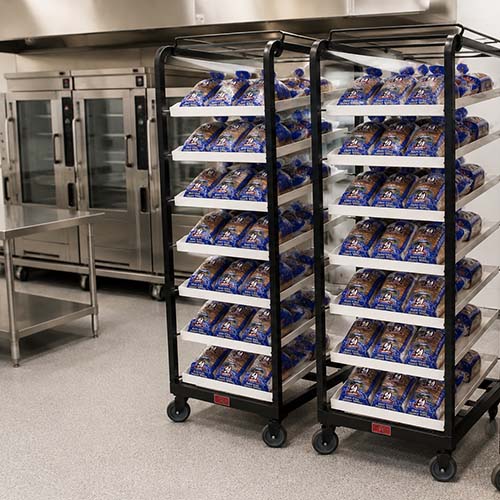
Many commercial bakery storage racks need to move throughout the facility. Mobile racks can help employees transport pans, trays, ingredients, and finished products without manually carrying heavy loads. In high-volume production, this can reduce physical strain and help products move faster between work areas.
Caster selection is an important part of mobile rack design. The right caster depends on floor conditions, rack load, travel distance, turning requirements, washdown exposure, and whether the rack needs brakes or directional control.
A rack that is difficult to push, steer, or stop can slow employees down and create safety concerns. Heavy-duty casters, ergonomic handles, and a stable frame design can improve control and make racks easier to use during long production shifts.
Airflow and Cooling Performance
For bakeries that use racks for cooling baked goods, airflow is a key design consideration. Baked products often need to cool evenly before packaging, decorating, slicing, or storing. If rack spacing is too tight or the design restricts air movement, cooling can take longer or become inconsistent.
Open rack construction, proper shelf spacing, and thoughtful layout can help promote better airflow around trays and pans. This can be especially important for bread, pastries, cookies, cakes, and other products that require controlled cooling before the next production step.
In some facilities, cooling racks may need to move directly from the oven area to a staging or packaging area. Custom rack design can help support both airflow and transport requirements.
Maximizing Storage Density Without Creating Bottlenecks
High-volume bakeries often need to make the most of available space. Storage racks can help increase organization and storage density, but only if they are designed to fit the facility properly.
A rack that holds a large number of pans may seem efficient, but if it is too large for aisles, doorways, coolers, or production areas, it can create movement problems. Likewise, racks that are too small may require more trips and take up more floor space overall.
Custom storage racks can be designed around aisle widths, door clearances, cooler dimensions, staging zones, and production flow. This helps bakeries increase capacity while maintaining safe and efficient movement.
Protecting Products, Pans, and Equipment
Product damage can be costly in high-volume bakery operations. Crushed baked goods, scratched pans, unstable stacks, or poorly supported trays can lead to waste, rework, and production delays.
Commercial bakery storage racks can be designed to protect both products and equipment. Proper pan runners, shelf spacing, rack depth, and frame stability help keep trays secure during storage and movement. Coated surfaces, smooth welds, or rounded contact points may also help reduce wear on pans or handled items.
A well-designed rack keeps products organized and supported from the moment they are loaded until they reach the next step in the process.
Custom Rack Design for Different Bakery Areas
A single bakery may require several types of storage racks depending on the department. Common bakery rack applications include:
- Clean pan storage
- Ingredient staging
- Dough handling
- Proofing support
- Oven loading and unloading support
- Cooling baked goods
- Packaging area staging
- Finished product storage
- Freezer or cooler storage
- Washdown or sanitation areas
Custom design makes it possible to match each rack to its specific role while keeping the overall material handling system consistent.
Choosing the Right Commercial Bakery Storage Rack
The best commercial bakery storage rack is one that fits the product, the process, and the facility. Before selecting a rack, bakeries should consider the size and weight of the items being stored, how often the rack will move, how it will be cleaned, where it will be used, and what production challenges it needs to solve.
A custom manufacturer can help evaluate these needs and recommend materials, dimensions, finishes, caster configurations, and layout features that support the bakery’s workflow.
Contact Salco for Custom Bakery Storage Racks
Salco Engineering designs and manufactures custom bakery storage racks for commercial kitchens, wholesale bakeries, and high-volume food production facilities. Whether your operation needs stainless steel racks, coated racks, mobile racks, pan storage systems, or custom material handling solutions, Salco can build equipment around your space, workflow, sanitation needs, and production goals.
To discuss a custom bakery storage rack for your facility, contact Salco Engineering and share your application details.