


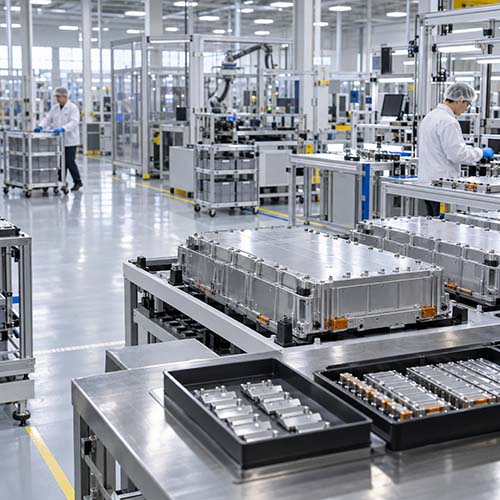
EV battery component carts and baskets play an important role in helping manufacturers move, protect, organize, and stage sensitive electric vehicle parts throughout production. As electric vehicle manufacturing continues to evolve, facilities need material handling equipment that supports cleanliness, consistency, part protection, and efficient workflow. Battery components, housings, trays, modules, connectors, brackets, and related assemblies often require careful handling between machining, washing, inspection, assembly, storage, and final production steps.
In these environments, generic carts or standard containers may not provide the protection or organization required. Parts can shift, scratch, collect contamination, become mixed with other components, or require extra handling before they reach the next stage of production. Custom carts and baskets help solve these challenges by creating purpose-built systems for clean material handling, work-in-process movement, and part-specific storage.
For EV manufacturers and suppliers, clean handling is not just about appearance. It can affect part quality, process consistency, production efficiency, and downstream assembly. The right cart or basket design helps keep components organized, separated, accessible, and protected while moving through the facility.
Why Clean Material Handling Matters in EV Battery Production
EV battery production involves many parts and subcomponents that must be handled carefully. Components may need to remain free from dirt, oils, metal chips, moisture, residue, or other contaminants that could interfere with assembly or performance. In some cases, parts may go through washing, drying, inspection, coating, or clean storage before being used in a battery system.
Clean material handling equipment helps reduce the risk of contamination by supporting organized movement between process steps. Instead of placing parts in open bins, stacking them directly on work surfaces, or moving them with equipment not designed for the application, facilities can use custom carts and baskets to improve control.
Clean handling solutions may support:
- Part separation during transport
- Reduced contact between components
- Improved airflow, drainage, and drying
- Better visibility for inspection
- Organized staging before assembly
- Compatibility with wash systems or production cells
- Reduced rehandling between departments
- More consistent movement of work-in-process materials
When components are easier to identify, move, and protect, production teams can reduce delays and improve overall workflow.
Common EV Battery Components That Require Careful Handling
EV battery manufacturing and battery-related supply chains involve a wide range of parts. Some are large and structural, while others are small, delicate, or sensitive to contamination. The handling method should match the part being moved and the process it will enter next.
Custom carts and baskets may be used for components such as:
- Battery trays and enclosures
- Module housings
- Cell support components
- Cooling plates and thermal management parts
- Brackets, frames, and mounting components
- Busbars and electrical connection components
- Stamped or machined metal parts
- Washed parts awaiting inspection
- Work-in-process assemblies
- Packaging-ready components
Each part may require a different cart or basket configuration. A large battery tray may need a reinforced cart with custom supports, while smaller machined components may need stainless steel wire baskets with dividers or compartments. Parts that move through cleaning processes may need baskets designed for drainage and airflow.
Custom Carts for EV Battery Component Transport
Custom carts are useful when EV battery components need to move between workstations, departments, production cells, washing areas, inspection stations, or assembly lines. A cart can be designed around the size, weight, shape, and sensitivity of the parts being handled.
For heavy or bulky components, a cart may require reinforced steel construction, heavy-duty casters, push handles, braking systems, and part-specific support points. For clean manufacturing environments, stainless steel or easy-to-clean finishes may be preferred. For delicate parts, the cart may include custom dunnage, formed supports, dividers, or non-marring contact surfaces.
Custom EV battery component carts can help improve:
- Line-side delivery
- Work-in-process movement
- Parts staging before assembly
- Transport between washing and inspection
- Temporary clean storage
- Organization of parts by batch, job, or production stage
When carts are designed around the workflow, employees can move components more efficiently while reducing the need for repeated lifting, sorting, or repositioning.
Custom Baskets for EV Battery Parts Washing and Storage
Wire baskets are especially useful for EV battery components that need to be washed, rinsed, dried, inspected, or staged in clean handling areas. Their open construction allows fluids, air, and debris to move through the basket while keeping parts contained and organized.
Custom stainless steel baskets can be designed with specific wire spacing, mesh size, handles, frames, dividers, and part supports. This allows the basket to match both the component and the equipment being used. For example, a basket may need to fit inside a wash system, stack on a cart, slide into a rack, or move through an automated process.
Basket design can support clean material handling by improving:
- Drainage after washing
- Airflow during drying
- Part separation during transport
- Visibility for inspection
- Repeatable loading and unloading
- Compatibility with carts, racks, conveyors, or automation
For EV battery component handling, the basket should not simply hold parts. It should help move parts through the process in a cleaner, more organized, and more repeatable way.
Supporting Technical Cleanliness and Contamination Control
Clean material handling is closely connected to technical cleanliness. In EV battery component manufacturing, unwanted particles, oils, fluids, or debris may create quality concerns or require additional cleaning steps. Carts and baskets can help reduce contamination risk by keeping parts off floors, away from unprotected surfaces, and separated from unrelated materials.
Design details matter. Smooth surfaces, open construction, proper drainage, corrosion-resistant materials, and easy-to-clean finishes can all support cleaner handling. Part-specific supports can reduce contact between components. Covers, compartments, or dedicated storage areas may be useful when parts need added protection between process steps.
Facilities focused on EV battery component handling can benefit from carts and baskets designed around the needs of battery parts, clean production areas, and efficient material flow.
Design Features for EV Battery Component Carts and Baskets
The best cart or basket design depends on the part, the process, and the facility layout. A handling solution used for clean storage may require different features than one used for parts washing or line-side delivery.
Important design features may include:
- Stainless steel construction for cleanability and corrosion resistance
- Carbon steel construction with protective finishes for heavy-duty use
- Wire mesh or open basket designs for drainage and airflow
- Custom dividers to separate parts
- Formed wire supports for part orientation
- Reinforced frames for heavy components
- Heavy-duty casters for safe transport
- Locking casters or brakes for stable loading and unloading
- Label areas for batch or part identification
- Stacking or nesting features for storage efficiency
- Compatibility with carts, racks, washers, or conveyors
These features help ensure that the equipment supports the actual manufacturing process instead of creating additional handling steps.
Benefits of Custom EV Battery Handling Equipment
Custom carts and baskets provide value because they can be designed around the facility’s exact needs. EV battery component production often involves changing product designs, new production layouts, strict quality expectations, and high-volume movement. Custom material handling equipment gives manufacturers more control over how parts move through each stage.
Benefits may include:
- Reduced part damage during handling
- Improved cleanliness between process steps
- More organized work-in-process storage
- Better access for employees
- Improved movement between production areas
- Reduced sorting and rehandling
- Greater compatibility with existing equipment
- Long-term durability in demanding environments
By reducing friction in the material handling process, custom carts and baskets can help manufacturers improve both quality and productivity.
Choosing the Right Cart or Basket Design
Selecting the right handling solution starts with understanding how the part moves through the facility. Before designing a cart or basket, manufacturers should evaluate the full process from loading to unloading.
Important questions include:
- What EV battery components will be handled?
- What are the part dimensions and weight?
- Do parts need to be separated, supported, or oriented?
- Will the equipment be used for washing, drying, inspection, storage, transport, or assembly?
- Are there cleanability or contamination control requirements?
- Will the cart or basket be exposed to moisture, chemicals, oils, or cleaning agents?
- Does the equipment need to fit into a washer, rack, conveyor, or production cell?
- How will employees load, move, and unload the parts?
- What floor conditions and travel distances are involved?
Answering these questions helps determine the best material, finish, frame strength, basket spacing, caster package, and custom features.
Custom EV Battery Component Carts and Baskets from Salco Engineering
EV battery component carts and baskets are important tools for clean material handling, part protection, work-in-process movement, and production efficiency. The right design can help manufacturers keep components organized, reduce contamination risks, improve part flow, and move materials more safely between process steps.
Salco Engineering & Manufacturing designs and fabricates custom carts, baskets, racks, and material handling solutions for automotive, electric vehicle, aerospace, industrial, and clean manufacturing environments. Whether your facility needs carts for battery trays, baskets for washed components, racks for clean storage, or custom handling equipment for line-side delivery, Salco can develop a solution around your parts and process.
To discuss EV battery component carts and baskets for clean material handling, request a quote from Salco Engineering today.