

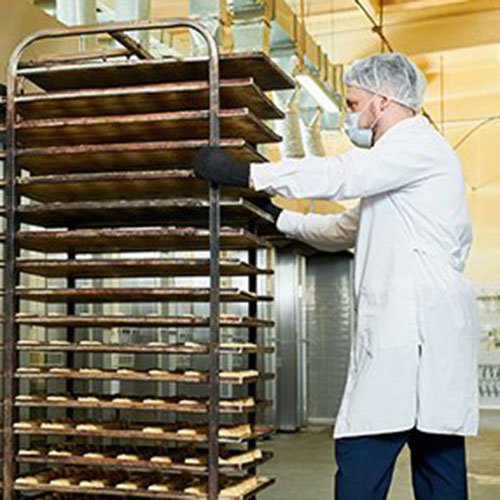
Commercial bakery racks are essential equipment for bakeries, food production facilities, grocery bakeries, cafés, commissary kitchens, and high-volume baking operations. From dough preparation and proofing to cooling, storage, transport, display, and packaging, bakery racks help keep products organized and moving efficiently throughout the production process. The right rack design can improve workflow, protect baked goods, maximize floor space, and support a cleaner, more productive bakery environment.
In commercial baking, timing and organization matter. Trays, pans, dough products, breads, pastries, cookies, rolls, and packaged goods must move from one stage to the next without creating bottlenecks. If racks are too small, difficult to move, poorly spaced, or not built around the bakery’s tray sizes, employees may spend extra time handling products, rearranging pans, searching for available storage, or moving items inefficiently between work areas.
Custom commercial bakery racks help solve these problems by giving bakeries equipment that is designed around their space, production volume, pan sizes, sanitation needs, and workflow. Instead of relying on standard racks that may not fit the operation, custom racks can be built for cooling, proofing, storage, transport, display, and other bakery-specific applications.
Why Commercial Bakery Racks Matter
Bakery racks do more than hold trays. They support the movement and organization of baked goods throughout the entire production cycle. In a busy commercial bakery, products may need to move from mixing and forming areas to proofing, from proofing to baking, from baking to cooling, and from cooling to packaging or display. Each step requires careful handling to maintain product quality and prevent delays.
Commercial bakery racks can support:
- Cooling baked goods after oven removal
- Proofing dough before baking
- Storing sheet pans, trays, and bakery products
- Transporting products between work areas
- Organizing baked goods before packaging
- Improving airflow around trays and pans
- Reducing clutter on worktables and counters
- Supporting retail or front-of-house product display
When bakery racks are designed properly, they can improve production flow and help employees move products more safely and efficiently.
Commercial Bakery Racks vs. Standard Storage Racks
Standard storage racks may work for general inventory, but commercial bakeries need racks designed for the specific demands of food production. Bakery racks may need to hold sheet pans, trays, proofing boards, cooling products, bread baskets, packaged goods, or display items. They also need to withstand frequent movement, cleaning, loading, unloading, and exposure to heat, humidity, flour, oils, and food residue.
Custom commercial bakery racks are built around the actual bakery environment. Rack height, spacing, caster selection, shelf design, material, finish, and load capacity can all be adjusted to match the operation. This makes the equipment more useful and helps reduce the limitations of standard racks.
A custom bakery rack can be designed to fit:
- Specific sheet pan or tray sizes
- Cooling, proofing, or storage requirements
- Available floor space and aisle width
- Oven, workstation, or packaging line layout
- Employee loading and unloading needs
- Cleaning and sanitation requirements
- Retail display or product presentation goals
Bakery Racks for Cooling
Cooling is one of the most important applications for commercial bakery racks. After products come out of the oven, they need proper airflow to cool evenly and maintain quality. Poor cooling can affect texture, moisture, packaging readiness, and product consistency.
Open rack designs allow air to circulate around trays, pans, and baked goods. This can help reduce moisture buildup and support more consistent cooling across batches. Proper spacing between trays also helps prevent products from being stacked too tightly while they are still warm.
Cooling racks may be used for:
- Bread and rolls
- Cookies and pastries
- Cakes and baked desserts
- Sheet pan products
- Packaged bakery items awaiting shipment
Custom rack spacing is especially important for bakeries that use specific pans, oversized trays, or products that require extra clearance.
Bakery Racks for Proofing
Proofing requires careful organization and consistent handling. Dough products need room to rise without being disturbed, crowded, or exposed to poor airflow. Commercial bakery racks used for proofing should provide reliable tray spacing, easy movement, and compatibility with the bakery’s proofing process.
Custom proofing racks can be designed around tray dimensions, dough product height, loading methods, and available proofing space. Depending on the application, racks may need to move in and out of proofing areas, remain stationary during production, or hold specific product quantities for batch consistency.
For bakeries that rely on high-volume dough production, the right rack design can help improve organization and reduce product handling between proofing and baking.
Bakery Storage Racks for Production Efficiency
Bakery storage racks help keep products, pans, trays, and supplies organized. In a commercial bakery, work areas can quickly become crowded if trays are stacked on tables, stored in walkways, or placed wherever space is available. Mobile bakery storage racks help reduce clutter and make better use of vertical space.
Bakery storage racks can be used to organize:
- Clean sheet pans and trays
- Prepared dough products
- Baked goods awaiting packaging
- Packaged bakery products
- Retail-ready breads and pastries
- Production supplies and containers
For bakeries that need rack systems built around trays and pans, Salco can design custom sheet pan racks for commercial bakery workflows, storage needs, and production layouts.
Bakery Racks for Transport
Many bakery racks are mobile because baked goods and trays need to move throughout the facility. A rack may travel from a prep area to a proofing room, from an oven area to cooling, from cooling to packaging, or from production to retail display. Smooth movement is essential for both productivity and product protection.
Casters play a major role in bakery rack performance. The right caster system can make racks easier to push, steer, lock in place, and move across the facility. Caster selection should account for rack load, floor conditions, travel distance, turning radius, and whether the rack needs to remain stationary during loading or unloading.
Transport-focused bakery rack features may include:
- Heavy-duty caster packages
- Locking swivel casters
- Ergonomic push handles
- Reinforced frames
- Tray stops or retaining features
- Rounded or protected edges
- Custom rack widths for aisle clearance
When racks are easier to move and control, employees can transport baked goods more safely while reducing the risk of product damage.
Commercial Bakers Racks for Trays and Pans
Commercial bakers racks are often designed to hold trays, pans, and bakery products in an organized vertical layout. These racks can help bakeries increase capacity without taking up unnecessary floor space. They are useful in both small bakeries and larger industrial food production facilities.
A custom bakers rack may include tray slides, pan supports, wire shelves, solid shelves, or rack spacing designed for specific products. For facilities that need equipment built around tray, pan, and bakery storage requirements, commercial bakers racks can be designed for production flow, durability, and daily use.
The goal is to keep products organized and accessible while supporting efficient movement through the bakery.
Stainless Steel Bakery Racks and Sanitation
Material selection is an important part of commercial bakery rack design. Bakery equipment must be durable, cleanable, and suitable for frequent use in food production environments. Stainless steel is often a preferred choice because it resists corrosion, supports easier cleaning, and performs well in environments where sanitation is important.
Stainless steel bakery racks can be useful in areas exposed to moisture, cleaning chemicals, humidity, food residue, or washdown processes. Smooth surfaces and open designs can help reduce areas where debris collects. For bakeries that prioritize cleanability and long-term durability, stainless steel bakery equipment can support sanitation and production efficiency.
Other material and finish options may also be appropriate depending on the application. Powder-coated steel, plated steel, or other finishes may be used in certain environments where appearance, durability, or cost efficiency are priorities. The right choice depends on cleaning frequency, product contact, moisture exposure, and expected service life.
Design Features That Improve Bakery Rack Performance
Custom commercial bakery racks can include features that make daily operations easier and more efficient. These details may seem small, but they can affect product handling, employee safety, cleaning, and overall workflow.
Custom Tray Spacing
Tray spacing should match the products being handled. Tight spacing may maximize capacity, but some products need additional clearance for cooling, proofing, or safe handling. Custom spacing helps balance storage density with practical access.
Rack Height and Width
Rack dimensions should fit the bakery layout. Racks that are too tall may be difficult to load safely. Racks that are too wide may be hard to move through aisles or around equipment. Custom sizing allows racks to match the available space.
Reinforced Frames
Commercial bakery racks are loaded, moved, cleaned, and used repeatedly. Reinforced frames help the rack withstand daily production demands while supporting trays, pans, and products safely.
Tray Stops and Retainers
Tray stops help prevent pans from sliding out during movement. This is especially useful for mobile racks that travel between work areas or through tight spaces.
Open Construction
Open rack construction supports airflow, visibility, and easier cleaning. This is helpful for cooling, drying, storage, and general bakery organization.
Mobile or Stationary Designs
Some bakery racks need casters for transport, while others are better suited as stationary storage or display units. Custom design allows the rack to match its role in the bakery.
Retail Bakery Display Racks
Some commercial bakeries need racks that support both production and presentation. Retail bakery display racks can be used to showcase breads, pastries, packaged goods, and specialty products in a storefront, grocery bakery, café, or market setting.
Display racks must be durable and functional, but they also need to support product visibility. Custom wire and steel designs can help create attractive displays while still holding up to daily use. Salco’s bread racks and wire product displays can be designed for commercial and retail environments where appearance and function both matter.
Industries and Facilities That Use Commercial Bakery Racks
Commercial bakery racks are used in a wide range of food production environments. Each facility may have different production volumes, products, cleaning procedures, and storage needs.
Common users include:
- Commercial bakeries
- Wholesale bakeries
- Industrial food production facilities
- Grocery store bakeries
- Restaurants and cafés
- Commissary kitchens
- Institutional kitchens
- Specialty bread and pastry producers
- Food packaging operations
- Retail bakery storefronts
Whether a facility needs racks for high-volume production or a smaller bakery needs better storage and transport, custom design can help the equipment fit the operation.
Choosing the Right Commercial Bakery Rack
Selecting the right bakery rack starts with understanding how it will be used. A rack for cooling may require different spacing than a rack for storage. A rack used near washdown areas may require different material than a display rack. A rack moved throughout the day may need a different caster package than one that stays in place.
Important questions to consider include:
- What tray or pan sizes will the rack hold?
- Will the rack be used for cooling, proofing, storage, transport, or display?
- How much clearance is needed between trays?
- Will the rack be moved frequently?
- What type of floor surface will the rack travel across?
- Does the rack need locking casters?
- Will the rack be exposed to moisture, cleaning chemicals, or washdown?
- Does the rack need to fit inside a specific room, cooler, proofing area, or production line?
- Are there sanitation or cleanability requirements?
- Is the rack intended for back-of-house production or retail display?
Answering these questions helps determine the best rack size, material, finish, spacing, caster system, and custom features.
Custom Commercial Bakery Racks from Salco Engineering
Commercial bakery racks are important tools for improving cooling, proofing, storage, transport, display, and production efficiency. The right rack design can help bakeries keep products organized, improve airflow, reduce clutter, support sanitation, protect baked goods, and create a smoother production workflow.
Salco Engineering & Manufacturing designs and fabricates custom bakery racks for commercial bakeries, food production facilities, grocery bakeries, cafés, commissary kitchens, and retail bakery environments. Whether your facility needs sheet pan racks, cooling racks, proofing racks, bakery storage racks, bread display racks, or custom stainless steel bakery equipment, Salco can develop a solution around your products, equipment, and facility layout.
To discuss custom commercial bakery racks for your operation, contact Salco Engineering today.