


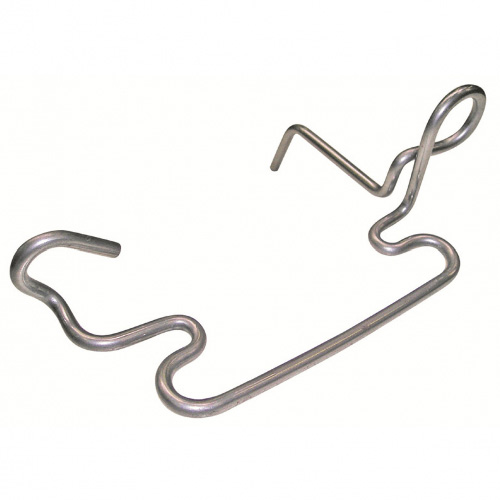
Custom wire forming plays an important role in modern manufacturing, providing precise, durable, and versatile components for a wide range of industrial applications. From simple brackets and retaining clips to complex wire baskets, racks, and material handling assemblies, custom wire forms help manufacturers solve challenges involving part protection, storage, transportation, and production efficiency.
Unlike standard, off-the-shelf components, custom wire forming allows manufacturers to develop products around specific dimensions, operating conditions, and performance requirements. Through advanced CNC wire bending technology, wire can be shaped into repeatable configurations that meet the demands of automotive, aerospace, medical, food processing, warehousing, and other industrial environments.
At Salco Engineering & Manufacturing, our custom wire forming services combine precision CNC technology with decades of steel fabrication experience. Whether a project requires individual wire components, specialized industrial fixtures, or wire formed parts incorporated into larger assemblies, our team develops solutions designed for practical, long-term performance.
What Is Custom Wire Forming?
Custom wire forming is a manufacturing process that shapes metal wire into specific bends, angles, curves, and three-dimensional configurations. Depending on the application, a finished wire form may serve as an individual component or become part of a larger welded or fabricated assembly.
Wire forms can be relatively simple, such as hooks, handles, clips, and support brackets, or more complex structures with multiple bends, precise dimensions, and specialized mounting features. The manufacturing process can involve CNC wire bending, cutting, welding, and finishing to create a component that meets the customer’s design requirements.
One of the primary advantages of custom wire forming is the ability to create functional components without relying exclusively on stamped sheet metal, machined parts, or heavier fabricated structures. Properly designed wire forms can provide the required support, containment, or positioning while minimizing unnecessary material.
Modern wire form manufacturing also makes it possible to produce consistent parts across repeated production runs. CNC equipment precisely controls the bending process, helping manufacturers achieve reliable dimensions and reducing variation between components.
How Custom Wire Form Manufacturing Works
Developing a successful custom wire form involves more than bending metal into a specific shape. Material selection, dimensional accuracy, product function, and manufacturing efficiency must all be considered before production begins.
Understanding the Application and Design Requirements
The first step in any custom wire forming project is understanding how the finished component will be used. A wire form designed to support automotive parts during transportation has different requirements than a stainless steel rack intended for food processing equipment.
Important considerations include the size and weight of the components being handled, required clearances, exposure to heat or moisture, frequency of use, and whether the finished wire form will be incorporated into an automated production system.
For example, a custom wire divider used inside an industrial parts basket must provide enough separation to prevent components from contacting one another. At the same time, its geometry must allow employees or automated handling equipment to load and remove parts efficiently.
Identifying these requirements early helps establish the appropriate wire diameter, material, shape, and overall design.
CNC Wire Bending and Precision Forming
CNC wire bending has transformed the manufacturing of complex wire components by allowing operators to program precise bending sequences and produce consistent shapes efficiently.
At Salco, our Numalliance FTX10 3D CNC wire bending machine provides the flexibility needed to manufacture both straightforward wire components and intricate three-dimensional designs. The equipment accommodates wire diameters ranging from 0.1205 inches to 0.625 inches, supporting applications that require different levels of strength, rigidity, and dimensional complexity.
Using computer-controlled bending technology, manufacturers can produce parts with multiple bend angles, radii, and directional changes. The repeatability of this process is particularly beneficial for components that must fit consistently within larger assemblies or be produced in quantities for ongoing manufacturing operations.
CNC wire forming can also reduce the need for multiple manual forming operations. Depending on the component design, this can simplify production, improve consistency, and reduce material handling between manufacturing steps.
Prototyping and Design Refinement
Before moving into full production, many custom wire forming projects benefit from prototyping and design verification. Physical samples allow manufacturers to evaluate whether a wire form fits correctly, supports the intended load, and interacts properly with surrounding equipment.
Salco uses SolidWorks design software and advanced design and prototyping capabilities to support product development. These tools help our team evaluate configurations, refine dimensions, and identify potential issues before committing to production.
For example, an initial wire form design may require adjustments to improve part accessibility, eliminate interference with other components, or simplify the manufacturing process. Addressing these concerns during development can reduce unnecessary revisions and improve the performance of the finished product.
Welding, Finishing, and Final Production
Some wire formed components are ready for use immediately after bending and cutting, while others require additional fabrication. Welding may be necessary to connect individual wire forms into baskets, frames, guards, racks, or other assemblies.
Depending on the application, finishing processes such as powder coating, zinc plating, nylon coating, or electropolishing may also be considered. These treatments can improve corrosion resistance, appearance, cleanability, or protection of the parts being handled.
Dimensional inspection and quality checks help verify that finished components meet the required specifications. Once a design is approved, CNC wire forming supports repeat production of consistent components for industrial use.
Industrial Applications of Custom Wire Forming
Custom wire forms are used throughout manufacturing and material handling operations. Their adaptability makes them useful wherever a product must be supported, positioned, secured, separated, or transported.
Automotive Manufacturing and Parts Handling
Automotive manufacturers rely on specialized material handling equipment to move components between production stations, assembly lines, storage areas, and shipping departments.
Wire formed products can include component support frames, retaining features, basket dividers, handles, and protective inserts. These components help keep parts organized while reducing movement and potential damage during handling.
One particularly valuable application involves custom dunnage inserts designed to separate automotive components within reusable containers. Precision wire forming allows these inserts to follow part-specific dimensions, providing stable positioning while allowing efficient loading and unloading.
Custom wire forms can also be integrated into carts and fixtures used for line-side delivery, helping operators access components in a consistent and organized arrangement.
Aerospace and Precision Component Manufacturing
Aerospace manufacturing environments frequently handle components with demanding dimensional, surface protection, and traceability requirements. Custom wire forms can support specialized storage, transportation, and processing equipment designed around these needs.
Applications include component holders, protective racks, wire baskets, and positioning fixtures used during manufacturing or inspection processes. Carefully designed wire supports can help minimize unnecessary contact with sensitive surfaces while keeping parts organized and accessible.
The ability to customize wire diameter, geometry, and material allows manufacturers to develop solutions based on the specific dimensions and handling requirements of aerospace components. Where additional performance or regulatory requirements apply, materials and finished assemblies must be evaluated against the relevant specifications.
Food Processing and Commercial Bakery Operations
Food manufacturing facilities often require equipment that can withstand frequent cleaning, moisture, and repeated handling. Stainless steel wire forms are commonly considered for these applications because of their corrosion resistance and suitability for appropriately designed, cleanable equipment.
Wire forming can be used to manufacture shelving supports, basket frames, dividers, tray supports, and other components used in food processing and storage operations. Open-wire configurations can improve visibility, drainage, and air circulation where these characteristics are beneficial.
Commercial bakeries also rely on wire formed components in bakery racks and product handling equipment. Custom wire supports and rack features can help accommodate specific tray dimensions, improve organization, and support efficient movement throughout the production process.
Medical, Pharmaceutical, and Laboratory Applications
Medical and pharmaceutical facilities require specialized equipment that supports organized handling, accessibility, and appropriate cleaning procedures. Custom wire forming provides flexibility when designing baskets, racks, and component holders for these environments.
Wire forms may be used to create dividers for medical supply baskets, storage supports for laboratory equipment, and specialized racks for handling containers or instruments.
Stainless steel is frequently considered for these applications because of its durability and cleanable surface. However, material grade, weld design, surface finish, and compatibility with required cleaning or sterilization procedures must be evaluated for each application.
A custom-designed wire structure can also provide the spacing and accessibility needed to organize equipment without creating unnecessarily bulky storage systems.
Warehousing, Logistics, and Industrial Material Handling
Warehouses and manufacturing facilities depend on efficient movement of materials between workstations, storage areas, and shipping departments. Custom wire forming supports this workflow by providing structural and organizational features for a variety of material handling products.
Wire formed components can be incorporated into industrial carts and trolleys to create retaining rails, basket supports, dividers, handles, and specialized containment features.
These designs are especially useful for facilities handling components with unusual shapes or dimensions. Rather than forcing products into standard storage configurations, a custom wire form can be developed around the actual items being transported.
Wire formed supports can also improve accessibility in order picking and work-in-process operations by keeping frequently used components visible and properly positioned.
Industrial Wire Baskets and Processing Equipment
Wire forming is an essential part of many custom industrial wire baskets used for parts washing, manufacturing, heat treating, and general material handling.
A wire basket may require specialized handles, dividers, support rods, or positioning features to accommodate components during a particular process. Custom wire forming allows these features to be designed around the dimensions and operating requirements of the parts being handled.
For example, baskets used in parts washing may benefit from open-wire construction that allows cleaning solutions to circulate and drain. Components used in heat-related processes require careful consideration of material properties, operating temperatures, and the loads placed on the finished assembly.
Combining custom wire forms with other fabricated steel components allows manufacturers to create complete equipment solutions designed around a specific production environment.
Benefits of Custom Wire Forming for Industrial Manufacturing
Consistent Precision and Repeatability
One of the most significant benefits of CNC wire forming is consistent production quality. Once a component has been programmed and its manufacturing process established, CNC technology can reproduce the same bending sequence across repeated parts.
This consistency helps maintain dimensional accuracy, particularly when wire forms must fit within existing equipment or larger assemblies. Repeatable manufacturing can also reduce the amount of adjustment required during installation and assembly.
Greater Design Flexibility
Traditional manufacturing methods are not always the most practical option for components with irregular shapes, complex bends, or specialized positioning requirements.
Custom wire forming provides flexibility to create brackets, supports, guards, and frames that follow the geometry of a particular part or product. These designs can incorporate multiple functional features into a single formed component, potentially reducing the number of separate pieces required.
This versatility is especially beneficial for industrial applications that cannot be adequately served by standard components.
Efficient Material Utilization
Wire formed components can provide effective support and containment without requiring large amounts of solid material. In applications where an open structure is appropriate, wire construction may reduce overall weight while maintaining the necessary functionality.
Lighter components can be easier to handle and may reduce unnecessary weight within larger material handling assemblies. However, appropriate wire diameter, material strength, and structural geometry must be selected to satisfy the intended loading conditions.
Reduced Manufacturing Complexity
CNC wire bending can simplify the production of components that would otherwise require several manual bending or fabrication operations.
A carefully engineered design may combine multiple bends and functional features into one continuous wire form. This can reduce assembly steps, simplify manufacturing, and improve consistency.
The potential cost savings depend on part geometry, production quantity, material requirements, tooling, and finishing operations. Evaluating these factors during design can help manufacturers develop more economical solutions.
Long-Term Durability
Industrial wire forms must often withstand repeated handling, vibration, cleaning, and exposure to demanding operating conditions.
Stainless steel and carbon steel wire offer different combinations of strength, corrosion resistance, and cost. When paired with suitable geometry and finishing methods, these materials can provide dependable performance in applications ranging from equipment support to heavy-duty material handling.
Custom fabrication also allows components to be reinforced or redesigned around known wear points, improving suitability for their intended operating environment.
Choosing the Right Materials and Design for Custom Wire Forms
The success of a wire formed component depends on selecting the proper combination of material, dimensions, geometry, and finish. Each of these decisions affects manufacturing feasibility and long-term performance.
Stainless Steel vs. Carbon Steel Wire
Stainless steel is often preferred in applications involving moisture, frequent cleaning, or exposure to corrosive conditions. It is commonly used in food processing, medical equipment, and other environments where corrosion resistance and cleanability are important.
Carbon steel is a practical option for many general manufacturing and industrial applications. It provides strength and can be paired with appropriate protective finishes when additional surface protection is necessary.
Selecting between these materials requires consideration of environmental exposure, expected loads, cleaning procedures, fabrication requirements, and overall project cost.
Wire Diameter and Structural Strength
Wire diameter directly influences the stiffness, strength, weight, and forming requirements of a finished component. Larger-diameter wire may be necessary for heavily loaded applications, while smaller wire can provide flexibility for lightweight supports or more detailed geometries.
However, diameter alone does not determine performance. The material grade, bend locations, unsupported spans, and way a load is applied all influence how a wire form behaves.
A successful design balances structural requirements with manufacturing efficiency and the available space within the final assembly.
Bend Geometry and Dimensional Requirements
Bend angles, bend radii, overall dimensions, and the spacing between features must be evaluated carefully during the design process.
Tight bends and complex configurations may introduce manufacturing limitations depending on wire diameter and material properties. Designers must also account for springback, the tendency of metal to partially return toward its original shape after bending.
By considering these factors during development, manufacturers can create components that are easier to produce consistently while maintaining the required fit and function.
Surface Finishes and Corrosion Protection
A wire form’s surface finish can affect its service life, appearance, cleanability, and interaction with other components.
Powder coating may be appropriate for industrial components requiring a durable colored finish, while zinc plating can provide corrosion protection for suitable carbon steel applications. Nylon coatings may be considered when cushioning or additional surface protection is important.
For certain stainless steel applications, electropolishing may improve surface smoothness and cleanability. The appropriate treatment depends on the material, operating environment, and performance requirements of the finished part.
Common Design Considerations That Improve Wire Form Performance
Effective custom wire forming begins with understanding how the component will interact with surrounding equipment and the people who use it. Several practical considerations can make the difference between a functional design and one that requires frequent adjustments.
Designing for Assembly and Installation
Wire forms that must connect to other components should account for mounting locations, clearances, and installation procedures. A part that appears correct in isolation may be difficult to install if surrounding equipment restricts access.
Reviewing these details during the design phase can reduce assembly complications and help ensure that the final component integrates properly into the larger product.
Minimizing Unnecessary Bends and Fabrication Steps
Although CNC equipment can produce complex configurations, additional bends do not always improve performance. In some cases, a simplified wire form can perform the same function with fewer manufacturing operations.
Reducing unnecessary complexity may improve production efficiency, simplify inspection, and make the finished component easier to reproduce.
The objective is not necessarily to create the simplest possible shape, but to develop the most practical design for the application’s requirements.
Accounting for Repeated Handling and Wear
Wire forms used in carts, baskets, and industrial fixtures may experience repeated contact with other components. Over time, vibration, impact, abrasion, or improper loading can contribute to wear.
Designers should consider contact points, loading direction, operating frequency, and the possibility of component movement. Appropriate wire geometry, materials, and surface treatments can help improve durability under these conditions.
Planning for Cleaning and Maintenance
In food processing, pharmaceutical, and similar environments, equipment design must account for regular cleaning and maintenance.
Open-wire configurations may provide better access to certain surfaces and reduce areas where debris can accumulate. However, welds, intersections, coating condition, and overall assembly geometry should still be evaluated to ensure that the finished component can be cleaned using the facility’s required procedures.
Designing for maintenance from the beginning helps support long-term equipment usability.
When Should Manufacturers Consider Custom Wire Forming?
Custom wire forming is worth considering when standard components cannot provide the required combination of fit, function, durability, or manufacturing efficiency.
For example, a manufacturer may need a specialized wire bracket that fits within a compact equipment enclosure, a retaining feature that secures an unusual component, or a set of precisely positioned supports inside a material handling basket.
Other applications may require wire formed components that fit existing automated equipment, protect sensitive surfaces, or accommodate frequent product changes.
Custom wire form manufacturing is also useful when companies need consistent replacement parts or repeatable components for ongoing production. Once the design and manufacturing process are established, additional components can be produced to the approved specifications.
The most effective solutions begin with a clear understanding of the intended application rather than simply replicating an existing part. Reviewing how the product will be handled, loaded, installed, and maintained can reveal opportunities to improve its overall design.
Why Work with Salco Engineering for Custom Wire Forming?
Selecting the right wire forming manufacturer involves evaluating more than equipment capabilities. Experience with material selection, industrial design, fabrication, and production requirements is equally important.
With more than 60 years of manufacturing experience, Salco Engineering & Manufacturing understands the practical challenges involved in developing industrial wire products. Our work extends beyond standalone wire formed components to include custom baskets, carts, racks, dunnage systems, and specialized material handling equipment.
This broader fabrication experience allows our team to consider how an individual wire form contributes to the performance of an entire product or assembly.
Our Numalliance FTX10 3D CNC wire bending equipment provides the precision and flexibility needed to manufacture a wide variety of wire components. Combined with our design capabilities and steel fabrication experience, this technology allows us to support projects ranging from individual custom parts to integrated industrial assemblies.
Whether customers have detailed engineering drawings, an existing sample, or an application that requires a new design, Salco can help evaluate the requirements and develop a practical manufacturing solution.
Request a Quote for Custom Wire Forming Services
Custom wire forming provides manufacturers with the flexibility to develop components that meet specific operational challenges while supporting consistent quality and efficient production.
From automotive parts handling and aerospace manufacturing to medical equipment, food processing, and industrial storage, precision wire forms contribute to stronger, more functional, and more reliable products.
Salco Engineering & Manufacturing combines advanced CNC wire bending technology with experienced design and fabrication capabilities to develop custom wire solutions for demanding industrial applications.
If your company needs custom wire forms, precision wire bending, or components for a larger fabricated assembly, request a quote from Salco Engineering to discuss your project. Our team can review your drawings, samples, material requirements, and intended application to help determine an appropriate manufacturing approach.