


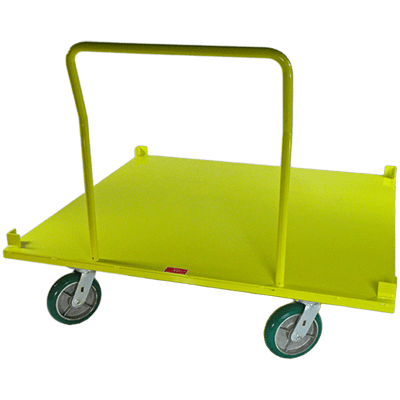
Heavy duty pallet carts and pallet trolleys are essential material handling tools for manufacturing plants, warehouses, distribution centers, shipping departments, receiving areas, and industrial facilities that need to move heavy or bulky loads efficiently. In demanding environments, the movement of palletized materials, containers, parts, tools, and work-in-process inventory can have a major impact on productivity, safety, and overall facility flow.
When products or materials are difficult to move, employees may spend too much time waiting for forklifts, making repeated trips, manually handling heavy items, or working around congestion in busy aisles. A well-designed pallet cart helps solve these problems by giving teams a durable, mobile, and organized way to transport loads between departments, workstations, staging areas, and shipping zones.
Unlike basic carts or light-duty warehouse equipment, heavy duty pallet carts are built to support substantial loads, frequent movement, and daily industrial use. They can be designed with reinforced steel frames, durable caster systems, pallet-sized platforms, tow bars, handles, containment features, brakes, and other custom options. For facilities that rely on repeatable material flow, custom pallet carts and trolleys can improve efficiency while reducing unnecessary handling.
What Are Heavy Duty Pallet Carts?
Heavy duty pallet carts are mobile material handling carts designed to move palletized goods, bulk materials, containers, parts, or heavy products across manufacturing and warehouse environments. They are commonly used where loads need to move shorter distances without relying on a forklift for every transfer.
A pallet cart may be pushed manually, pulled by an operator, or designed for towing depending on the size of the cart, load weight, travel distance, and facility layout. Some carts are built as flat pallet platforms, while others may include rails, sides, shelves, corner posts, cradles, or custom fixtures to hold specific products or containers.
The terms pallet cart, pallet trolley, pallet dolly, pallet transport cart, and heavy duty pallet cart are often used to describe similar types of equipment. The exact design depends on the application. A warehouse may need a cart for moving palletized inventory from receiving to storage, while a manufacturing facility may need a custom pallet trolley for moving parts between production cells.
Why Pallet Carts Matter in Manufacturing and Warehousing
Material movement is one of the most important parts of any industrial operation. Even when production equipment, storage systems, and order fulfillment processes are well planned, inefficient movement between steps can create bottlenecks. Pallet carts help improve this movement by giving employees a practical way to transport loads safely and consistently.
Heavy duty pallet carts can support:
- Movement of palletized goods between departments
- Transport of heavy parts and industrial components
- Staging materials near production lines
- Shipping and receiving operations
- Warehouse replenishment and storage support
- Work-in-process movement between manufacturing steps
- Short-distance transport where forklifts are inefficient
- Movement of bins, totes, containers, and bulk materials
- Safer handling of loads that are too heavy or awkward to carry manually
For facilities that need application-specific equipment, Salco designs custom pallet carts and trolleys around the load, process, and facility layout.
Heavy Duty Pallet Carts vs. Standard Warehouse Carts
Standard warehouse carts may be useful for boxes, tools, small parts, or general supplies, but they are often not suitable for heavier palletized loads. A cart that is undersized or not properly reinforced can become difficult to move, unstable under load, or unable to withstand daily use in an industrial environment.
Heavy duty pallet carts are built with load capacity, stability, and durability in mind. They may include stronger frames, heavier tubing, reinforced platforms, upgraded caster plates, larger wheels, tow-ready designs, and other structural features that support demanding material handling applications.
For heavy industrial use, cart design should account for:
- Total load weight
- Load dimensions
- Load distribution
- Floor conditions
- Travel distance
- Turning radius
- Manual movement or towing requirements
- Braking and locking needs
- Operator safety and ergonomics
Facilities that handle dense parts, large containers, tooling, or repeated heavy loads may also benefit from purpose-built heavy duty industrial carts designed for maximum load capacity and dependable daily use.
Pallet Carts in Manufacturing Applications
Manufacturing facilities use pallet carts to move materials, parts, and components through different stages of production. These carts help keep operations moving by reducing delays between receiving, storage, machining, assembly, inspection, packaging, and shipping.
Line-Side Material Delivery
Production lines need materials delivered at the right time and in the right quantity. Heavy duty pallet carts can be used to stage components near assembly areas, workstations, or production cells. This keeps materials accessible without overcrowding the work area.
Line-side pallet carts may be designed around specific containers, pallets, bins, or part families. By matching the cart to the production process, manufacturers can improve organization and reduce the time employees spend searching for or moving materials.
Work-in-Process Transport
Many manufacturing operations require parts to move through several process steps before final assembly or shipment. A pallet cart can support work-in-process transport by keeping parts grouped, organized, and mobile between departments.
For example, a cart may move components from fabrication to welding, from machining to washing, from inspection to packaging, or from assembly to staging. When the cart is designed for the parts being handled, it can reduce rehandling and help maintain better process flow.
Heavy Parts and Component Handling
Manufacturers often handle parts that are too heavy, bulky, or awkward for manual movement. Heavy duty pallet carts can be designed with reinforced structures and caster systems capable of supporting these loads.
Depending on the application, carts may include side rails, custom supports, dunnage, cradles, stops, or containment features to help keep parts stable during movement. This is especially useful for automotive, aerospace, metal fabrication, industrial equipment, and component manufacturing operations.
Tooling and Fixture Transport
Manufacturing facilities also use pallet carts to move tooling, fixtures, dies, jigs, and maintenance equipment. These items are often heavy and valuable, so cart stability and product protection are important.
A custom pallet trolley can be designed with a specific platform size, reinforced frame, or retaining features to help employees move tooling safely between storage areas, machines, and workstations.
Pallet Carts in Warehouse Applications
In warehousing and distribution, pallet carts help move goods from receiving to storage, from storage to staging, and from staging to shipping. They can be especially useful for short-distance movement where using a forklift may be unnecessary or inefficient.
Shipping and Receiving
Shipping and receiving areas often involve constant movement of products, pallets, containers, and packaged goods. Heavy duty pallet carts can help employees move loads between dock areas, inspection points, staging zones, and warehouse aisles.
In busy dock environments, pallet carts can reduce congestion by allowing smaller movements to happen without waiting for forklift availability. This can help improve turnaround time and keep materials moving during peak periods.
Warehouse Staging
Staging is an important part of warehouse operations. Products may need to be organized before storage, shipment, inspection, assembly, or order fulfillment. Pallet carts provide a mobile staging solution that can be moved as workflow changes.
Instead of placing materials directly on the floor or moving pallets repeatedly, facilities can stage products on carts that are easier to reposition. This supports cleaner organization and faster movement when materials are ready for the next step.
Inventory Replenishment
Pallet carts can also support replenishment by moving bulk inventory from storage areas to picking locations, production areas, or packing departments. A cart designed around the size and weight of the materials being replenished can help employees move products more efficiently.
For facilities with narrow aisles or limited maneuvering space, pallet carts can be designed with specific dimensions and caster configurations to support better movement through the warehouse.
Order Fulfillment Support
While pallet carts are often associated with heavy loads, they can also help with fulfillment operations that involve larger orders, bulk products, or grouped shipments. A cart may be used to move products from picking areas to packing stations or from packing to shipping.
When paired with other warehouse carts, pallet carts help create a more flexible material handling system for different load sizes and workflows.
Custom Pallet Trolleys for Industrial Facilities
Custom pallet trolleys are valuable when standard carts do not fit the load, facility layout, or handling process. In industrial environments, the cart must be designed around real operating conditions rather than generic assumptions.
Salco’s custom steel pallet trolleys can be built for manufacturing plants, warehouses, distribution centers, logistics operations, and other facilities that need durable material handling solutions.
Custom pallet trolley design may include:
- Specific platform dimensions
- Heavy-duty welded steel frames
- Reinforced load-bearing areas
- Custom caster layouts
- Push handles or pull handles
- Tow bars or hitch systems
- Brakes or locking casters
- Side rails, corner posts, or containment lips
- Custom dunnage or part supports
- Powder-coated, plated, or stainless steel finishes
These features help ensure the cart fits the load, supports the workflow, and performs reliably over time.
Key Design Features of Heavy Duty Pallet Carts
The best pallet cart design depends on the facility and application. A cart used for palletized shipping goods may need different features than a cart used for machined parts, tooling, or work-in-process transport.
Reinforced Steel Construction
Heavy duty pallet carts need strong construction to support repeated loading and transport. Steel is commonly used because it provides strength, durability, and fabrication flexibility. Reinforced frames, cross members, welded joints, and heavy-duty platforms can help the cart withstand daily use.
High Load Capacity
Load capacity should be one of the first design considerations. The cart must be built to support the heaviest expected load while maintaining stability and maneuverability. Load distribution is also important. A concentrated load may require additional reinforcement in specific areas of the platform.
Durable Caster Systems
Casters and wheels affect how the cart moves, turns, and handles under load. A heavy duty pallet cart may require larger wheels, higher-capacity casters, swivel and rigid caster combinations, brakes, or directional locks depending on the facility.
Caster selection should consider:
- Total cart weight when loaded
- Floor condition
- Travel distance
- Turning requirements
- Manual pushing or towing
- Noise and vibration control
- Need for brakes or locks
Push, Pull, or Tow Options
Some pallet carts are pushed manually, while others are pulled or towed. The right option depends on load weight, travel distance, facility layout, and how frequently the cart moves.
For longer travel distances or heavier loads, towable pallet carts may improve efficiency. For shorter movements or tighter work areas, push handles and properly selected casters may be more practical.
Containment and Stability Features
Loads can shift during movement, especially when carts travel around corners, over uneven floors, or through busy warehouse areas. Containment features help keep materials secure.
Common containment options include:
- Raised platform edges
- Side rails
- Corner posts
- Removable retaining bars
- Custom fixtures
- Part-specific supports
- Non-marring surfaces when required
Ergonomic Handling
Even a strong cart can create problems if it is difficult to use. Handle height, pushing force, cart width, turning radius, and loading height all affect employee comfort and safety. Ergonomic design can help reduce strain and make carts easier to move during repeated daily use.
Benefits of Heavy Duty Pallet Carts
Improved Material Flow
Pallet carts help move materials between departments, workstations, storage areas, and shipping zones more efficiently. This improves overall facility flow and reduces delays caused by waiting for equipment or manually moving materials in smaller quantities.
Reduced Forklift Dependence
Forklifts are important for many material handling tasks, but they are not always the best option for every movement. Heavy duty pallet carts can reduce short-distance forklift use, helping keep forklifts available for larger lifts while reducing traffic in busy work areas.
Better Workplace Safety
Moving heavy materials by hand can increase the risk of strain, dropped products, and injuries. Pallet carts reduce the need for manual carrying and can be designed with stable frames, proper casters, brakes, and ergonomic handles to support safer movement.
Improved Organization
Pallet carts can keep materials grouped and organized as they move through the facility. This is useful for staging production jobs, grouping shipments, replenishing inventory, or keeping work-in-process materials together between manufacturing steps.
Greater Flexibility
Because pallet carts are mobile, they allow facilities to adjust workflows as needs change. Carts can be repositioned, reassigned, or redesigned for different product lines, departments, or material handling requirements.
Industries That Use Heavy Duty Pallet Carts
Heavy duty pallet carts and pallet trolleys are used across many industries where materials need to be moved safely and efficiently.
Common industries include:
- Manufacturing
- Warehousing and distribution
- Automotive production
- Aerospace manufacturing
- Metal fabrication
- Food processing
- Industrial equipment manufacturing
- Logistics and transportation
- Packaging operations
- Maintenance and repair departments
Each industry may require different cart features. Automotive facilities may need carts for heavy parts or line-side staging. Warehouses may need carts for palletized inventory and dock movement. Fabrication shops may need carts for steel components or tooling. Food production facilities may need carts with materials or finishes that support cleaner handling.
Choosing the Right Pallet Cart or Pallet Trolley
Selecting the right pallet cart starts with understanding the application. Before choosing a standard design or requesting a custom cart, facilities should evaluate how the cart will be used and what it must support.
Important questions include:
- What materials or products will the cart carry?
- What is the maximum load weight?
- How will the weight be distributed across the cart?
- What pallet size, container size, or product dimensions must be supported?
- Will the cart be pushed, pulled, or towed?
- How far will the cart travel during normal use?
- What floor conditions will the cart encounter?
- Does the cart need brakes, locks, rails, or retaining features?
- Will the cart be used in shipping, receiving, production, storage, or staging?
- Does the cart need to fit through specific aisles, doors, or work areas?
- Are there finish, corrosion resistance, or cleanability requirements?
Answering these questions helps determine the cart size, frame design, caster package, handle placement, material, finish, and custom features.
Custom Heavy Duty Pallet Carts from Salco Engineering
Heavy duty pallet carts and pallet trolleys are practical solutions for improving material handling in manufacturing and warehousing environments. The right cart can help reduce unnecessary forklift use, improve staging, support safer movement, protect products, and keep materials flowing between departments.
Salco Engineering & Manufacturing designs and fabricates custom pallet carts, pallet trolleys, industrial carts, and material handling equipment for warehouses, manufacturing plants, distribution centers, automotive facilities, logistics operations, food production facilities, and other industrial environments. Whether your facility needs a simple pallet transport cart or a custom heavy duty pallet trolley designed around a specific load, Salco can build a solution around your workflow.
To discuss custom pallet carts or pallet trolleys for your manufacturing or warehousing operation, contact Salco Engineering today.