


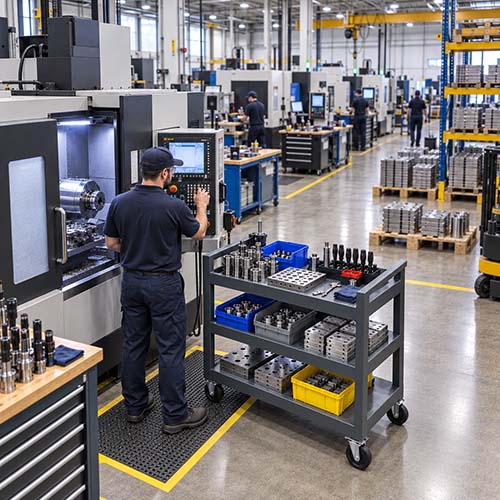
Industrial storage carts help manufacturing plants, warehouses, distribution centers, maintenance departments, and production facilities keep parts, tools, supplies, and work-in-process materials organized and mobile. In many industrial environments, materials are constantly moving between receiving, storage, production, assembly, inspection, packaging, and shipping. When the right items are not easy to find or move, employees lose time searching, carrying, sorting, and waiting for equipment.
A well-designed industrial storage cart solves these challenges by combining storage, organization, and mobility in one piece of equipment. Instead of relying only on fixed shelving, bins, pallets, or worktables, facilities can use mobile carts to bring materials closer to the point of use. This improves workflow, reduces unnecessary walking, supports safer handling, and helps keep production areas cleaner and more efficient.
Unlike standard utility carts, custom industrial storage carts can be built around the specific materials being handled. Parts, tools, bins, totes, trays, fixtures, fasteners, supplies, and work-in-process components may all require different storage layouts. A custom cart can include shelves, drawers, wire baskets, dividers, tool holders, flat platforms, containment rails, handles, heavy-duty casters, and other features that match the facility’s daily needs.
Why Industrial Storage Carts Matter
Storage is not only about where materials are kept. In active manufacturing and warehouse environments, storage also affects how quickly employees can access materials, how safely items can be moved, and how efficiently work flows between process steps. A cart that stores parts in an organized and accessible way can reduce wasted movement and improve productivity throughout the facility.
Industrial storage carts are especially useful because they can move with the work. Tools can be transported to maintenance areas. Components can be staged near assembly lines. Work-in-process materials can move from one department to the next. Supplies can be stored close to packing stations, inspection areas, or production cells. This flexibility makes storage carts valuable in facilities where layouts, product lines, and workflows change over time.
Industrial storage carts can support many daily tasks, including:
- Organizing parts near production lines
- Moving tools between work areas
- Staging work-in-process materials
- Transporting components between departments
- Reducing clutter on workbenches and floors
- Keeping supplies close to the point of use
- Improving access to maintenance items
- Protecting parts during temporary storage
- Supporting kitting and assembly preparation
Storage Carts for Parts Handling
Parts handling is one of the most common uses for industrial storage carts. Manufacturing facilities often need to move components between machining, fabrication, washing, inspection, assembly, finishing, and packaging. If parts are stored loosely or moved in containers that are not designed for the application, they can become damaged, mixed together, misplaced, or difficult to access.
Custom storage carts can be designed around the size, shape, weight, and sensitivity of the parts being handled. Some parts may require open shelves for quick access, while others may need wire baskets, dividers, or individual compartments. Heavy components may require reinforced shelves and stronger frames. Delicate or finished parts may need protective supports or separation features to reduce contact during movement.
When parts are stored and transported in a more organized way, employees can reduce sorting time, improve visibility, and move materials more confidently from one step of the process to the next.
Storage Carts for Tools and Maintenance Supplies
Tools and maintenance supplies can quickly become disorganized in busy industrial facilities. When employees cannot find the right tool, repair part, fixture, or supply, equipment downtime can increase and work slows down. Industrial storage carts help maintenance teams keep essential items organized and mobile.
A tool storage cart may include drawers, shelves, pegboard-style storage, compartments, bins, holders, or secure storage areas. These features help employees organize tools by use, department, machine, or task. Instead of making repeated trips back to a tool room, workers can bring the necessary tools directly to the work area.
Mobile tool carts are especially useful for maintenance departments, repair teams, production support staff, and facilities with large floor plans. By improving access to tools and supplies, storage carts can help reduce downtime and support faster response to maintenance needs.
Storage Carts for Work-in-Process Materials
Work-in-process materials often need to be staged between production steps. Parts may be waiting for inspection, cleaning, assembly, coating, packaging, or shipment. Without a clear storage method, WIP materials can take up valuable floor space, create confusion, or slow down production.
Industrial storage carts provide a mobile and organized way to manage work-in-process materials. Carts can be labeled by job, batch, part number, department, or production stage. They can also be designed to fit specific containers, trays, baskets, or parts. This keeps materials grouped together and easier to move when the next step is ready.
For lean manufacturing environments, WIP storage carts can help reduce clutter and improve visual organization. Employees can see what materials are waiting, where they belong, and how they should move through the facility. This supports better communication between departments and helps keep production flowing.
Custom Features for Industrial Storage Carts
The best industrial storage cart design depends on the application. A cart used for small tools will look very different from a cart used for heavy machined parts or work-in-process assemblies. Custom fabrication allows each cart to be built around the materials, workflow, and facility layout.
Common custom features include:
- Fixed or adjustable shelves
- Heavy-duty steel frames
- Wire baskets or mesh compartments
- Solid shelves for flat storage
- Drawers for tools and small parts
- Dividers for part separation
- Raised shelf lips or containment rails
- Push handles or pull handles
- Label holders or identification areas
- Custom dunnage or part supports
- Locking casters or braking systems
- Powder-coated or stainless steel finishes
These details can make a major difference in how well the cart performs. The goal is not just to create a cart that holds materials, but to create one that improves the way employees access, move, and manage those materials throughout the day.
Load Capacity and Durability
Industrial storage carts must be strong enough for the materials they carry. A cart used for lightweight packaging supplies may not need the same construction as one used for steel parts, tooling, fixtures, or heavy work-in-process components. Load capacity, load distribution, shelf reinforcement, frame strength, and caster selection all need to be considered during the design process.
For heavy-duty applications, facilities may benefit from heavy duty industrial carts designed for maximum load capacity and dependable daily use. These carts can be built with reinforced frames, stronger shelves, upgraded casters, and custom features that support demanding material handling requirements.
Durability is especially important in environments where carts are loaded, unloaded, moved, turned, cleaned, and used repeatedly across multiple shifts. A well-built storage cart can reduce replacement frequency, improve safety, and provide long-term value.
Mobility and Caster Selection
Mobility is one of the biggest advantages of industrial storage carts. However, a cart is only useful if it moves safely and easily. Caster selection should be based on the total load, floor surface, travel distance, turning requirements, noise concerns, and whether the cart needs brakes or directional locks.
A storage cart used in a tight production cell may need a different caster layout than a cart used to move materials across a warehouse. Heavy carts may require larger wheels or higher-capacity casters. Carts used near workstations may need locking casters to stay in place during loading and unloading.
Proper caster selection helps employees move carts with less effort while improving control and stability.
Industries That Use Industrial Storage Carts
Industrial storage carts are used across many industries because they can be customized for a wide range of products and processes.
Common applications include:
- Automotive manufacturing
- Aerospace manufacturing
- Metal fabrication
- Warehousing and distribution
- Food processing
- Medical and laboratory environments
- Electronics manufacturing
- Industrial maintenance departments
- Assembly operations
- Tool rooms and repair areas
Each environment has different requirements. Automotive facilities may need carts for parts and work-in-process materials. Warehouses may need mobile storage for inventory and supplies. Maintenance departments may need tool carts. Food or medical facilities may require stainless steel or easy-clean construction. Custom design allows the cart to match the needs of the facility.
Choosing the Right Industrial Storage Cart
Selecting the right industrial storage cart starts with understanding how it will be used. Before choosing a standard cart or requesting a custom design, facilities should consider the materials, workflow, and environment.
Important questions include:
- What parts, tools, or materials will the cart store?
- What is the maximum load weight?
- How often will the cart be moved?
- Will the cart be used for storage, transport, staging, or all three?
- Does the cart need shelves, baskets, drawers, dividers, or compartments?
- Will parts need to be separated or protected?
- What aisle widths and floor conditions will the cart encounter?
- Does the cart need brakes or locking casters?
- Are there corrosion resistance, sanitation, or finish requirements?
- Does the cart need to integrate with racks, workstations, conveyors, or production equipment?
Answering these questions helps determine the right cart size, material, frame design, caster package, shelf layout, and custom features.
Custom Industrial Storage Carts from Salco Engineering
Industrial storage carts are practical solutions for organizing and moving parts, tools, supplies, and work-in-process materials. The right cart can improve access, reduce clutter, support safer handling, protect products, and help employees move materials more efficiently throughout the facility.
Salco Engineering & Manufacturing designs and fabricates custom industrial storage carts for manufacturing plants, warehouses, distribution centers, maintenance departments, automotive facilities, food production operations, medical environments, and other demanding workplaces. Whether your facility needs a parts storage cart, tool cart, WIP staging cart, shelf cart, mobile storage cart, or heavy-duty cart built around a specific application, Salco can develop a solution around your workflow and load requirements.
To discuss industrial storage carts for parts, tools, and work-in-process materials, request a quote from Salco Engineering today.