

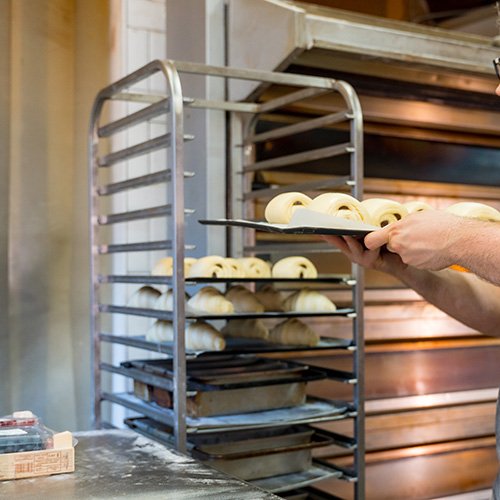
Every successful bakery depends on efficiency, organization, food safety, and consistent product handling. From proofing and cooling to storage, transport, and packaging, the right equipment helps keep production moving without unnecessary delays. One of the most important pieces of equipment in a commercial bakery is the bakery tray rack.
A bakery tray rack gives bakeries a practical way to store and move multiple trays, sheet pans, bread pans, or baked goods at one time. These racks are often used throughout the entire production process, helping employees move products between prep areas, ovens, cooling zones, packaging stations, storage areas, and retail display spaces. When bakery tray racks are designed properly, they can improve workflow, protect product quality, save floor space, and support cleaner day-to-day operations.
However, not all bakery tray racks are built the same. A small retail bakery may need compact racks for limited floor space, while an industrial bakery may need heavy-duty rolling racks built for high-volume production. Materials, tray spacing, caster selection, rack size, cleanability, and long-term durability all affect how well the rack performs.
This article explains what to look for in a bakery tray rack and how custom rack design can help commercial bakeries improve efficiency, organization, and product handling.
Why Bakery Tray Racks Are Essential in Commercial Bakeries
A bakery tray rack is more than a storage fixture. It is part of the bakery’s workflow. In many facilities, trays and pans move through several steps before the final product reaches packaging, delivery, or display. Racks help keep those products organized and easy to transport.
Bakery tray racks are commonly used for:
- Holding sheet pans before baking
- Moving trays between prep areas and ovens
- Cooling baked goods after they come out of the oven
- Staging products for packaging
- Organizing breads, pastries, rolls, cookies, or baked items
- Transporting trays through production areas
- Storing bakery pans when not in use
- Supporting retail or wholesale bakery workflows
Without the right rack system, employees may waste time moving trays individually, stacking products in ways that restrict airflow, or working around racks that are difficult to maneuver. A well-designed bakery tray rack helps reduce unnecessary handling and allows employees to move more product with fewer trips.
How Bakery Tray Racks Improve Workflow
In commercial baking, timing matters. Products often need to be moved quickly from prep to proofing, from baking to cooling, and from cooling to packaging. When racks are designed for the specific workflow, they help employees keep trays organized at each stage.
Bakery tray racks can improve workflow by:
- Keeping trays grouped by batch, product type, or production stage
- Reducing repeated lifting and carrying
- Improving movement through narrow production areas
- Allowing more trays to be stored vertically
- Supporting faster cooling through proper spacing
- Helping employees stage products for the next process step
For high-volume bakeries, these improvements can add up quickly. A rack that fits the production line, tray size, aisle space, and handling process can help reduce delays and make daily operations more predictable.
Material Selection for Bakery Tray Racks
The material used to build a bakery tray rack affects its durability, cleanability, corrosion resistance, and long-term value. Salco Engineering manufactures custom bakery racks using proven materials selected for the application, including stainless steel and powder-coated carbon steel.
Stainless Steel Bakery Tray Racks
Stainless steel is a strong option for bakeries that need durable, easy-to-clean equipment. It resists corrosion, holds up well in demanding environments, and supports routine cleaning. Stainless steel bakery tray racks are often used in commercial kitchens, food production facilities, bakeries, and environments where sanitation is a priority.
Stainless steel may be the right choice when racks are exposed to:
- Moisture
- Frequent cleaning
- Food production environments
- Temperature changes
- High-volume daily use
- Long-term sanitation requirements
While stainless steel racks may have a higher upfront cost, their durability and long service life can make them a smart investment for bakeries that rely on racks every day.
Powder-Coated Carbon Steel Bakery Tray Racks
Powder-coated carbon steel is another effective option for bakery tray racks. Carbon steel provides strength and structural support, while powder coating adds a protective finish that can improve appearance and durability.
Powder-coated racks can be designed in different colors, which may help with product organization, department identification, or brand presentation. For many bakeries, powder-coated carbon steel offers a strong balance of durability, function, and cost efficiency.
This option may be useful for bakeries that need rugged racks for transport, staging, or storage but do not require stainless steel for every application.
Tray Spacing and Rack Capacity
Tray spacing is one of the most important design considerations for any bakery tray rack. The spacing between levels affects how many trays the rack can hold, how easily employees can load and unload pans, and how well air can circulate around baked goods.
If spacing is too tight, products may be difficult to access, and airflow may be restricted during cooling. If spacing is too wide, the rack may hold fewer trays than needed, reducing storage efficiency. The right spacing depends on tray depth, product height, baking process, cooling needs, and how employees handle the trays.
Common rack capacity considerations include:
- Number of trays per rack
- Tray or sheet pan dimensions
- Spacing between each tray level
- Product height after baking
- Cooling and airflow requirements
- Overall rack height and footprint
- Employee access and loading height
Custom bakery tray racks can be designed around the exact trays, pans, or production volumes used in your facility. This helps improve efficiency without sacrificing access or product quality.
Mobility and Caster Selection
Most bakery tray racks need to move throughout the facility. They may travel between mixing areas, proofing rooms, ovens, cooling zones, packaging lines, storage areas, and delivery staging. Because of this, caster selection plays a major role in rack performance.
The wrong casters can make racks difficult to steer, noisy, unstable, or unsafe. The right casters make racks easier to move while protecting floors and supporting the expected load.
Fixed and Swivel Casters
Fixed casters move in a straight line and can provide stability for racks that travel longer distances. Swivel casters rotate, making the rack easier to maneuver in tight spaces. Many bakery tray racks use a combination of fixed and swivel casters to balance control and turning ability.
For bakeries with tight aisles, compact kitchens, or frequent turns, swivel casters may be especially useful. For larger production spaces where racks travel in straight paths, fixed casters can provide better directional stability.
Caster Materials
Caster material should be selected based on floor type, load capacity, noise level, cleaning needs, and the operating environment.
Common caster options include:
- Rubber casters for quieter movement and floor protection
- Polyurethane casters for durability and smooth rolling performance
- High-temperature casters for demanding bakery environments
- Metal casters for heavy-duty applications where strength is a priority
- Locking casters for stability during loading, unloading, or staging
A custom caster package helps ensure the bakery tray rack is safe, stable, and easy to move during daily use.
Cleanability and Food Safety Considerations
Food production environments require equipment that can be cleaned and maintained properly. Bakery tray racks should be designed with sanitation in mind, especially when used near food products, ingredients, cooling areas, or packaging operations.
Cleanability considerations may include:
- Material selection
- Smooth surfaces
- Open designs that reduce debris buildup
- Durable finishes
- Corrosion resistance
- Easy access for routine cleaning
Stainless steel is often preferred in areas where cleaning and sanitation are especially important. Powder-coated racks can also be useful when properly designed for the environment and cleaning process.
Custom Bakery Tray Racks for Unique Facility Needs
No two bakeries operate exactly the same way. Rack requirements may vary based on product type, production volume, available floor space, oven layout, tray size, and employee workflow. This is why custom bakery tray racks are often a better fit than standard rack options.
Salco Engineering designs custom sheet pan racks and bakery tray rack solutions that can be tailored to commercial bakery environments. Custom design allows the rack to match the trays, pans, equipment, and movement patterns already used in the facility.
Custom bakery tray rack features may include:
- Custom height, width, and depth
- Tray spacing based on product needs
- Stainless steel or powder-coated construction
- Heavy-duty caster packages
- Push handles or pull handles
- Open designs for airflow and cooling
- Protective rails or stops to secure trays
- Narrow footprints for tight production spaces
- High-capacity designs for industrial bakeries
- Mobile or stationary configurations
Custom racks can help bakeries reduce wasted space, improve tray access, and create a smoother flow between production stages.
Bakery Tray Racks for Cooling, Proofing, and Storage
Bakery tray racks can support several different stages of production. In cooling applications, proper spacing helps air move around baked goods so products cool more evenly. In proofing areas, racks may need to fit specific room layouts or environmental controls. In storage areas, racks help organize trays vertically so bakeries can make better use of available space.
Common rack uses include:
- Cooling fresh baked goods
- Staging trays before baking
- Holding products during proofing
- Organizing pans and trays after cleaning
- Moving finished products to packaging
- Supporting wholesale bakery production
- Transporting trays between departments
Because bakery tray racks often support multiple parts of the workflow, the rack should be durable enough for frequent movement and designed for the specific tasks it will perform.
Choosing the Right Bakery Tray Rack Manufacturer
The quality of a bakery tray rack depends heavily on the manufacturer. An experienced fabrication partner can help ensure that the rack is designed around the bakery’s actual operating needs rather than a generic equipment template.
When evaluating a bakery tray rack manufacturer, consider whether they can provide:
- Custom design support
- Material and finish recommendations
- Experience with commercial bakery equipment
- Heavy-duty fabrication capabilities
- Consistent quality across multiple racks
- Ability to build around existing tray sizes and workflows
- Support for both prototype and production quantities
Salco Engineering brings experience in metal fabrication, wire products, carts, racks, and bakery-focused material handling solutions. This allows our team to build bakery tray racks that are practical, durable, and designed for daily use.
Benefits of Investing in Custom Bakery Tray Racks
The right bakery tray rack can improve more than storage. It can support better movement, safer handling, faster production, and more consistent product quality.
Benefits of custom bakery tray racks include:
- Improved organization of trays, pans, and baked goods
- Better use of vertical storage space
- Reduced manual carrying and repeated handling
- Improved airflow for cooling applications
- Easier movement between production areas
- Better tray access for employees
- Improved sanitation and cleanability
- Durable construction for high-volume use
- Custom sizing for tight or unique facility layouts
- Long-term value compared to poorly fitting standard racks
Bakery Tray Racks and Complete Bakery Storage Solutions
Bakery tray racks often work alongside other storage and handling equipment, including bread racks, bakery display racks, sheet pan racks, ingredient storage carts, and rolling bakery carts. When these products are designed to work together, bakeries can improve movement from production to storage to display.
Salco Engineering provides bread display equipment, bakery storage racks, and other food industry solutions built for the needs of commercial and industrial bakery environments.
Whether your facility needs one custom bakery tray rack or a complete set of bakery tray racks for a production area, Salco can help design equipment that supports your workflow.
Request a Quote for Custom Bakery Tray Racks
Bakery tray racks are essential for maintaining efficiency, organization, cleanliness, and product quality in commercial bakery environments. The best rack design depends on your trays, products, floor space, production volume, cleaning needs, and movement patterns. By choosing custom bakery tray racks, your facility can improve workflow while using equipment built for daily bakery operations.
If your bakery is ready to upgrade to durable, high-performance tray racks, Salco Engineering can help. Our team combines fabrication experience with practical design support to deliver bakery rack solutions built around your exact needs.
Request a quote today to discuss custom bakery tray racks for your facility.