What Are Heavy Duty Gravity Flow Racks?
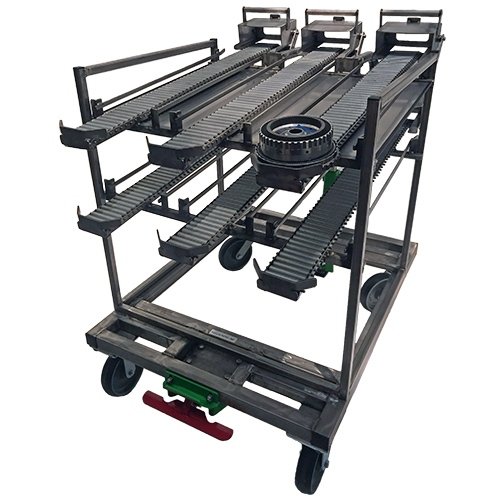
Heavy duty gravity flow racks are storage and material handling systems designed to move products through sloped lanes using gravity. Items are loaded from one side of the rack and move toward the opposite side as products are removed. This keeps the next item ready for picking, assembly, packing, or use in production.
These systems are also commonly referred to as carton flow racks, gravity-fed racks, flow racks, or flow-through racks. While the basic concept is simple, the design can vary widely depending on the application. Some racks are designed for cartons and packaged goods, while others are built for totes, bins, trays, containers, automotive components, industrial parts, or work-in-process materials.
Heavy duty gravity flow racks are especially valuable when facilities need better product rotation, faster access, and a cleaner material handling process. By moving products forward automatically, these racks reduce the amount of manual reaching, searching, and rearranging required during daily operations.
How Gravity Flow Racks Work
Gravity flow racks are typically set at a slight incline. Products are loaded from the back or supply side of the rack and move forward along rollers, skate wheels, or flow tracks. As the front item is removed, the next item advances into position.
This flow-through design can support first-in, first-out inventory management, which is useful when products need to be rotated in the order they were received or produced. It also helps keep picking faces stocked and accessible, which can reduce downtime and improve employee efficiency.
Depending on the product and workflow, a gravity flow rack may include lane dividers, end stops, guide rails, braking systems, custom track spacing, reinforced frames, or adjustable angles. These details help control how products move through the rack and prevent items from shifting, jamming, or moving too quickly.
Benefits of Custom Gravity Flow Racks
Custom gravity flow racks can improve both storage and movement inside a facility. Instead of storing items on standard shelving where products must be manually pulled forward, flow racks bring materials to the point of access automatically.
Key benefits include:
- Improved product accessibility for picking, assembly, and staging
- Better first-in, first-out inventory rotation
- Reduced manual reaching, lifting, and repositioning
- More organized storage for cartons, totes, bins, and parts
- Faster replenishment from the loading side of the rack
- Improved use of floor space and vertical storage areas
- Reduced congestion in picking or production areas
- More efficient line-side material delivery
- Custom lane layouts for specific products or containers
For facilities that handle repeated product movement throughout the day, gravity flow racks can help create a more consistent and efficient material handling process.
Gravity Flow Racks for Manufacturing Applications
Manufacturing facilities often use gravity flow racks to keep parts, components, totes, and work-in-process materials organized near production lines. Instead of placing materials on the floor, on pallets, or on standard shelving, flow racks can position items where employees need them while maintaining an orderly production area.
Line-side gravity flow racks are especially useful for assembly operations. Parts can be loaded from the back of the rack and picked from the front, helping separate replenishment activity from production activity. This can reduce interruptions and support a smoother workflow.
Gravity flow racks can be used for:
- Line-side parts storage
- Assembly component staging
- Work-in-process handling
- Kanban and lean manufacturing systems
- Small parts totes and bins
- Production cell organization
- Finished goods staging
Because every production environment is different, custom rack dimensions, lane spacing, flow direction, and load capacity are important design considerations.
Gravity Flow Racks for Warehouses and Distribution Centers
Warehouses and distribution centers depend on fast, accurate product movement. Gravity flow racks can help improve order picking by keeping products visible, organized, and easy to access. When cartons, bins, or packaged goods automatically move to the front of the rack, employees can pick more efficiently and spend less time repositioning inventory.
These systems can be useful in picking zones, replenishment areas, packing departments, and staging locations. They are often used where high-turnover items need to remain accessible throughout the day.
For warehouse applications, gravity flow racks may be designed around carton size, tote size, product weight, picking frequency, and aisle layout. Customization helps ensure the rack works with the facility’s process rather than creating additional handling steps.
Automotive and Industrial Component Storage
Automotive and industrial manufacturing facilities often handle a wide range of components that need to move quickly and reliably through production. Gravity flow racks can help organize these parts near assembly stations, inspection areas, or staging zones.
Custom heavy duty flow racks can be designed for containers, totes, trays, or part-specific carriers used in automotive and industrial settings. They may support brackets, fasteners, machined parts, subassemblies, electrical components, or other production materials.
For heavy or high-value components, rack strength and product control are especially important. Salco can design reinforced flow rack systems with proper load capacity, lane guidance, and stopping features to support the product safely and consistently.
Food, Bakery, and Packaging Applications
Gravity flow racks can also be useful in food production, commercial bakery, packaging, and distribution environments where product rotation and organized movement are important. Flow racks can help keep containers, trays, cartons, or packaged goods moving in an orderly way through storage, staging, or packing areas.
For applications where cleanability or corrosion resistance is important, material and finish selection should be considered during design. Stainless steel, powder-coated steel, or other finishes may be used depending on the environment and cleaning requirements.
Custom rack design can help food and bakery facilities improve organization, reduce clutter, and keep high-turnover products accessible during busy production or distribution periods.
Electronics, Retail, and E-Commerce Applications
Electronics, retail, and e-commerce operations often handle products that vary in size, packaging, weight, and picking frequency. Gravity flow racks can help organize these products while improving visibility and access.
In e-commerce and retail distribution environments, flow racks can support fast-moving SKUs, order assembly areas, packing zones, and replenishment systems. In electronics manufacturing or assembly, gravity flow racks may be used to organize packaged components, small parts bins, trays, or work-in-process materials.
By customizing the rack around the product and workflow, facilities can reduce clutter and create more efficient picking or assembly areas.
Customizable Features for Heavy Duty Gravity Flow Racks
Gravity flow racks are not one-size-fits-all. The right rack depends on the product, container type, available space, load weight, picking method, replenishment process, and facility layout.
Custom features may include:
- Custom rack height, width, and depth
- Heavy duty welded steel construction
- Roller tracks, skate wheels, or flow rails
- Adjustable lane widths
- Lane dividers for product separation
- Custom slope or flow angle
- End stops or retaining bars
- Braking or speed control features
- Reinforced frames for heavy loads
- Multiple picking levels
- Custom loading and unloading orientation
- Powder-coated or stainless steel finishes
These features help control product movement, improve organization, and support safer daily use.
Heavy Duty Construction for Industrial Use
Gravity flow racks used in industrial facilities must be built for repeated loading, unloading, impact, and product movement. Heavy duty construction is especially important when racks support dense containers, metal parts, industrial components, or high-volume replenishment.
Salco can design racks with reinforced steel frames, durable flow tracks, structural supports, and finishes suited to the environment. Load capacity, product size, center of gravity, track spacing, and stopping points are all considered during the design process.
A properly built gravity flow rack should support the product without flexing, shifting, or creating unsafe handling conditions. It should also allow employees to load and remove materials efficiently without fighting the system.
Design Considerations for Gravity Flow Rack Systems
Before designing a custom gravity flow rack, it is important to understand how the rack will be used. The product, container, and workflow all influence the final design.
Important questions include:
- What products, boxes, totes, bins, or containers will the rack hold?
- What is the weight of each item and the total loaded weight?
- How many lanes are needed?
- How wide should each lane be?
- How often will products be loaded and picked?
- Will the rack support first-in, first-out inventory rotation?
- Will products be loaded from the back and picked from the front?
- Does the product need dividers, guides, brakes, or end stops?
- What floor space and aisle clearance are available?
- Does the rack need to be stationary, mobile, or integrated with other equipment?
Answering these questions helps ensure the rack supports the facility’s actual process and product flow.
Custom Gravity Flow Racks from Salco Engineering
Heavy duty gravity flow racks can help warehouses, manufacturing plants, distribution centers, and industrial facilities improve inventory movement, product accessibility, storage efficiency, and line-side organization. By using gravity to move products toward the picking side, these racks can reduce manual handling and support a cleaner, more efficient workflow.
Salco Engineering & Manufacturing designs and fabricates custom gravity flow racks for a range of industries and applications. Whether your facility needs carton flow racks for warehouse picking, line-side flow racks for manufacturing, heavy duty racks for industrial parts, or custom flow-through storage for totes and containers, Salco can develop a solution around your products and process. To discuss a custom gravity flow rack system for your facility, request a quote from Salco Engineering today.