

Custom steel fabrication plays an important role in modern industrial and manufacturing environments. When standard equipment does not fit the job, manufacturers need fabricated steel components, carts, baskets, racks, frames, fixtures, and material handling products designed around their specific workflow. From heavy-duty shop floor transport to precision part handling, custom steel fabrication helps facilities solve practical challenges that off-the-shelf products often cannot address.
Industrial facilities depend on equipment that is strong, reliable, repeatable, and built for daily use. A cart may need to carry heavy parts across a production floor. A wire basket may need to hold components during washing, heat treating, or automated handling. A rack may need to support work-in-process inventory while improving access and floor space. A fabricated steel frame may need to integrate with machinery, conveyors, or production cells. In each case, custom fabrication allows the product to be designed around the process rather than forcing the process to work around a standard piece of equipment.
Salco Engineering & Manufacturing provides custom steel fabrication for industrial and manufacturing applications, including custom carts and trolleys, wire baskets, racks, dunnage systems, wire products, and fabricated steel solutions. By combining design experience, material knowledge, prototyping, welding, wire forming, milling, and fabrication capabilities, Salco helps manufacturers improve material flow, protect parts, reduce handling problems, and build equipment that supports long-term production needs.
What Is Custom Steel Fabrication?
Custom steel fabrication is the process of cutting, bending, forming, welding, machining, finishing, and assembling steel into products or components designed for a specific application. Instead of purchasing a standard product and trying to make it fit the job, custom fabrication creates a solution around the required dimensions, load capacity, part geometry, operating environment, and workflow.
In industrial settings, custom steel fabrication may be used to produce:
- Industrial carts
- Material handling baskets
- Wire baskets and wire forms
- Custom racks and storage systems
- Gravity flow racks
- Dunnage systems and part supports
- Machine frames and guards
- Workstations and platforms
- Steel displays and product handling equipment
- Fixtures for manufacturing, washing, inspection, or assembly
The goal is to create fabricated steel products that improve how materials move, how parts are protected, and how employees interact with equipment throughout the facility.
Why Custom Steel Fabrication Matters in Manufacturing
Manufacturing facilities are rarely one-size-fits-all. Each operation has different products, equipment, floor layouts, handling methods, cleanliness requirements, and production goals. A standard cart, rack, basket, or fixture may work for basic use, but it may not provide the right strength, dimensions, spacing, mobility, or part protection for a demanding industrial process.
Custom steel fabrication gives manufacturers more control over the equipment they use every day. A fabricated product can be designed to match the load, fit the available space, integrate with surrounding equipment, and support the exact way parts move through production.
Common advantages of custom steel fabrication include:
- Better fit for specific products, parts, and facility layouts
- Improved durability for demanding industrial environments
- Stronger load support for heavy or dense components
- Reduced product damage during handling and transport
- Improved material flow between production steps
- Better organization of work-in-process materials
- Custom features for ergonomics, mobility, cleaning, or automation
- Longer equipment life compared to poorly suited standard products
For facilities that rely on repeatable movement and consistent part handling, the right fabricated steel solution can improve daily productivity and reduce ongoing operational problems.
Solving Industrial and Manufacturing Challenges with Custom Fabrication
Manufacturing teams often face challenges that cannot be solved with generic equipment. Heavy parts, tight spaces, demanding production schedules, corrosion concerns, cleanliness requirements, and part protection needs can all influence the design of custom fabricated steel products.
Heavy Loads and Structural Demands
Industrial carts, racks, baskets, and fixtures must often support significant weight. If the equipment is not designed for the load, it may bend, wobble, wear out prematurely, or become unsafe to use. Custom steel fabrication allows products to be reinforced where needed, using the proper material thickness, wire diameter, tubing, frame structure, weld design, and support points.
This is especially important for automotive components, aerospace parts, tooling, dies, fabricated assemblies, steel parts, and heavy work-in-process materials. A custom fabricated cart or rack can be designed around the actual maximum load instead of relying on a generic capacity rating that may not reflect real use.
Part Protection and Product Quality
Parts can be damaged when they shift, collide, scrape, fall, or stack unevenly during transport or storage. For manufacturers handling machined components, coated parts, precision assemblies, or high-value products, this damage can lead to rework, scrap, delays, and quality issues.
Custom steel fabrication allows material handling equipment to include dividers, formed wire supports, dunnage, trays, rails, compartments, or non-marring contact points. These design features help keep parts separated and properly positioned during movement through the facility.
Workflow and Material Flow Problems
Poor material flow can slow down an entire operation. When employees need to search for parts, make repeated trips, wait for equipment, or move materials through inefficient routes, productivity drops. Custom steel carts, racks, and baskets can be designed to support the way materials actually move through the building.
For example, a custom cart may be sized to fit between specific workstations. A basket may be designed to move through a washer and then transfer directly to inspection. A rack may be built for line-side storage. A fabricated frame may be designed to hold components in the correct orientation for assembly. These details help reduce unnecessary handling and create a smoother production process.
Limited Floor Space
Floor space is valuable in manufacturing plants and warehouses. Standard equipment may be too wide, too tall, too short, or poorly organized for the available space. Custom fabrication allows equipment to be sized around aisle widths, storage areas, machine footprints, workstation layouts, and material flow paths.
Custom racks, carts, and storage systems can use vertical space more effectively while maintaining safe access for employees. Mobile designs can also allow equipment to be moved where it is needed instead of permanently occupying valuable production space.
Cleaning, Corrosion, and Environmental Exposure
Industrial equipment may be exposed to moisture, cleaning chemicals, oils, coolants, heat, food residue, outdoor conditions, or abrasive materials. Custom steel fabrication allows the right material and finish to be selected for the environment.
Depending on the application, products may be fabricated from carbon steel, stainless steel, wire mesh, tubing, sheet metal, or a combination of materials. Finishes may include powder coating, zinc plating, nylon coating, electropolishing, or other protective options. These decisions affect durability, cleanability, corrosion resistance, appearance, and long-term performance.
Custom Steel Carts for Industrial Material Handling
Steel carts are one of the most common custom fabricated products used in manufacturing and warehousing. They help move parts, tools, supplies, work-in-process materials, containers, and finished goods throughout the facility. A well-designed cart can reduce unnecessary carrying, improve organization, and support safer movement between departments.
Custom industrial carts may include:
- Reinforced steel frames
- Flat platforms or multiple shelves
- Wire baskets or compartments
- Custom dunnage or part supports
- Heavy-duty casters
- Push handles or tow bars
- Brakes or locking caster systems
- Stainless steel or powder-coated finishes
Steel carts can be designed for warehouse picking, line-side delivery, heavy parts transport, maintenance departments, parts washing areas, automotive production, aerospace manufacturing, and many other industrial uses. For applications involving heavy loads and frequent use, purpose-built heavy duty industrial carts can provide the durability and load support needed for demanding environments.
Custom Steel and Wire Baskets
Wire baskets and steel baskets are widely used for parts handling, washing, storage, transport, heat treating, and production staging. Their open design allows visibility, drainage, airflow, and cleaning access, making them useful in many manufacturing processes.
Custom wire baskets can be fabricated around the size, shape, and weight of the parts being handled. Basket design may include specific wire spacing, wire diameter, frame reinforcement, handles, dividers, stacking features, or compatibility with carts, racks, conveyors, and wash systems.
Common basket applications include:
- Industrial parts washing
- Ultrasonic cleaning
- Heat treating
- Automotive parts handling
- Aerospace component processing
- Medical and laboratory handling
- Food processing and bakery applications
- Work-in-process storage
- Robotic and automated material handling
By designing baskets around the process, manufacturers can improve part protection, reduce handling time, and support more consistent results across production steps.
Custom Racks and Storage Systems
Custom steel racks help facilities organize materials, improve access, and make better use of available space. Racks may be used for parts storage, line-side staging, bakery trays, product displays, work-in-process materials, raw materials, or finished goods.
Unlike standard shelving, custom fabricated racks can be designed around specific product dimensions, load capacity, storage density, access requirements, and facility layout. This is useful when products are irregularly shaped, heavy, fragile, or difficult to store efficiently.
Custom rack solutions may include fixed racks, mobile racks, flow racks, storage frames, display racks, or production staging systems. For facilities that need parts or products to move efficiently through a process, custom gravity flow racks can support organized product movement, inventory rotation, and improved access.
Wire Forming for Custom Industrial Components
Wire forming is an important part of custom steel fabrication, especially for products that require shaped wire components, baskets, handles, dividers, guards, hooks, supports, or product displays. Custom wire forms can be designed for strength, repeatability, and integration with larger fabricated assemblies.
Salco’s wire forming capabilities support the production of custom wire products for manufacturing, material handling, retail display, food production, aerospace, medical, automotive, and industrial applications.
Wire forming can support custom fabricated products such as:
- Basket frames
- Wire dividers
- Handles and hooks
- Product display components
- Part supports and separators
- Protective guards
- Custom wire fixtures
When wire forming is combined with welding, fabrication, and finishing, manufacturers can receive a complete custom solution built around the application.
Precision Welding and Fabrication Quality
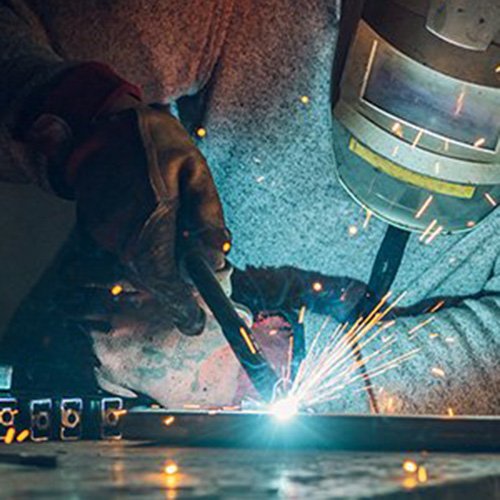
Welding quality has a major impact on the strength, durability, and appearance of custom fabricated steel products. Industrial carts, racks, baskets, frames, and supports must hold up to repeated use, loading, unloading, transport, cleaning, and impact. Poor welds or weak joints can shorten equipment life and create safety concerns.
Salco’s precision welding services support custom fabrication projects that require strong, consistent, and reliable welded construction. This is important for products that must perform in demanding manufacturing and warehouse environments.
Welding considerations may include material type, joint design, load requirements, finish expectations, corrosion resistance, and the final use of the product. A properly welded and fabricated product provides better long-term value and more dependable performance.
CNC Milling and Fabricated Steel Components
Some custom steel fabrication projects require machined components in addition to welded or formed steel structures. CNC milling can be used to create precision features, mounting points, plates, brackets, tooling components, fixtures, or other fabricated steel parts.
By combining fabrication with milling capabilities, Salco can support projects that require both structural fabrication and precision-machined details. This is especially useful when fabricated products need to integrate with machinery, automation, production equipment, or existing facility systems.
Design and Prototyping for Custom Steel Fabrication
Successful custom fabrication starts with understanding the problem. Before a product is built, the design must account for the part, process, load, environment, ergonomics, and equipment it will interact with. Design and prototyping help identify potential issues before full production begins.
Salco’s design and prototyping capabilities help manufacturers evaluate custom solutions before moving into final fabrication. This can be useful for products that require exact dimensions, new handling methods, complex part geometry, or integration with production equipment.
During the design process, important questions may include:
- What parts or products will the equipment handle?
- What is the maximum load weight?
- How will employees load, unload, push, pull, or move the equipment?
- Will the product be used with carts, racks, conveyors, washers, lifts, or automation?
- Does the equipment need to protect finished surfaces or precision features?
- Will it be exposed to moisture, heat, chemicals, or cleaning processes?
- Are there size restrictions based on aisles, doors, machines, or workstations?
- Does the product need a specific finish or coating?
Answering these questions helps ensure the fabricated product works in the real environment where it will be used.
Materials and Finishes for Custom Steel Fabrication
Material and finish selection can affect strength, appearance, corrosion resistance, cleanability, part protection, and service life. Custom fabrication allows each product to be built using the material and finish best suited to the application.
Common material and finish options include:
- Carbon steel for strong general industrial use
- Stainless steel for corrosion resistance and cleanability
- Powder coating for durability and appearance
- Zinc plating for corrosion protection
- Nylon coating for part protection
- Electropolishing for certain stainless steel applications
- Custom finishes based on process requirements
Protective finishes can help extend the life of fabricated steel products, especially in environments where equipment may be exposed to moisture, abrasion, cleaning chemicals, or frequent handling.
Industries That Use Custom Steel Fabrication
Custom steel fabrication supports a wide range of industries because many facilities need equipment built around their specific products and processes.
Industries served may include:
- Automotive manufacturing
- Aerospace manufacturing
- Food processing
- Commercial bakeries
- Medical and laboratory environments
- Pharmaceutical production
- Warehousing and distribution
- Electronics and technology
- Industrial parts washing
- Heat treating and finishing
- General manufacturing
Each industry has different requirements. Automotive manufacturers may need carts, baskets, and dunnage for heavy parts and technical cleanliness. Aerospace facilities may need precise part handling and protection. Food production facilities may need stainless steel racks and baskets for sanitation. Warehouses may need heavy-duty carts and storage systems for daily material movement.
Choosing the Right Custom Steel Fabrication Partner
The right fabrication partner should do more than build from a basic sketch. Industrial and manufacturing customers benefit from working with a fabricator that understands material handling, product protection, load requirements, facility flow, and long-term durability.
When choosing a custom steel fabrication company, consider whether they can provide:
- Experience with industrial and manufacturing applications
- Custom design and prototyping support
- Wire forming, welding, machining, and assembly capabilities
- Material and finish recommendations
- Consistent quality and repeatable production
- Ability to fabricate carts, baskets, racks, frames, and specialty equipment
- Understanding of material handling workflows
- Support from concept through production
A strong partner can help identify design improvements, reduce unnecessary complexity, and create equipment that performs reliably in the facility.
Custom Steel Fabrication from Salco Engineering
Custom steel fabrication is a practical way to solve industrial and manufacturing challenges that standard products cannot address. Whether a facility needs carts for material handling, baskets for parts washing, racks for storage, wire forms for custom assemblies, or fabricated steel components for production support, the right design can improve efficiency, safety, organization, and long-term equipment performance.
Salco Engineering & Manufacturing designs and fabricates custom steel products for demanding industrial applications. With capabilities in design, prototyping, wire forming, welding, milling, finishing, and custom fabrication, Salco can help manufacturers build solutions around their parts, process, and facility layout.
To discuss custom steel fabrication for industrial baskets, carts, racks, wire products, or fabricated components, request a quote from Salco Engineering today.