


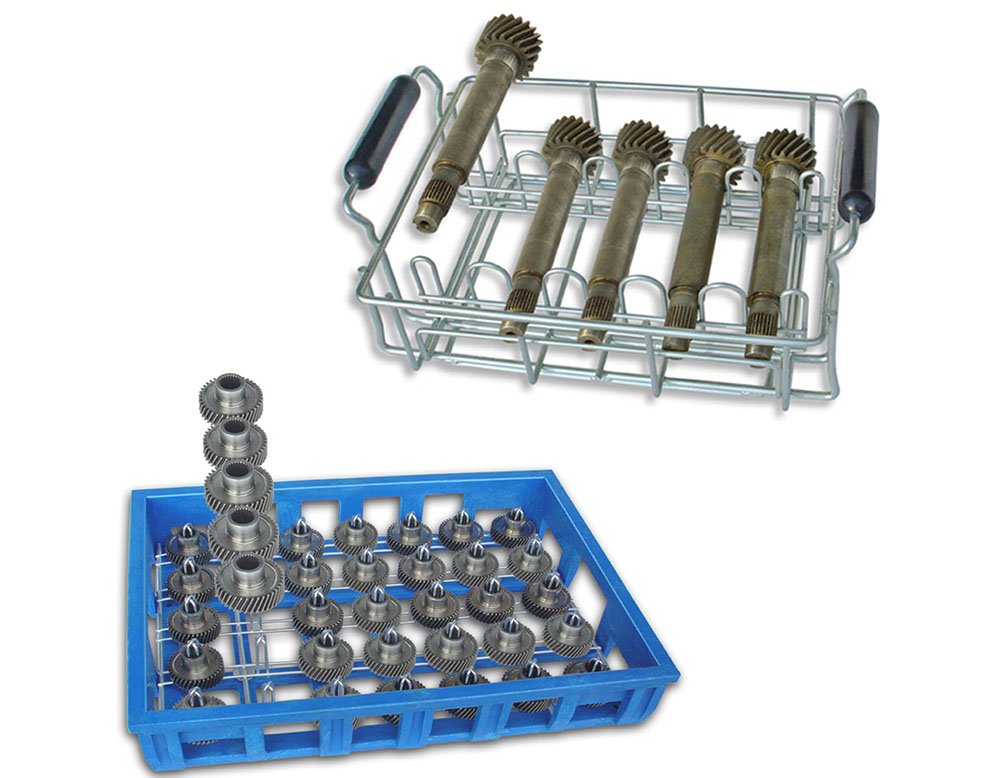
Automotive manufacturing depends on efficient, repeatable material handling at every stage of production. From parts washing and heat treating to assembly, storage, and transport, the containers used to move components directly affect quality, cleanliness, and productivity. Two of the most common options in automotive facilities are wire baskets and plastic containers. While both serve important roles, they perform very differently under the demanding conditions of automotive manufacturing.
Understanding the strengths and limitations of wire baskets versus plastic containers can help manufacturers choose the right solution for their processes, reduce part damage, and improve long-term efficiency.
Material Handling Requirements in Automotive Manufacturing
Automotive parts vary widely in size, weight, and sensitivity. Components are often exposed to aggressive wash chemistries, high temperatures, oils, and repeated handling cycles. Containers must support these conditions without degrading, contaminating parts, or slowing production.
In many cases, manufacturers rely on custom material handling solutions such as wire baskets, racks, and inserts to meet strict cleanliness and durability standards throughout the production process.
Comparing Wire Baskets and Plastic Containers
Although plastic containers and wire baskets are both used in automotive plants, their performance differs significantly depending on application requirements.
Strength and Load Capacity
Metal wire baskets offer significantly higher tensile strength than plastic containers. Automotive parts such as castings, gears, and machined components can be heavy, and wire baskets are designed to support these loads without deforming. Even when ventilation openings are required for washing or drying, wire mesh maintains its structural integrity.
Plastic containers lose strength more quickly when holes or slots are added for drainage or airflow. Over time, repeated loading and unloading can cause plastic to warp, crack, or fail, especially under heavy loads.
For parts washing, heat treating, or high-weight applications, wire baskets are typically the more reliable option.
Water, Oil, and Chemical Exposure
Automotive manufacturing environments expose containers to water, oils, greases, detergents, and solvents. Plastic materials tend to absorb oils and chemicals over time, leading to discoloration, residue buildup, and potential contamination.
Steel wire baskets are easier to clean and do not absorb fluids in the same way. This makes them especially well-suited for parts washing systems, ultrasonic cleaning, and processes where cleanliness is critical. Many manufacturers pair wire baskets with industrial part wash systems to ensure consistent cleaning results and reduce cross-contamination.
Corrosion Resistance and Longevity
Corrosion resistance depends heavily on material selection. While some plastics are formulated for chemical resistance, many degrade quickly when exposed to strong acids, alkalis, or elevated temperatures.
Metal performance varies by alloy. Basic carbon steel offers limited corrosion resistance, while stainless steel wire baskets provide excellent durability even in harsh environments. Certain stainless alloys are highly resistant to corrosion, making them suitable for repeated immersion in aggressive wash solutions.
When long service life and resistance to chemicals are required, stainless steel wire baskets consistently outperform plastic containers.
Temperature Resistance and Process Compatibility
Automotive parts often pass through high-temperature processes such as heat treating, drying, or curing. Plastic containers generally have lower temperature limits and can soften, warp, or release contaminants when exposed to heat.
Wire baskets can be engineered to withstand extreme temperatures, making them compatible with heat treating operations, industrial ovens, and drying systems. This flexibility allows a single basket design to be used across multiple stages of production.
Hybrid Solutions Using Wire Inserts in Plastic Containers
In some applications, manufacturers combine the benefits of both materials by using formed wire inserts inside plastic totes. This approach provides the lightweight and stackable advantages of plastic containers while adding the strength, drainage, and part protection of custom wire forms.
Custom wire inserts help secure parts, reduce movement during transport, and improve wash performance without fully replacing existing plastic container systems.
Which Option Is Best for Automotive Manufacturing?
The right choice between wire baskets and plastic containers depends on how the container will be used. Plastic containers may be suitable for light-duty storage or short-distance transport. However, for demanding automotive applications involving cleaning, chemicals, heat, and heavy loads, wire baskets are often the superior solution.
Custom wire baskets offer advantages that include improved durability, better cleanliness, and longer service life. Salco designs wire baskets that are stackable, resistant to contamination, and engineered to withstand washing, heat treating, and other industrial processes.
Custom Wire Baskets Designed for Automotive Applications
Salco Engineering & Manufacturing specializes in custom wire baskets designed specifically for automotive manufacturing environments. Each basket is engineered to match part geometry, load requirements, and process conditions, ensuring reliable performance throughout the production cycle.
If you are evaluating wire baskets versus plastic containers for your facility, Salco can help you identify the most effective solution for your application.
Contact Salco today to discuss custom wire basket designs that improve part protection, cleanliness, and efficiency in automotive manufacturing.