


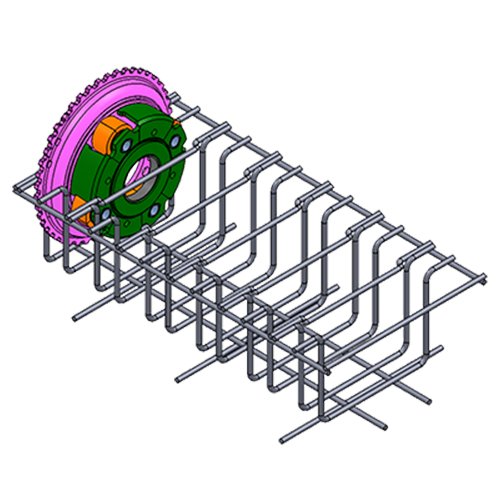
In modern production environments, digital design is no longer optional—it is foundational. SolidWorks in manufacturing has become a core technology for companies seeking precision, speed, and efficiency in product development and fabrication. From concept modeling to full-scale production, SolidWorks enables manufacturers to design complex components, validate performance, and streamline workflows before a single piece of material is cut.
As one of the most widely used 3D CAD platforms in the world, SolidWorks supports manufacturers across industries including automotive, aerospace, material handling, food processing, and heavy equipment production. Companies like Salco Engineering & Manufacturing rely on SolidWorks to design high-performance steel products, custom carts, wire baskets, and fabrication assemblies with accuracy and repeatability.
Why SolidWorks in Manufacturing Is Essential Today
Manufacturing has evolved far beyond hand drawings and 2D drafting. Today’s production demands tight tolerances, rapid prototyping, and seamless collaboration between engineering and fabrication teams. SolidWorks in manufacturing environments bridges the gap between design intent and physical production.
By using 3D parametric modeling, engineers can build detailed digital prototypes, simulate real-world conditions, and identify potential issues before materials are ordered or production begins. This reduces waste, prevents costly rework, and accelerates time to market.
Key advantages include:
- Accurate 3D modeling with full dimensional control
- Real-time design modifications with automatic updates
- Integrated simulation and stress testing
- Improved communication between engineering and shop floor teams
- Direct compatibility with CNC machining and fabrication systems
Design Optimization and Rapid Iteration
One of the strongest benefits of SolidWorks in manufacturing is design optimization. Engineers can create multiple design iterations quickly, adjusting dimensions, materials, and structural components with minimal disruption.
For example, when designing custom industrial carts, engineers can evaluate load capacity, weight distribution, and ergonomic features before fabrication begins. This digital testing ensures that the final product performs as expected under real-world conditions.
The ability to simulate stress points and structural performance is especially important in steel fabrication and heavy-duty applications, where small design errors can result in major operational issues.
Improved Collaboration and Communication
SolidWorks improves collaboration across departments and with external clients. Because designs exist in a fully interactive 3D environment, stakeholders can review assemblies, identify adjustments, and provide feedback early in the process.
This collaborative approach is particularly valuable in custom manufacturing projects where specifications vary from client to client. At Salco, SolidWorks models are often shared during the design phase to ensure alignment before fabrication begins.
Digital models also integrate seamlessly with design and prototyping services, allowing faster validation and refinement of custom components.
Cost Savings Through Early Error Detection
Manufacturing errors become exponentially more expensive the later they are discovered. SolidWorks in manufacturing environments helps eliminate this risk by identifying design flaws early.
Through built-in analysis tools, engineers can:
- Detect interference between components
- Verify tolerances and clearances
- Simulate load and stress performance
- Optimize material usage
- Reduce unnecessary weight without sacrificing strength
These capabilities translate directly into lower material costs, fewer production delays, and improved product reliability.
Applications of SolidWorks in Manufacturing
SolidWorks supports nearly every phase of manufacturing, from product development to fabrication and assembly.
Product Design and Engineering
SolidWorks allows engineers to create detailed 3D models of parts and assemblies. This includes everything from small precision components to large structural frames.
Manufacturers use SolidWorks to design:
- Material handling systems
- Steel frames and weldments
- Machined components
- Custom racks and storage systems
- Industrial fixtures and tooling
Weldment Design and Steel Fabrication
SolidWorks is especially powerful for weldment design. Built-in tools allow engineers to create complex structural frames quickly and generate accurate cut lists for production.
This capability is critical in projects involving custom steel fabrication, where dimensional precision ensures proper fit and structural integrity.
By modeling weldments digitally, manufacturers can:
- Optimize joint placement
- Calculate material requirements
- Reduce fabrication errors
- Improve production efficiency
Integration with CNC Machining and Milling
SolidWorks models integrate directly with CNC programming software, allowing seamless transfer from design to machining. This connection ensures that parts manufactured through milling, cutting, or forming match design specifications exactly.
When paired with in-house capabilities such as CNC wire forming and precision machining, SolidWorks enhances consistency and reduces production variability.
SolidWorks for Custom Manufacturing Projects
Custom manufacturing requires flexibility, creativity, and precision. SolidWorks in manufacturing supports these goals by allowing engineers to adapt designs quickly for unique customer requirements.
At Salco Engineering & Manufacturing, SolidWorks is used to design:
- Heavy-duty industrial carts
- Custom steel baskets
- Material handling equipment
- Specialized racks and fixtures
- Prototyped components for client approval
By combining digital design with fabrication expertise, Salco ensures each product meets performance standards while maintaining production efficiency.
Why SolidWorks Remains a Competitive Advantage
Companies that invest in advanced CAD systems gain a measurable advantage in speed, accuracy, and quality control. SolidWorks in manufacturing environments supports:
- Faster product development cycles
- Improved accuracy across production runs
- Better alignment between design and fabrication
- Enhanced customer collaboration
- Scalable production planning
As manufacturing continues to evolve toward automation and digital integration, SolidWorks remains a central tool in maintaining competitiveness.
Partner with Salco for Precision Design and Fabrication
If your project requires precision engineering, custom steel fabrication, or advanced material handling design, leveraging SolidWorks in manufacturing ensures accuracy from concept to completion.
Salco Engineering & Manufacturing combines digital design expertise with in-house fabrication capabilities to deliver durable, high-performance industrial solutions.
Contact Salco Engineering & Manufacturing today to discuss your custom manufacturing project and discover how advanced 3D design tools can improve your next build.