


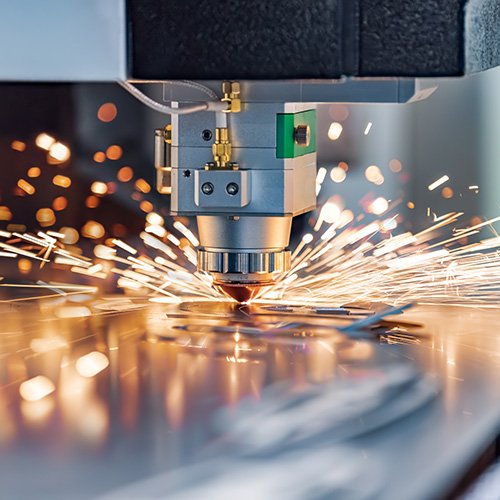
When manufacturing steel components, choosing the right cutting method can significantly impact precision, production speed, and overall cost. Two of the most common metal cutting processes used in modern fabrication are laser cutting and plasma cutting. Both methods are capable of cutting steel efficiently, but they serve different purposes depending on material thickness, required precision, and project scale.
Understanding the differences between laser cutting vs plasma cutting steel can help manufacturers determine which method is best suited for their application. In this guide, we’ll explore how each process works, the advantages of each technique, and when manufacturers typically choose one method over the other.
What Is Laser Cutting?
Laser cutting is a high-precision fabrication process that uses a concentrated laser beam to melt, burn, or vaporize material. A computer-controlled system directs the laser through mirrors and lenses, allowing extremely accurate cuts along complex shapes and contours.
This technology is widely used in industries that require tight tolerances and intricate designs. Because the laser beam is extremely focused, the resulting cuts are clean and smooth with minimal heat distortion.
Laser cutting is commonly used for:
- Precision metal components
- Custom sheet metal parts
- Automotive components
- Industrial brackets and mounting plates
- Components used in custom steel fabrication
Laser cutting systems are typically controlled through CAD and CNC software, allowing complex designs to be produced consistently and repeatedly.
Advantages of Laser Cutting Steel
Laser cutting offers several advantages for manufacturers who require accuracy and repeatability.
- Extremely precise cuts with tight tolerances
- Smooth edges requiring minimal finishing
- Ability to produce intricate designs and small features
- Minimal heat-affected zones
- Excellent repeatability for high-volume production
Because of these benefits, laser cutting is commonly used for precision components and parts that require detailed shapes or exact dimensions.
What Is Plasma Cutting?
Plasma cutting is another widely used method for cutting conductive metals such as steel, stainless steel, and aluminum. Instead of a laser beam, plasma cutting uses a high-velocity stream of ionized gas to melt and remove metal from the cut path.
The process works by sending compressed gas through a nozzle while an electrical arc converts the gas into plasma. This plasma stream becomes extremely hot—hot enough to melt metal—and is directed toward the material to create a cut.
Plasma cutting is frequently used for:
- Heavy steel plate cutting
- Structural steel fabrication
- Industrial equipment manufacturing
- Large-scale metal components
- Parts used in heavy-duty industrial carts and trolleys
Because the plasma arc is larger than a laser beam, the cuts are generally wider and less precise than laser cutting. However, plasma cutting excels at cutting thicker materials quickly.
Advantages of Plasma Cutting Steel
Plasma cutting offers several advantages when speed and thickness are more important than fine detail.
- Fast cutting speeds for thicker materials
- Lower equipment cost compared to laser systems
- Effective for cutting thick steel plate
- Works well in heavy industrial environments
- Suitable for large structural parts
For many fabrication projects involving heavy steel components, plasma cutting provides an efficient and cost-effective solution.
Laser Cutting vs Plasma Cutting Steel: Key Differences
While both processes are capable of cutting steel, the differences between laser cutting and plasma cutting become clear when comparing precision, speed, cost, and material thickness.
Precision and Cut Quality
Laser cutting is significantly more precise than plasma cutting. The focused beam allows manufacturers to produce detailed shapes, small holes, and complex contours.
Plasma cutting produces wider cuts and may require additional finishing if smooth edges are required.
Material Thickness
Laser cutting performs best on thinner materials and medium-thickness steel sheets. Plasma cutting, on the other hand, excels when cutting thick steel plate.
For heavy structural components or large fabrication projects, plasma cutting may be the preferred option.
Production Speed
When cutting thinner materials, laser cutting can be extremely fast and efficient. However, plasma cutting is typically faster when processing thicker metal plates.
Cost Considerations
Plasma cutting equipment is generally less expensive to operate and maintain than laser cutting systems. For projects where extreme precision is not required, plasma cutting can offer cost savings.
However, laser cutting may reduce secondary finishing work due to its clean cut edges, which can offset the higher equipment cost in some manufacturing applications.
Applications Across Manufacturing Industries
Both laser and plasma cutting are essential processes in modern fabrication. Manufacturers choose the method based on the requirements of each project.
Industries that commonly rely on these cutting methods include:
- Automotive manufacturing
- Industrial equipment fabrication
- Heavy machinery production
- Material handling equipment manufacturing
- Components used in wire forming and fabricated steel assemblies
Each application may require a different cutting approach depending on the material thickness, part geometry, and production volume.
Choosing the Right Cutting Method for Your Project
When comparing laser cutting vs plasma cutting steel, the right choice depends on several factors:
- Required precision and tolerances
- Material thickness
- Production speed requirements
- Budget and production volume
- Desired edge quality and finishing needs
Many manufacturers utilize both cutting methods depending on the type of part being produced.
Steel Fabrication Solutions from Salco
At Salco Engineering & Manufacturing, we specialize in precision steel fabrication and custom manufacturing solutions for industrial applications. Our experienced team works closely with clients to determine the most efficient fabrication processes for each project, ensuring high-quality components that meet exact specifications.
From custom metal components to complete material handling systems, Salco delivers durable solutions built for demanding industrial environments.
If you need help determining the best cutting or fabrication process for your project, contact Salco today to discuss your requirements and request a custom quote.