


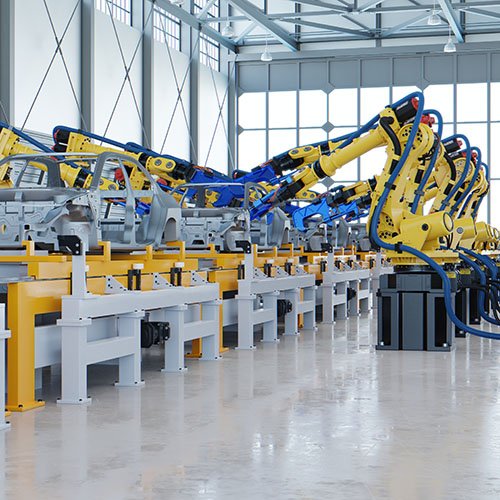
Robotics is changing the way manufacturers move, stage, clean, inspect, and process materials. Across automotive manufacturing, aerospace production, CNC machining, food processing, medical device manufacturing, warehousing, and industrial assembly, companies are using automation to improve speed, consistency, safety, and overall production efficiency. Robotic arms, conveyors, automated guided vehicles, machine tending systems, and automated production cells can reduce repetitive labor and help facilities keep materials moving with greater accuracy.
However, robotics alone does not create an efficient material handling system. Automated equipment depends on the right support products to present parts consistently, move materials safely, and protect components throughout the production process. Custom carts and baskets play a critical role in this relationship. They act as the connection point between the robot, the part, the operator, and the next step in the workflow.
When carts and baskets are designed specifically for robotic integration, they can help improve part orientation, reduce handling errors, protect components, support automated loading and unloading, and keep production moving smoothly. Without properly designed material handling equipment, even advanced robotic systems may struggle with misaligned parts, inconsistent pick points, product damage, or avoidable downtime.
The Growing Role of Robotics in Material Handling
Material handling includes the movement, storage, protection, control, and presentation of parts and products throughout a facility. Traditionally, many of these tasks were handled manually by employees using carts, bins, racks, forklifts, or workstations. While manual handling is still important, more manufacturers are now using robotics to improve repeatability and reduce physical strain.
Robotics can be used in many material handling applications, including:
- Loading and unloading CNC machines
- Moving parts between production cells
- Transferring components to wash lines
- Supporting robotic pick-and-place systems
- Staging parts for assembly
- Handling products during inspection
- Moving materials to packaging or shipping areas
- Reducing repetitive lifting and carrying
As production demands increase, robotics can help facilities maintain output while improving consistency. However, robots perform best when the parts they handle are presented in the same position every time. This is where custom carts, baskets, and fixtures become essential.
Why Robotic Material Handling Requires Custom Equipment
Robots are highly repeatable, but they are not automatically flexible in the same way a human operator is. If a part is shifted, rotated, nested with another part, or buried inside a loose container, the robot may not be able to pick it accurately. In automated environments, poor part presentation can lead to failed picks, dropped components, cycle interruptions, manual corrections, or damage to equipment and products.
Custom material handling equipment solves these problems by creating a predictable environment for the robot. Instead of using generic bins or carts, manufacturers can use baskets and carts designed around the part geometry, robot reach, gripper access, load weight, process sequence, and facility layout.
Important design considerations include:
- Part size, shape, and weight
- Required part orientation
- Robot gripper or end-of-arm tooling access
- Vision system visibility
- Cycle time requirements
- Load capacity and frame strength
- Conveyor, cart, or rack compatibility
- Cleaning, drying, or washdown requirements
- Operator interaction and ergonomic access
By designing carts and baskets around these requirements, manufacturers can create a smoother connection between manual workflows and automated systems.
The Role of Custom Carts in Robotic Material Handling
Custom carts are often used to move parts, baskets, trays, tools, fixtures, and work-in-process materials between automated stations. In a robotic production environment, carts may need to dock with a machine, align with a robotic workstation, support part presentation, or transport loaded baskets between departments.
A standard cart may not provide the positioning accuracy or durability needed for automation. If a cart does not stop in the same place every time, parts may not align correctly with the robot. If the cart frame flexes under load, part locations may shift. If the cart is difficult for employees to move or secure, it can slow the entire process.
Custom carts for robotic integration may include:
- Reinforced steel frames
- Heavy-duty casters
- Locking or braking systems
- Docking features
- Guide rails or alignment points
- Shelves designed for baskets or trays
- Push handles or tow options
- Part-specific storage areas
- Compatibility with conveyors, lifts, or workstations
When properly designed, these carts can help keep materials moving between automated steps while still supporting safe operator interaction.
Custom Baskets for Robotic Part Presentation
Custom baskets are especially important when robots need to pick, place, load, unload, wash, or inspect individual parts. A basket can do more than contain components. It can hold each part in a defined position, separate parts to prevent damage, improve visibility, and provide the robot with consistent access.
For robotic material handling, baskets may include formed wire supports, dividers, pockets, retainers, open wire spacing, or part-specific layouts. These design features help prevent parts from shifting during transport and allow robotic systems to interact with them more accurately.
Custom baskets can help support:
- Consistent pick locations
- Repeatable part orientation
- Reduced part-to-part contact
- Improved visibility for operators or vision systems
- Better drainage and airflow in wash processes
- Safer handling between production stages
For a deeper look at basket design for automation, Salco’s article on robotic material handling baskets explains how custom baskets can support CNC loading, wash lines, and automated production cells.
Robotics in CNC Loading and Machine Tending
CNC machine tending is one of the most common uses for robotics in manufacturing. Robots can load raw parts into CNC machines, unload machined components, and transfer finished parts to washing, inspection, deburring, or assembly areas. This can improve machine utilization and reduce the need for repetitive manual loading.
For CNC loading to work effectively, parts must be presented in a repeatable layout. Custom baskets, trays, and carts can hold parts in fixed positions so the robot can pick each component consistently. For finished machined parts, the handling equipment may also need to protect critical surfaces, threads, edges, or tight-tolerance features.
Custom baskets and carts help ensure that parts move through CNC operations with less manual handling and fewer positioning errors.
Robotic Material Handling for Wash Lines
Automated wash lines are used to remove oils, coolant, metal chips, dirt, debris, and other contaminants from industrial parts. Robotics may be used to load baskets into wash equipment, transfer parts between cleaning stages, or move components to drying and inspection areas.
In wash line applications, baskets must allow cleaning fluids, spray, air, or ultrasonic energy to reach the parts. Open wire construction can help improve drainage, airflow, and visibility while reducing areas where debris or liquid can collect.
Custom wash line baskets may be designed for:
- Fluid access during cleaning
- Fast drainage after washing
- Proper part spacing
- Corrosion resistance
- Repeated exposure to cleaning chemicals
- Robotic or operator loading
- Compatibility with conveyors or automated handling systems
When the basket design matches the cleaning process, manufacturers can improve wash consistency and reduce unnecessary rework.
Supporting Automated Production Cells
Automated production cells often combine robots, CNC machines, conveyors, wash systems, inspection equipment, and operator stations into one coordinated workflow. In these environments, material handling equipment must support both automation and human interaction.
Custom carts and baskets can help standardize how parts enter, move through, and exit the production cell. This improves flow and reduces interruptions caused by inconsistent handling. A basket may present parts to a robot, move through a wash system, and then be staged on a cart for inspection or assembly. A cart may move loaded baskets from one automated cell to another while maintaining part organization.
The goal is to reduce unnecessary transfers, improve repeatability, and keep materials organized throughout the process.
Improving Safety and Ergonomics with Automation
Robotics can reduce the need for employees to perform repetitive lifting, carrying, bending, or reaching. However, the supporting carts and baskets still need to be designed with people in mind. Operators may load baskets, move carts, inspect parts, or interact with automated equipment during changeovers and maintenance.
Ergonomic cart and basket design can make these tasks safer and more efficient. Proper handle height, accessible basket placement, smooth-rolling casters, stable frames, and secure containment can all help reduce employee strain.
When robotics and ergonomic material handling equipment work together, facilities can improve both productivity and workplace safety.
Industries Using Robotics in Material Handling
Robotics and custom material handling solutions are used across many industries. Each application has different requirements for part protection, load capacity, cleanliness, precision, and workflow integration.
Common industries include:
- Automotive manufacturing
- EV component production
- Aerospace manufacturing
- CNC machining
- Medical device manufacturing
- Food processing
- Electronics manufacturing
- Industrial parts washing
- Warehousing and fulfillment
- General manufacturing and assembly
In each of these environments, custom carts and baskets help robotics perform more reliably by keeping parts organized, protected, and properly positioned.
The Future of Robotics in Material Handling
As automation continues to expand, material handling equipment will become even more important. Future production systems will rely on better integration between robots, carts, baskets, sensors, conveyors, and workstations. Facilities that invest in automation-ready handling equipment can improve consistency and reduce the limitations that come from using generic containers or carts.
Custom carts and baskets will continue to play a key role in helping manufacturers improve workflow, reduce downtime, protect parts, and support both robotic and manual operations.
Partner with Salco for Robotic Material Handling Solutions
Robotics is transforming material handling, but successful automation requires more than robotic equipment alone. Custom carts and baskets help bridge the gap between automated systems and real-world production needs. By improving part presentation, transport, organization, and protection, these solutions can help manufacturers get more value from robotic systems.
Salco Engineering designs and manufactures custom carts, baskets, racks, and material handling products for manufacturing, automation, CNC loading, wash lines, production cells, and industrial transport applications. Whether your facility is adding robotics for the first time or improving an existing automated process, Salco can help develop custom equipment built around your parts and workflow.
To discuss custom carts and baskets for robotic material handling, contact Salco Engineering today.