


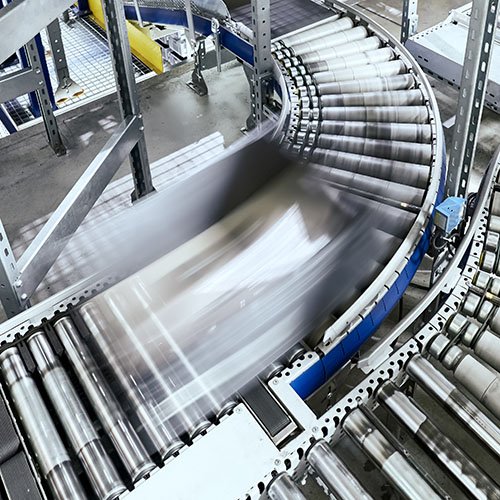
Industrial conveyor baskets play an important role in manufacturing, warehousing, and material handling operations where parts and components must move efficiently between workstations, processing equipment, and production areas. Designed to integrate with conveyor systems, these specialized baskets provide a reliable way to transport, organize, and protect materials throughout the manufacturing process.
From automotive components and machined metal parts to precision assemblies and products requiring specialized cleaning, custom conveyor baskets can be engineered around the specific requirements of an operation. Basket dimensions, wire spacing, load capacity, material composition, and protective features can all be adapted to the components being handled and the equipment used to transport them.
Industrial manufacturing baskets are particularly valuable in facilities that rely on repeatable processes and consistent material flow. Instead of allowing loose parts to move independently through production, properly designed baskets keep components grouped, organized, and positioned for the next manufacturing operation. This can help reduce unnecessary handling, protect finished surfaces, and support more efficient movement through production lines.
For manufacturers using automated conveyors, robotic equipment, industrial washing systems, or interconnected production cells, the right basket design can contribute to a more organized and dependable material handling process.
What Are Industrial Conveyor Baskets?
Industrial conveyor baskets are containers or fixtures designed to carry components along a conveyor system. Depending on the application, they may be constructed from stainless steel wire, carbon steel wire, welded steel frames, or combinations of materials selected for strength, durability, and compatibility with the manufacturing environment.
Unlike general-purpose storage containers, conveyor baskets must work with the physical and operational requirements of the equipment transporting them. Overall dimensions, bottom construction, weight distribution, and how the basket interacts with conveyor rollers, belts, chains, stops, and guides are all important design considerations.
Some baskets simply transport components between workstations, while others also serve as fixtures that maintain part orientation during cleaning, inspection, assembly, or other manufacturing operations.
Custom designs are especially useful when standard containers cannot accommodate unusual part geometries, heavier loads, specific conveyor clearances, or precise positioning requirements.
Manufacturing Baskets for Modern Production Environments
Manufacturing baskets are used throughout industrial production to store, organize, transport, and protect parts as they move through different stages of fabrication and assembly. Although not every manufacturing basket is designed for use on a conveyor, conveyor-compatible baskets are an important part of facilities that depend on continuous or automated material movement.
In a typical manufacturing operation, components may move from machining to cleaning, inspection, assembly, finishing, and packaging. A custom manufacturing basket can help maintain an organized group of parts throughout several of these stages, reducing the need to unload and repack components repeatedly.
This approach can be particularly useful when parts are small, numerous, delicate, or difficult to handle individually. Instead of transporting components loosely, operators can load them into designated basket locations and move the entire assembly through the appropriate production process.
Salco Engineering manufactures custom industrial wire baskets for material handling and manufacturing applications, including specialized designs that can be adapted to conveyor integration, component protection, and production requirements.
Key Design Features of Industrial Conveyor Baskets
Successful conveyor basket design requires an understanding of both the products being carried and the equipment moving them. A basket that performs well in stationary storage may require significant changes before it can operate reliably on a conveyor line.
Dimensions and Conveyor Compatibility
Overall basket dimensions must be compatible with the conveyor’s width, side rails, transfer points, available clearances, and surrounding equipment. The basket should travel through the system without interfering with guides, sensors, stops, or other components.
Height is also important. A tall basket or one carrying oversized components may require additional clearance beneath machinery, overhead structures, or transfer equipment.
Custom fabrication allows manufacturers to develop baskets that fit existing conveyors rather than requiring expensive equipment modifications to accommodate standard containers.
Bottom Construction and Contact Surfaces
The bottom of a conveyor basket is especially important because it determines how the basket interacts with the conveyor. Roller conveyors, belt conveyors, and chain-driven systems may require different contact surfaces and support arrangements.
For example, a basket moving over rollers may require adequately spaced support members or a suitable base structure to maintain stability and prevent the basket from catching between rollers. Other conveyor configurations may require flat contact areas, reinforced runners, or specific positioning features.
The basket should be designed around the actual conveyor system, including transitions between conveyor sections and any automated stops or indexing locations.
Load Capacity and Weight Distribution
Manufacturing baskets must safely support their intended loads without excessive deflection or deformation. Component weight, quantity, distribution, and the forces experienced during conveyor movement all influence structural requirements.
A basket containing several lightweight components has very different requirements from one carrying dense machined steel parts or heavy industrial assemblies. Reinforced frames, additional wire supports, and strategic placement of structural members may be necessary for more demanding loads.
Weight distribution also affects conveyor performance. Uneven loading can cause instability, especially during acceleration, stopping, or transfer between equipment sections.
Part Separation and Protective Features
Some industrial components can be transported together without individual separation. Others must remain in specific positions to prevent scratches, dents, or damage to machined and finished surfaces.
Custom conveyor baskets can incorporate formed-wire dividers, individual compartments, support rails, locating features, and specialized part-holding structures. When additional protection is needed, custom dunnage inserts can help maintain separation and minimize unwanted movement.
These features can be especially valuable when transporting high-value components or moving parts between operations where surface condition and dimensional integrity are important.
Handles and Ergonomic Features
Although conveyor systems automate much of the material movement, employees may still need to load, unload, reposition, or inspect individual baskets. Handles, accessible lifting points, smooth edges, and appropriate basket weight can improve usability.
Ergonomic features should be considered during design rather than added after the basket has been fabricated. The location of handles or lifting points should not interfere with conveyor guides, automated equipment, or adjacent baskets.
Choosing Materials for Custom Manufacturing Baskets
Material selection directly affects basket durability, corrosion resistance, maintenance requirements, and suitability for specific manufacturing processes. Stainless steel and carbon steel are common options for industrial conveyor baskets, although the best material depends on how the basket will be used.
Stainless Steel Conveyor Baskets
Stainless steel wire baskets are frequently selected for environments involving moisture, repeated cleaning, or applications where corrosion resistance is a priority. Their open construction can also support drainage and fluid circulation when baskets are incorporated into compatible cleaning or processing systems.
Applications may include automotive parts washing, medical equipment handling, food processing, precision manufacturing, and industrial cleaning operations.
Stainless steel baskets can also be manufactured with different surface finishes depending on the required corrosion resistance, appearance, and cleanability.
Carbon Steel Manufacturing Baskets
Carbon steel offers strength and durability for many general manufacturing and material handling applications. It can be an economical choice for baskets used in relatively controlled environments or processes where an applied protective finish is appropriate.
Custom carbon steel baskets can be fabricated with reinforced frames, dividers, handles, and other features required for industrial conveyor integration.
Protective Coatings and Surface Finishes
Powder coating, nylon coating, zinc plating, and other finishes may be considered depending on the environment and the components being handled. Certain finishes can provide corrosion protection or reduce direct metal-to-metal contact with sensitive parts.
However, not every coating is compatible with every manufacturing process. Temperature, chemicals, abrasion, cleaning methods, and repeated loading should be evaluated before selecting a finish.
For applications involving aggressive cleaning solutions, elevated temperatures, or stringent cleanliness requirements, uncoated stainless steel may be preferable to coated carbon steel.
Applications of Industrial Conveyor and Manufacturing Baskets
Custom manufacturing baskets support a wide variety of production environments. Their ability to combine part organization with durable construction makes them useful throughout industrial manufacturing and material handling operations.
Automotive Manufacturing
Automotive suppliers use manufacturing baskets to handle machined components, brackets, fasteners, transmission parts, steering components, and other products moving between machining, washing, inspection, and assembly operations.
Custom conveyor baskets can be designed to maintain part orientation, provide separation between components, and support predictable loading and unloading. When baskets move through automated systems, consistent positioning can also help simplify downstream handling.
Aerospace and Precision Manufacturing
Aerospace components often require careful handling because of their complex geometry, precision-machined surfaces, or high replacement value. Manufacturing baskets can be designed with dedicated part locations and support points that help protect critical features during movement between production stages.
Basket material, finish, and contact surfaces should be selected according to the specific component and manufacturing environment.
Industrial Parts Washing and Cleaning
Wire conveyor baskets can support industrial cleaning processes when designed for the equipment and cleaning chemistry involved. Their open structure allows wash fluids to circulate around components while helping contain parts during movement through the system.
Applications may include aqueous parts washing, spray cleaning, rinsing, and drying. Some baskets are also designed for use in specialized cleaning equipment where part orientation and fluid access are important.
For effective cleaning, wire spacing, component density, drainage, and contact areas should all be evaluated. A basket that is overloaded or improperly designed may prevent cleaning solutions from reaching important surfaces.
Assembly and Work-in-Process Material Handling
Manufacturing baskets can help organize components as they travel between workstations. Parts may be loaded into a basket after machining, transported to inspection, staged for assembly, and moved to another department without requiring repeated transfers into different containers.
This approach can improve organization and help maintain a consistent flow of work-in-process materials. It may also support more reliable inventory counts when baskets are designed to hold a defined quantity of components.
Food Processing and Pharmaceutical Manufacturing
Stainless steel manufacturing baskets are also used in industries where cleanability and corrosion resistance are important. Food processing and pharmaceutical facilities may require baskets that support repeated cleaning, accessible surfaces, and compatibility with specific operating procedures.
In these environments, basket construction, weld quality, material grade, drainage, and surface finish must be evaluated according to the intended process. Stainless steel construction alone does not guarantee suitability for every sanitation or regulated application.
Warehousing and Distribution
In warehouse and distribution environments, conveyor baskets can help move grouped products between storage areas, picking stations, packing operations, and shipping departments. Custom basket dimensions and containment features can be useful when handling products that do not fit securely in conventional bins or containers.
Facilities that combine conveyor transport with other warehouse material handling equipment can benefit from designing baskets around the complete movement and storage process.
Manufacturing Baskets for Automated Production Systems
Automation places additional demands on basket design. In a manually operated production environment, employees can often adjust a container that is slightly misaligned or reposition a part that has shifted. Automated systems require greater consistency because equipment operates according to programmed movements and defined positions.
When manufacturing baskets are used with robotic loading systems, automated conveyors, or machine tending equipment, several factors become particularly important. These include consistent external dimensions, repeatable part positioning, reliable conveyor contact surfaces, suitable access for robotic grippers, and clearance around locating features.
Some applications may also require baskets to interface with mechanical stops, sensors, indexing mechanisms, or other automated handling equipment.
Custom steel baskets for robotic material handling can be designed around these requirements, helping manufacturers establish more consistent movement of parts between automated operations.
Benefits of Custom Conveyor Baskets in Manufacturing
Improved Material Flow
Conveyor-compatible baskets allow components to move through established production routes while remaining grouped and organized. This can reduce unnecessary handling between operations and support a more predictable manufacturing workflow.
Reduced Component Damage
Custom dividers, locating features, and protective contact surfaces help minimize uncontrolled movement during transport. For delicate or high-value components, proper basket design can reduce the likelihood of scratching, impact, and other handling-related damage.
Consistent Loading and Unloading
Manufacturing baskets designed to hold a defined number of parts in consistent positions can simplify loading, unloading, counting, and inspection. This standardization is particularly useful when multiple operators or automated systems interact with the same components.
Long-Term Durability
Welded steel wire baskets can be engineered for repeated use in demanding manufacturing environments. Appropriate materials, reinforced construction, and suitable finishes can help extend service life and reduce the frequency of container replacement.
Better Integration With Existing Equipment
Custom dimensions and construction allow baskets to work with conveyors, racks, carts, cleaning equipment, robotic cells, and other material handling systems already in place. This can be more practical than modifying the surrounding equipment to accommodate an unsuitable standard container.
Wire Mesh Baskets vs. Solid Containers for Conveyor Systems
Wire mesh baskets and solid containers each offer advantages depending on the manufacturing process. Wire construction is especially useful when visibility, airflow, drainage, fluid circulation, and reduced container weight are important.
Open wire construction allows operators to see the contents more easily and can provide access for cleaning fluids or process airflow. It also offers flexibility when adding dividers, handles, and custom support features.
Solid containers may be more appropriate when carrying loose materials, very small components, powders, or products that require continuous bottom support or more complete containment.
For certain operations, a combination of solid and wire elements provides the best solution. A custom conveyor basket might include a reinforced or solid base for stable transport along the conveyor while using wire sides and dividers to reduce weight and improve accessibility.
The decision should be based on the characteristics of the load and the equipment rather than assuming one container style is best for every application.
How to Choose the Right Industrial Conveyor Basket
Before selecting a conveyor basket, manufacturers should evaluate the intended application and the requirements of the entire material handling process. A successful design must account for more than simply fitting the parts inside the container.
Important considerations include:
- Overall basket length, width, and height
- Conveyor type and available clearances
- Maximum load weight and weight distribution
- Bottom construction and conveyor contact points
- Part dimensions, quantity, and orientation
- Need for dividers or protective contact surfaces
- Required material and surface finish
- Exposure to chemicals, moisture, or elevated temperatures
- Manual or automated loading and unloading methods
- Integration with existing racks, carts, and production equipment
- Expected production volume and frequency of use
Providing this information early in the design process can help identify potential problems involving conveyor compatibility, structural support, part protection, and equipment interaction before fabrication begins.
Custom Manufacturing Baskets From Salco Engineering
Salco Engineering & Manufacturing designs and fabricates custom wire baskets for industrial material handling, manufacturing, processing, and conveyor applications. By developing baskets around specific components and operating conditions, Salco can provide solutions that address more than basic storage and transportation needs.
Custom manufacturing baskets can incorporate welded steel frames, formed-wire components, dividers, handles, reinforced supports, specialized contact surfaces, and features intended for conveyor or automation integration. Materials and finishes can be selected according to the environment and performance requirements.
Working from customer drawings, part samples, equipment dimensions, and application requirements, Salco can help develop baskets that fit existing manufacturing processes while supporting efficient handling and consistent component positioning.
Improving Manufacturing Efficiency With Industrial Conveyor Baskets
Industrial conveyor baskets are an important part of modern material handling because they help connect individual manufacturing operations into a more organized production process. When properly designed, they provide a dependable way to transport components, maintain part separation, support automated handling, and reduce unnecessary movement between workstations.
Whether an operation requires stainless steel conveyor baskets for industrial washing, heavy-duty manufacturing baskets for machined components, or custom wire containers for an automated assembly line, the most effective design begins with understanding the parts, equipment, and operating environment.
Salco Engineering manufactures custom wire baskets for manufacturing and material handling, including application-specific designs for demanding industrial processes. If your facility needs conveyor-compatible baskets or specialized manufacturing containers, contact Salco Engineering to discuss your dimensions, load requirements, conveyor equipment, and production needs.