


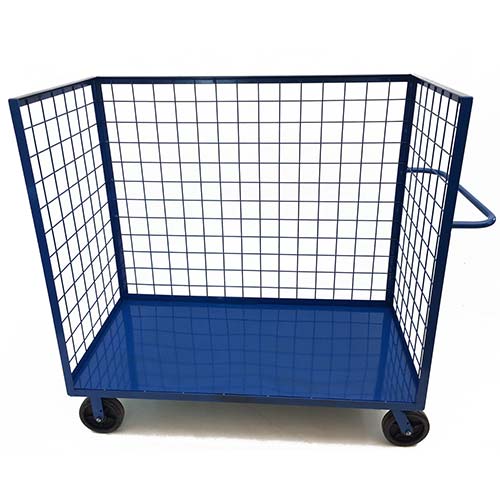
Stock picking carts are essential material handling tools for warehouses, distribution centers, fulfillment operations, manufacturing facilities, and storage environments where products need to be picked, staged, transported, sorted, and organized efficiently. In high-volume operations, even small delays in the picking process can affect labor productivity, order accuracy, shipment speed, inventory control, and customer satisfaction.
Also referred to as stock picker carts, warehouse picking carts, order picking carts, fulfillment carts, or distribution carts, these mobile solutions help employees move through aisles and storage areas while collecting products for orders, replenishment, kitting, production, or internal transfers. The right cart design can reduce unnecessary walking, limit manual carrying, improve product organization, and help workers move more items in fewer trips.
For many facilities, a standard utility cart is not enough. Products may vary by size, weight, quantity, packaging style, fragility, or handling requirements. A custom stock picking cart can be designed around the specific products being moved, the available aisle space, the order picking process, the required load capacity, and the way employees interact with materials throughout the day. When the cart fits the workflow, product flow becomes more efficient from storage to packing, staging, shipping, or production.
What Are Stock Picking Carts?
Stock picking carts are mobile carts designed to help employees collect, organize, and transport inventory throughout a warehouse or distribution center. They are commonly used by workers who move through aisles, pallet racks, shelving systems, bin locations, small parts storage areas, or production zones to retrieve products and move them to the next stage of the process.
Unlike basic carts, stock picking carts are often built with the picking task in mind. A cart may include shelves, tote positions, wire baskets, dividers, flat platforms, label holders, push handles, pull handles, ergonomic features, or custom compartments. These features help employees keep items separated, visible, and easier to manage during the picking process.
In some facilities, stock picker carts are used for lightweight packages or small parts. In others, they may need to support heavier industrial components, bulky products, fragile items, or parts that must remain separated to prevent damage. The right cart design depends on what is being picked, how products are stored, how far the cart travels, and what happens after the items are collected.
Why Stock Picker Carts Matter in Distribution Centers
Order picking is one of the most labor-intensive activities in many warehouses and fulfillment centers. If workers spend too much time walking, searching, lifting, sorting, or correcting errors, productivity declines. Stock picker carts improve the process by giving employees a more organized and mobile way to pick products accurately and efficiently.
In a distribution center, a cart may travel through several aisles before returning to a packing station, shipping area, staging zone, or production department. A well-designed cart allows employees to collect more items per trip while keeping products separated by order, route, zone, customer, or priority. This can reduce the need for additional sorting later in the process.
Custom industrial carts and trolleys can be engineered around the way products move through a facility. This makes them useful not only for order picking, but also for replenishment, returns, kitting, batch picking, and short-distance material transport.
Stock Picking Carts and Product Flow
Product flow is the movement of materials from one stage of the operation to the next. In a warehouse, this may include receiving, storage, picking, packing, staging, shipping, and returns. In manufacturing environments, product flow may also include machining, assembly, inspection, packaging, and work-in-process movement.
Stock picking carts help improve product flow by making movement more predictable and organized. Instead of employees carrying items by hand or making multiple trips for small quantities, carts allow products to move in larger, organized groups. This helps reduce wasted motion and supports a more efficient process.
Facilities focused on improving stock picking workflow with custom material handling carts can benefit from cart designs that match their picking strategy, aisle layout, product mix, and fulfillment process.
Common Applications for Stock Picking Carts
Stock picking carts are used in many types of facilities because they can be adapted to a wide range of picking, transport, and staging needs. They are especially useful where employees need to collect multiple items, keep products organized, or move materials between departments without relying on forklifts or pallet jacks for every trip.
Common applications include:
- Order picking in warehouses and distribution centers
- Batch picking for e-commerce fulfillment
- Zone picking in larger facilities
- Inventory replenishment and restocking
- Small parts picking and transport
- Component movement in manufacturing facilities
- Kitting and assembly preparation
- Returns processing
- Product staging before packing or shipping
- Movement of totes, bins, boxes, trays, or containers
- Work-in-process handling
- Temporary storage during production or fulfillment
A retail distribution center may need carts with multiple shelves and tote positions. An e-commerce fulfillment operation may need carts designed for batch picking and order separation. A manufacturing facility may need reinforced carts for metal parts, machined components, or industrial products. The design should match the environment and the task.
Stock Picking Carts for Order Picking
Order picking carts are designed to help employees collect products for individual customer orders or internal requests. These carts may be simple shelf carts or more complex carts with compartments, bins, dividers, barcode areas, or dedicated tote positions.
The main goal is to help workers move through the warehouse efficiently while keeping picked items organized. When products are separated clearly on the cart, employees can reduce errors and avoid extra sorting before packing or shipment.
Order picking carts are especially useful for facilities that handle a high number of smaller orders. Instead of picking one order at a time, employees may be able to pick several orders during a single trip, depending on the cart layout and warehouse system.
Stock Picking Carts for Batch Picking
Batch picking allows workers to collect items for multiple orders at the same time. This can reduce walking time, but it also requires strong organization. If products are mixed together on the cart, errors can occur during sorting, packing, or shipping.
Custom stock picking carts can be designed with dedicated order positions, dividers, tote slots, label holders, shelves, or compartments to keep each order separated. This helps make batch picking more practical and reduces the chance of items being placed in the wrong order.
For fulfillment centers and e-commerce warehouses, batch picking carts can be an important part of improving order speed without sacrificing accuracy.
Stock Picking Carts for Replenishment and Restocking
Stock picking carts are not only used to pick outgoing orders. They can also be used for inventory replenishment and restocking. Employees can load products onto carts and move them to shelves, bins, racks, or production stations that need to be refilled.
Restocking carts may need open shelves, durable decks, wire baskets, or compartments that make products easy to identify and access. In some cases, carts can be designed around specific bin sizes, packaging types, or product categories.
When replenishment materials are organized before they move through the facility, employees can restock more efficiently and reduce disruptions in picking areas.
Stock Picking Carts for Kitting and Assembly Support
Manufacturing and assembly operations often use stock picking carts to gather components for a production job, assembly process, or work order. This is commonly known as kitting. Instead of sending employees to search for parts during production, the necessary components can be picked, organized, and staged on a cart before work begins.
Kitting carts may include part-specific compartments, trays, dividers, shelves, or holders that keep each component organized. This can reduce delays at workstations, improve accuracy, and help employees confirm that all required parts are available before production starts.
Key Features of Effective Stock Picker Carts
The best stock picker cart design depends on the products being handled, the warehouse layout, and the daily workload. However, several design features are especially important for improving efficiency, safety, and long-term durability.
Durable Construction
Stock picker carts must withstand frequent use in demanding environments. Depending on the application, carts may be manufactured from carbon steel, stainless steel, aluminum, wire mesh, or a combination of materials. For industrial applications, welded frames, reinforced shelves, and durable caster assemblies can help extend service life.
Durability is especially important in facilities with long shifts, heavy use, uneven floors, tight aisles, loading areas, or manufacturing environments. A cart that bends, wobbles, or fails under repeated use can slow down operations and create safety concerns.
Easy Maneuverability
Maneuverability is one of the most important features of stock picking carts. Workers often need to navigate narrow aisles, shelving rows, workstations, packing areas, shipping lanes, and busy warehouse traffic. The cart should move smoothly, turn predictably, and remain stable when loaded.
Caster selection should account for cart size, total load weight, floor surface, travel distance, and turning requirements. Swivel casters, rigid casters, brakes, wheel material, and caster placement can all affect how the cart performs.
Custom Shelving
Shelf spacing should match the products being picked. A cart used for small boxes may need several closely spaced shelves, while a cart used for larger parts may require fewer shelves with more clearance. Adjustable shelves may be helpful when product sizes vary, while fixed shelves may provide strength and consistency for repeatable applications.
For facilities that need flexible cart designs for picking, packing, and material transport, warehouse carts with wheels can be designed to support multiple steps in the material handling process.
Tote Positions and Compartments
Many stock picker carts are designed to hold totes, bins, trays, or containers. Dedicated tote positions help keep products separated and organized during picking. This is especially helpful for batch picking, where multiple orders are being collected at once.
Custom compartments can also be used to separate products by order, part number, customer, route, department, or production step. Better organization on the cart can reduce sorting time and improve accuracy later in the process.
Wire Baskets and Dividers
Wire baskets and dividers can help contain smaller products, loose parts, tools, supplies, or irregularly shaped items. Open wire construction improves visibility and can make it easier for employees to quickly identify items on the cart.
Dividers can also reduce product movement during transport, helping prevent damage when the cart travels through aisles, around corners, or across different floor surfaces.
Ergonomic Handles and Loading Heights
Employees may use stock picking carts throughout an entire shift, so ergonomic design matters. Handle height, shelf height, cart width, loading position, and turning effort can all affect comfort and safety.
Cart designs that reduce bending, reaching, lifting, and pushing effort can help reduce fatigue. Properly positioned handles and accessible shelf spacing make it easier for employees to load, move, and unload the cart repeatedly.
Load Capacity and Stability
Stock picker carts should be designed for the weight and size of the products they will carry. Overloading a cart or using a cart with poor balance can make movement difficult and increase safety risks.
Custom cart design can account for load distribution, center of gravity, frame strength, shelf reinforcement, and caster capacity. This is especially important when carts are used for dense parts, bulk inventory, or heavy industrial components.
Benefits of Custom Stock Picker Carts
Improved Picking Efficiency
Stock picker carts allow employees to collect multiple items in a single trip. This reduces unnecessary walking and repeated movement through the facility. In large warehouses and busy distribution centers, even small improvements in travel time can make a meaningful difference over the course of a shift.
Better Product Organization
A well-designed cart keeps products visible, separated, and easier to manage. Shelves, bins, dividers, label holders, and compartments help employees know where each item belongs. This supports better order accuracy and reduces time spent sorting items later.
Reduced Product Damage
Products can be damaged when they are stacked poorly, dropped, dragged, or allowed to shift during movement. Stock picker carts can include containment rails, wire baskets, dividers, protective surfaces, custom dunnage, or product-specific supports to help protect items during transport.
Improved Workplace Safety
Manual carrying can increase the risk of strains, sprains, dropped products, and fatigue. Stock picking carts reduce the need for employees to carry items by hand across long distances. When carts are designed with stable frames, proper caster packages, and ergonomic handles, they can support safer material movement.
More Efficient Use of Warehouse Space
Custom cart designs can help facilities use space more effectively. Narrow carts can move through tight aisles. Tall carts can use vertical space. Compact carts can support small storage areas or packing stations. The right cart improves movement without creating unnecessary congestion.
Less Dependence on Forklifts and Pallet Jacks
Forklifts and pallet jacks are important tools, but they are not always the most efficient option for smaller or more frequent picking tasks. Stock picking carts allow employees to move products safely without waiting for larger equipment. This can reduce traffic in busy areas and keep forklifts available for heavier loads.
Custom Stock Picker Carts vs. Standard Warehouse Carts
Standard warehouse carts can be useful for general transport, but they may not be the best fit for specialized picking workflows. Custom stock picker carts are designed around the actual products, employees, storage systems, and movement patterns inside the facility.
A custom cart may be the better choice when a facility needs:
- Specific shelf spacing
- Dedicated tote or bin locations
- Heavy-duty load capacity
- Narrow aisle compatibility
- Order separation features
- Wire baskets or dividers
- Protective dunnage or part supports
- Special caster configurations
- Integration with conveyors, racks, or workstations
- Improved ergonomics for employees
By designing carts around the workflow, companies can reduce the inefficiencies that often come from using generic equipment.
Industries That Use Stock Picking Carts
Stock picking carts are valuable in many industries because they can be customized for different products, workflows, and facility layouts.
Common industries include:
- Warehousing and distribution
- E-commerce fulfillment
- Retail distribution
- Manufacturing
- Automotive production
- Aerospace manufacturing
- Food production
- Medical supply distribution
- Industrial maintenance
- Electronics and technology
Each industry may have different requirements. A medical supply distributor may prioritize clean organization and accurate picking. An automotive manufacturer may need heavy-duty carts for dense parts. An e-commerce fulfillment center may need carts designed for fast batch picking. A food production facility may need easy-to-clean construction.
Choosing the Right Stock Picking Cart
Selecting the right stock picking cart starts with understanding the facility’s workflow. The cart should match the products being handled, the storage layout, the picking method, and the next step in the process.
Important questions include:
- What products or parts will the cart carry?
- What is the maximum load weight?
- How many orders or product groups need to be separated?
- Will the cart hold totes, bins, boxes, trays, or loose parts?
- How wide are the aisles?
- How far will the cart travel during a typical shift?
- Will the cart be used for order picking, batch picking, replenishment, kitting, or staging?
- Does the cart need shelves, baskets, dividers, label holders, or compartments?
- Will employees push, pull, or tow the cart?
- Does the cart need to integrate with packing stations, conveyors, racks, or workstations?
Answering these questions helps determine the right cart size, material, shelf layout, caster package, handle placement, and custom features.
Frequently Asked Questions About Stock Picker Carts
What is the difference between stock picker carts and stock picking carts?
The terms are often used interchangeably. Stock picker carts generally refer to carts used by employees who pick products, while stock picking carts describe the same type of cart based on the task. Both terms refer to mobile carts used for picking, organizing, and transporting products in warehouses, distribution centers, and fulfillment operations.
How do stock picker carts improve warehouse efficiency?
Stock picker carts improve warehouse efficiency by helping employees pick and move multiple items in a single trip. They reduce unnecessary walking, improve product organization, support batch picking, and help move products more quickly from storage to packing, staging, shipping, or production areas.
Can stock picker carts be customized?
Yes. Stock picker carts can be customized with shelves, bins, dividers, handles, caster types, brakes, wire baskets, flat platforms, label holders, product-specific supports, and other features based on the application.
What materials are used to manufacture stock picker carts?
Stock picker carts may be manufactured from steel, stainless steel, aluminum, wire mesh, or a combination of materials. The best material depends on load requirements, cleaning needs, product type, facility environment, and how the cart will be used.
Are stock picker carts useful in small warehouses?
Yes. Stock picker carts can be designed for small warehouses, narrow aisles, and compact storage areas. Narrow cart widths, smooth caster configurations, and vertical storage layouts can help maximize space while improving movement.
How do stock picker carts help reduce workplace injuries?
Stock picker carts reduce the need for employees to manually carry products across the facility. They can also be designed with ergonomic handles, proper shelf heights, smooth-rolling casters, and stable frames to make picking and transport safer and easier.
Custom Stock Picking Carts from Salco Engineering
Stock picking carts are important tools for improving product flow in distribution centers, warehouses, fulfillment operations, and manufacturing facilities. The right cart design can improve picking speed, increase organization, reduce product damage, support safer handling, and help employees move materials more efficiently throughout the facility.
Salco Engineering & Manufacturing designs and fabricates custom stock picker carts for warehouses, distribution centers, fulfillment centers, manufacturing plants, logistics operations, and industrial facilities. Whether your operation needs carts for order picking, batch picking, replenishment, kitting, staging, transport, or work-in-process handling, Salco can design a cart around your products, facility layout, and workflow requirements.
To discuss custom stock picking carts for your warehouse, distribution center, or manufacturing operation, contact Salco Engineering today.