


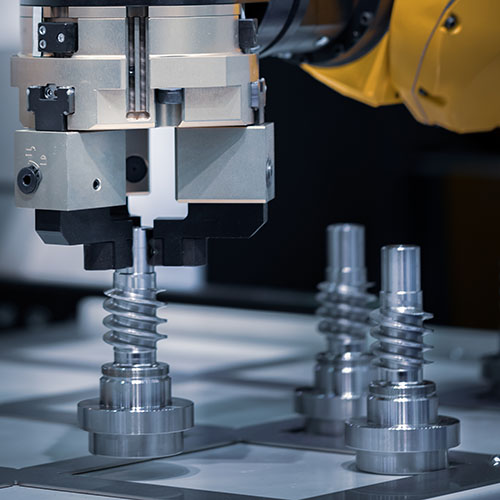
As manufacturers continue to invest in robotics, automation, and smarter production systems, the equipment used to hold, organize, and move parts must keep up with the demands of automated facilities. Robotic arms, conveyors, CNC loading systems, automated wash lines, vision systems, and production cells all rely on repeatability. If parts are not positioned consistently, protected properly, or easy for automation equipment to access, the entire process can slow down.
Wire baskets are one of the most versatile material handling products used in automated manufacturing environments. When designed correctly, they can support part staging, robotic pick-and-place, CNC loading, wash line processing, automated storage, inspection, and transport between production steps. Their open construction provides visibility, airflow, drainage, and accessibility, while custom wire design allows each basket to be built around the part, robot, gripper, machine, and workflow.
At Salco Engineering & Manufacturing, custom wire baskets can be designed specifically for robotics integration and automated material handling applications. Instead of relying on standard baskets that may not fit the system, Salco develops basket solutions around the actual production environment, part geometry, handling sequence, and automation requirements.
Why Wire Baskets Matter in Robotic Manufacturing
Robots are highly repeatable, but they depend on consistent part presentation. A human operator can look into a bin, identify a part, adjust its position, and compensate for minor inconsistencies. A robotic system typically needs the part to be in a known location, at the correct angle, and accessible to the gripper or end-of-arm tooling.
If parts are loose, tangled, nested, or randomly positioned in a container, the robot may struggle to pick them accurately. This can lead to mis-picks, dropped parts, cycle interruptions, part damage, or the need for manual correction. In high-volume production, even small disruptions can affect throughput and equipment utilization.
Custom wire baskets help solve these issues by organizing parts in a controlled layout. They can be designed with dividers, formed wire supports, custom compartments, stops, handles, lift points, and part-specific spacing. These features help automation systems interact with parts more consistently while protecting components during movement, washing, staging, and storage.
Custom Wire Baskets vs. Standard Containers
Standard bins, totes, or baskets may work for general storage, but automated facilities often need more precision. A generic container may not provide the right part spacing, orientation, drainage, load capacity, or access points for robotic handling.
Custom wire baskets are designed around the specific task. The basket can be engineered to hold parts in the same position every time, support robot access, fit a conveyor or washer, allow fluid to drain, or stack efficiently when not in use. This makes the basket part of the production system rather than just a container.
Common customization options include:
- Custom length, width, height, and basket depth
- Wire spacing based on part size and handling needs
- Formed wire supports for part orientation
- Dividers or compartments for part separation
- Stacking or nesting features
- Handles, lift points, or robotic grip locations
- Open construction for visibility, drainage, and airflow
- Reinforced frames for heavier loads or high-cycle use
- Stainless steel or coated material options
These design details can improve automation reliability while reducing the limitations of off-the-shelf containers.
Wire Baskets for Robotic Pick-and-Place Systems
Pick-and-place applications depend on accurate part location. Robots need to identify, grip, move, and release components without unnecessary repositioning or manual intervention. Custom wire baskets can support this process by holding each part in a predictable location.
For small parts, wire dividers or compartments can prevent shifting and mixing. For larger or irregular parts, formed wire supports can hold each component in a specific orientation. For delicate components, separation features can reduce part-to-part contact and help prevent scratches, dents, or edge damage.
Wire baskets can also support vision-guided robotics. Open wire construction improves visibility, making it easier for cameras, sensors, or operators to verify part position. When parts are consistently spaced and clearly visible, robotic systems can operate with greater confidence.
Wire Baskets for CNC Loading and Unloading
CNC machine tending is a common automation application in modern manufacturing. Robots may load raw blanks into CNC machines, unload machined parts, and transfer finished components to deburring, washing, inspection, or assembly areas. For this process to work correctly, parts must be staged in a consistent way before the robot picks them.
Custom wire baskets can be designed to present parts at repeatable pick points. They may include formed wire pockets, orientation stops, individual compartments, or open access areas for robotic grippers. These design features help reduce pick errors and support smoother machine tending cycles.
After machining, finished parts may need additional protection. Machined surfaces, threads, edges, and precision features can be damaged if components collide inside a loose container. Custom baskets keep parts separated and organized as they move from CNC equipment to the next production step.
Wire Baskets for Automated Wash Lines
Automated wash lines require baskets that support both cleaning performance and material handling efficiency. Parts must be held securely while still allowing cleaning solution, spray, water, air, or ultrasonic energy to reach the required surfaces.
Wire baskets are especially useful in wash line applications because their open design allows fluids to pass through the basket. This can improve drainage, support faster drying, reduce trapped debris, and help cleaning systems reach more part surfaces.
Custom wire baskets for wash lines may be designed around:
- Washer dimensions and conveyor clearance
- Spray patterns or immersion requirements
- Part spacing for cleaning exposure
- Drainage and drying needs
- Corrosion resistance requirements
- Automated loading and unloading methods
- Stacking, storage, or return flow after cleaning
When the basket fits both the part and the wash system, manufacturers can improve cleaning consistency while reducing unnecessary handling before and after the wash cycle.
Wire Baskets for Automated Production Cells
Automated production cells often combine multiple operations into one connected workflow. A cell may include robotic loading, machining, washing, drying, inspection, assembly, packaging, or transfer to another process. Wire baskets can help standardize how parts move through the cell and how they are presented at each stage.
In a production cell, baskets may be used to bring raw parts into the system, hold parts between robotic steps, move components through a washer, or organize finished parts for inspection. The basket design must account for robot reach, gripper clearance, conveyor spacing, part weight, cycle time, and operator access.
For more information on this type of application, Salco’s article on robotic material handling baskets explains how custom baskets can support CNC loading, wash lines, and automated production cells.
Improving Part Protection in Automated Facilities
Automation can improve speed and consistency, but parts still need protection during movement. Components may shift during transport, vibrate on conveyors, or contact surrounding parts during loading and unloading. Without the right basket design, part damage can still occur even in a highly automated environment.
Custom wire baskets can reduce damage by controlling how parts are stored and moved. Dividers, retaining features, formed supports, and custom spacing can keep components separated and stable. This is especially important for precision machined parts, automotive components, aerospace parts, medical device components, electronics, coated parts, and finished surfaces.
Better part protection can help reduce scrap, rework, inspection failures, and downstream quality issues.
Material and Finish Options for Automation-Ready Wire Baskets
The right material depends on the environment where the basket will be used. Stainless steel is often preferred for wash lines, food processing, medical applications, clean manufacturing, and environments where corrosion resistance is important. Carbon steel may be suitable for general industrial applications, especially when paired with an appropriate protective finish.
Material and finish considerations may include:
- Exposure to water, chemicals, oils, or coolants
- Cleaning or sanitation requirements
- Temperature exposure
- Load weight and frequency of use
- Part surface sensitivity
- Corrosion resistance needs
- Interaction with robotic grippers or conveyors
Selecting the right material and finish helps ensure that each basket performs reliably in high-cycle automated environments.
Industries Using Wire Baskets for Robotics Integration
Custom wire baskets are used in many industries that rely on automation, repeatability, cleanliness, and efficient material flow. Because the baskets can be designed around specific part and process requirements, they are useful in a wide range of manufacturing environments.
Common industries include:
- Automotive manufacturing
- EV component production
- Aerospace manufacturing
- CNC machining
- Medical device manufacturing
- Food processing and packaging
- Electronics manufacturing
- Industrial parts washing
- Metal stamping and fabrication
- Automated assembly operations
In each application, the goal is to keep parts organized, protected, visible, and consistently positioned so robotic systems can operate more efficiently.
Design Collaboration for Robotics-Compatible Wire Baskets
Developing a wire basket for robotics integration begins with understanding the part and process. Important details include part geometry, load weight, required orientation, robot access, cleaning requirements, cycle time, and how baskets will be loaded, moved, stacked, or returned after use.
Salco can work with manufacturers, engineers, automation integrators, and production teams to design baskets that match the requirements of the automated system. This collaborative approach helps ensure the basket supports the full workflow rather than only one step in the process.
Custom Wire Baskets for Smarter Automated Material Handling
Wire baskets play an important role in robotics integration and automated material handling. They help present parts consistently, improve robotic pick accuracy, support wash line performance, protect components, and keep automated production cells moving efficiently.
Salco Engineering & Manufacturing designs and fabricates custom wire baskets for manufacturing, robotics, CNC loading, wash lines, inspection, automated production, and industrial material handling applications. Whether your facility is retrofitting an existing automated system or launching a new robotic cell, Salco can help develop baskets that support your equipment, parts, and workflow.
To discuss custom wire baskets for robotics integration, contact Salco Engineering today.