


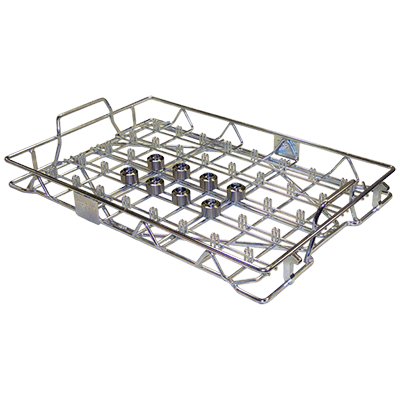
Stainless steel baskets are essential material handling tools for manufacturers that need durable, clean, corrosion-resistant containers for moving, washing, storing, and protecting parts. In industrial environments, baskets are often exposed to moisture, chemicals, oils, heat, abrasion, heavy loads, and repeated daily use. A standard plastic bin or lightly coated container may work for basic storage, but demanding production environments often require a stronger and more reliable solution.
Industrial stainless steel baskets are used throughout manufacturing facilities to support parts cleaning, ultrasonic washing, heat treating, material transport, work-in-process storage, inspection, assembly, and automated production. Their open wire construction allows fluids, air, heat, and debris to move through the basket while keeping components organized and accessible. When designed correctly, stainless steel wire baskets can improve efficiency, reduce part damage, support cleaner processes, and help manufacturers keep production moving smoothly.
Salco Engineering & Manufacturing designs and fabricates custom stainless steel baskets for industrial applications where strength, cleanliness, and long-term performance matter. By building each basket around the parts, process, and facility workflow, Salco helps manufacturers move beyond generic containers and into purpose-built material handling solutions.
Why Stainless Steel Baskets Are Used in Industrial Applications
Manufacturing environments can be hard on material handling equipment. Baskets may be loaded and unloaded hundreds of times, moved between departments, placed into wash systems, exposed to temperature changes, stacked, transported, or used in automated equipment. Because of this, basket material and design have a direct impact on performance.
Stainless steel baskets are widely used because they offer a practical combination of durability, corrosion resistance, cleanability, and design flexibility. Compared to plastic containers or coated steel baskets, stainless steel can often handle more demanding conditions without warping, absorbing contaminants, or relying on a surface coating that may chip or wear away over time.
Common reasons manufacturers choose stainless steel baskets include:
- Corrosion resistance in wet or washdown environments
- Strong construction for repeated industrial use
- Open wire design for drainage, airflow, and visibility
- Compatibility with cleaning, washing, and drying processes
- Better resistance to heat than plastic containers
- Long service life in demanding applications
- Custom design options for specific parts and processes
- Easy integration with carts, racks, conveyors, and wash systems
For facilities that need consistent performance, stainless steel baskets can become a key part of the production process rather than a simple storage container.
Stainless Steel Baskets vs. Plastic Containers and Coated Steel Baskets
Plastic containers, totes, and bins are common in many facilities, but they are not ideal for every industrial application. Plastic may crack, absorb residue, deform under heat, or become scratched in ways that make cleaning more difficult. For lightweight storage, plastic may be acceptable. For repeated industrial washing, heavy parts, high-temperature exposure, or precision part handling, stainless steel is often a better choice.
Coated carbon steel baskets can provide strength, but the coating may become damaged over time. Once a coating chips, scratches, or wears away, the exposed metal underneath may be more vulnerable to corrosion. This can create concerns in washdown environments, cleaning systems, or applications where contamination control matters.
Stainless steel wire baskets provide strength and corrosion resistance without depending entirely on an applied coating. This makes them useful in facilities where baskets must be washed, exposed to chemicals, used repeatedly, or kept clean between process steps.
Common Uses for Stainless Steel Wire Baskets
Stainless steel baskets are used across many stages of industrial production. They can help organize parts before processing, hold components during cleaning, protect items during transport, and support storage between manufacturing steps.
Parts Handling and Material Transport
One of the most common uses for stainless steel baskets is parts handling. Manufacturing facilities often need to move components between machining, washing, inspection, assembly, packaging, and shipping areas. If parts are loose in a bin, they may shift, collide, become difficult to identify, or require extra sorting before the next step.
Custom stainless steel baskets can be designed with the right dimensions, wire spacing, handles, dividers, and load capacity for the parts being moved. This helps employees transport materials more efficiently while reducing the risk of damage or disorganization.
For parts that require added protection, baskets may include formed wire supports, custom compartments, or part-specific layouts. Salco’s article on stainless steel parts baskets explains how custom basket designs can improve part handling and organization in manufacturing environments.
Industrial Parts Washing
Stainless steel baskets are widely used in industrial parts washing because they allow cleaning fluids, sprays, air, and debris to move through the basket. In automotive, aerospace, medical, machining, and general manufacturing operations, parts often need to be cleaned after cutting, forming, welding, grinding, or assembly.
Open wire construction helps cleaning solution reach more part surfaces while allowing oils, coolant, chips, and debris to drain away. This can improve cleaning consistency and reduce the need for rework.
Custom basket designs for washing applications may account for:
- Washer dimensions
- Spray angles and fluid access
- Drainage and drying requirements
- Part spacing and separation
- Load weight
- Basket handling method
- Compatibility with conveyors or automated systems
For facilities focused on cleaning efficiency, custom parts washing baskets can be designed around the specific cleaning process and the parts being processed.
Ultrasonic Cleaning
Ultrasonic cleaning is used when parts require detailed cleaning of small surfaces, holes, threads, crevices, or precision features. In these applications, basket design matters because the basket must hold parts securely while still allowing cleaning action to reach the components.
Stainless steel baskets are well suited for ultrasonic cleaning because they provide strength, cleanability, and open construction. Custom baskets can be designed to separate parts, reduce contact, improve cleaning exposure, and support repeatable loading.
Industries that use ultrasonic cleaning baskets may include medical device manufacturing, aerospace, automotive, electronics, precision machining, and laboratory environments. Salco’s stainless steel ultrasonic wash baskets can be designed around delicate components, part geometry, and wash system requirements.
Heat Treating and Thermal Processing
Stainless steel baskets can also be used in certain heat treating and thermal processing applications where parts need to be held, separated, and exposed to consistent airflow or heat. Heat treating baskets must be designed with the right material, wire diameter, reinforcement, and load support to handle temperature exposure and repeated use.
In high-temperature processes, basket design needs to account for thermal expansion, distortion risk, load distribution, and part orientation. A basket that is not designed for the process may warp, sag, or fail prematurely.
Custom heat treating baskets can help manufacturers support thermal stability, durability, and consistent handling throughout demanding production processes.
Work-in-Process Storage
Many facilities use stainless steel baskets for work-in-process storage. Parts may need to be staged between machining, washing, inspection, assembly, coating, or packaging. A basket that keeps components organized can reduce confusion, improve visibility, and make it easier to move materials through production.
Stainless steel baskets can be designed to stack, nest, or fit onto carts and racks. This helps facilities make better use of floor space while keeping parts protected and accessible. In lean manufacturing environments, baskets can support a more organized material flow by keeping each batch, part family, or production stage clearly separated.
Automated Production and Robotic Handling
As more manufacturers use robotics, conveyors, and automated cells, stainless steel baskets can be designed to support repeatable part presentation. Robots and automated equipment require parts to be located consistently. If parts shift or become mixed together, the system may require manual correction.
Custom stainless steel wire baskets can include formed supports, dividers, orientation features, or open access areas that allow robots, operators, or vision systems to interact with parts consistently. This is especially useful in CNC loading, automated wash lines, robotic pick-and-place, and inspection processes.
Design Features of Custom Stainless Steel Baskets
The effectiveness of a stainless steel basket depends on more than the material. The design must fit the part, process, and handling method. Custom basket design allows manufacturers to improve performance in ways that standard containers often cannot.
Wire Diameter
Wire diameter affects basket strength, weight, durability, and open area. Heavier wire may be needed for dense parts or repeated industrial handling, while lighter wire may be suitable for smaller components or applications where basket weight must be minimized.
Mesh Size and Wire Spacing
Mesh size and wire spacing are important for both part containment and process performance. Smaller parts may require tighter spacing to prevent loss or shifting. Washing and drying processes may benefit from more open spacing to improve fluid movement, drainage, and airflow.
Dividers and Compartments
Dividers help separate parts and prevent contact during transport or processing. This is useful for precision components, finished surfaces, threaded parts, coated items, or parts that must remain organized by type or production stage.
Handles and Lift Points
Handles, lift points, or grip areas can make baskets easier to move manually or with equipment. Depending on the application, baskets may need hand grips, crane lift points, forklift access, or features that allow robotic handling.
Stacking and Nesting Features
Stackable baskets help save floor space and improve storage efficiency. Nestable baskets may reduce storage space when empty. Custom stacking features can help ensure baskets remain stable and aligned during storage or transport.
Reinforced Frames
Industrial baskets that carry heavy loads or go through repeated process cycles may require reinforced frames, stronger corners, cross supports, or heavier wire. Reinforcement helps prevent deformation and extends service life.
Custom Part Supports
Some parts need to be held in a specific orientation. Custom formed wire supports can prevent rotation, reduce part contact, and keep components in the correct position for washing, inspection, automation, or assembly.
Benefits of Stainless Steel Baskets for Industrial Operations
Using the right stainless steel basket can improve more than storage. It can affect quality, throughput, cleanliness, safety, and long-term operating costs.
Improved Part Protection
Parts can become damaged when they shift, collide, or stack unevenly inside a container. Custom stainless steel baskets can reduce this risk by keeping components separated, supported, and stable. This is especially important for machined parts, polished surfaces, delicate assemblies, and high-value components.
Better Cleaning and Drainage
Open wire construction allows liquids and air to move through the basket. This supports more effective washing, rinsing, draining, and drying. In cleaning systems, the right basket design can help reduce trapped fluids, debris, and residue.
Long-Term Durability
Stainless steel baskets are built for repeated use. Their durability can reduce replacement frequency and lower the total cost of ownership over time. This is especially important in facilities where baskets are used daily or exposed to harsh conditions.
Cleaner Material Handling
Stainless steel is easier to clean than many porous or coated materials. This makes stainless steel baskets useful in environments where cleanliness, sanitation, or contamination control is important.
Improved Workflow
Custom basket designs can help materials move more efficiently from one step to the next. When baskets match carts, racks, washers, conveyors, and workstations, employees spend less time transferring, sorting, or reorganizing parts.
Industries That Use Stainless Steel Baskets
Stainless steel baskets are used across a wide range of industries because they can be customized for different materials, processes, and handling needs.
Common industries include:
- Automotive manufacturing
- Aerospace manufacturing
- Medical device manufacturing
- Pharmaceutical production
- Food processing
- Commercial baking
- Precision machining
- Electronics manufacturing
- Industrial parts washing
- Heat treating and finishing
- General manufacturing and assembly
Each industry may require different basket features. Automotive manufacturers may need baskets for parts washing, heat treating, or technical cleanliness. Aerospace manufacturers may require careful part separation and protection for precision components. Food and medical facilities may prioritize sanitation and cleanability. General manufacturers may need strong, reusable baskets for storage, transport, and work-in-process handling.
Choosing the Right Stainless Steel Basket
Selecting the right basket begins with understanding the full application. The basket should be designed for the parts being handled, the process being used, and the equipment it must work with.
Important questions include:
- What parts will the basket hold?
- What are the part dimensions and weight?
- Do parts need to be separated or oriented?
- Will the basket be used for washing, storage, transport, heat treating, or automation?
- What chemicals, fluids, or temperatures will the basket be exposed to?
- Does the basket need to stack, nest, or fit into a cart or rack?
- Will the basket be moved manually, by conveyor, by forklift, or by robot?
- What wire spacing is needed for containment, cleaning, or drainage?
- Are there special cleanability or contamination control requirements?
Answering these questions helps determine the proper material, wire diameter, mesh size, frame style, handle design, and reinforcement requirements.
Custom Stainless Steel Baskets from Salco Engineering
Stainless steel baskets are durable, versatile, and practical solutions for industrial parts handling, washing, storage, and production support. They can improve organization, protect components, support cleaner workflows, and help materials move more efficiently through demanding manufacturing environments.
Salco Engineering & Manufacturing designs and fabricates custom stainless steel baskets for automotive, aerospace, medical, food processing, pharmaceutical, industrial cleaning, precision machining, and general manufacturing applications. Whether your facility needs baskets for parts washing, ultrasonic cleaning, heat treating, work-in-process storage, robotic handling, or material transport, Salco can develop a custom solution around your parts and process.
To discuss stainless steel baskets for your industrial application, contact Salco Engineering today.